"I would fight it tooth and nail": The Sims artist would challenge any mandate to reduce diversity after EA Saudi buyout

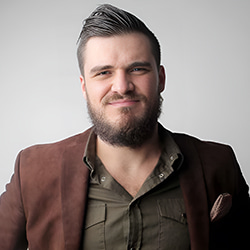
Answering concerns that The Sims team may face pressure to reduce support for diversity following the Saudi Arabian-backed buyout of EA, senior character artist Jess Hyland says she's not "heard anything" about such a mandate and, if one were introduced, she "would fight it tooth and nail."
Last September, EA announced they had accepted a buyout offer from an investor consortium consisting of Saudi Arabia's Public Investment Fund, equity firm Silver Lake, and Jared Kushner's Affinity Partners. The group would be buying 100% of the company behind games such as Battlefield, EA FC, and The Sims for $56 billion – $20 billion of which would be debt loaded up onto EA and their studios.
Image credit: EADespite reports in November that Saudi Arabia's PIF is dealing with financial distress, all reports point to the Committee on Foreign Investment in the United States likely waving through the acquisition in the coming months. However, while that's good news for the investors, unionised workers at EA worry that, should the deal go through, the debt leveraged to purchase the company will lead to layoffs after the acquisition. Indeed, just last month, EA made an unknown number of job cuts across the recruitment, IT, customer support, and the "trust and safety" division.
Another concern of the buyout, however, is whether EA's new owners would push for cultural change within the company. Former Dragon Age executive producer Mark Darrah has argued that this would most likely impact studios such as Bioware. "If this is a PR move for the Saudi government as much as it is a financial one," Darrah said in a YouTube video last year. "The studios that don't have much of a track record, what you might do is just come in and put your thumb on the scale and push their messaging in directions that you want, in directions that make you look good or at the very least, steer them away from messaging that makes you look bad.
"But for the studios that have more of a track record, especially a track record that maybe doesn't line up with your own political views - again, BioWare - you're going to look at that studio and wonder how you make them fit into your new structure. It's hard to imagine that you have BioWare pivot from having very progressive messaging to having the reverse, because it's what the government wants. It's hard to imagine that the public perception of a game that comes out of BioWare, even if you do do that, isn't apocalyptically bad."
While Darrah was talking about Bioware, his arguments also apply to The Sims.
Image credit: EASince first releasing in 2000, developers Maxis have fostered and embraced a diverse audience. It's a series that supports players building sims of various genders, sexualities, ethnicities, and disabilities. A position and set of values some significant Sims players worry is at odds with the developer's potential new owners. Following the buyout announcement last September, several major Sims creators left the EA Creator Network. This prompted a statement from EA saying: "We deeply respect that everyone experiences The Sims in their own way and will make choices that are right for them. However you choose to play, create, or share, we’re grateful to be part of your journey. Our mission, values, and commitment remain the same. The Sims will always be a space where you can express your authentic self."
During her talk at Develop, Hyland was asked if she worried that the buyout could lead to a mandate to reduce diversity in The Sims or restrict the team's ability to continue adding support for LGBTQIA+ players.
Image credit: EA"I can't talk about the acquisition specifically, " Hyland said. "The latest information about that is on our website EA.com. And, honestly, I don't know what's happening with it at the moment. I will say that I don't feel like I've ever had a mandate from on high about what we're making, in terms of 'that's too diverse', and I don't think we will. I mean, fingers crossed, but I haven't heard anything coming down the pipe. I don't think it's gonna happen and I would fight it tooth and nail."
I understand and share Darrah's concern, and that of The Sims' players, that an EA buyout could lead to a chilling effect within the company. The politics of the people with the money always threatens to influence the companies they own, but that influence can be resisted (though, obviously resistance carries risk).
I hesitated before writing this story, as it singles out a developer who is working as part of a team and doesn't speak for the company, but we tend not to hear these voices when it comes to big studio buyouts, and that means we lose the fact that they, too, are active in this. Individual team members are able to, and often do, push back and raise their voices within a company. When we talk about studios, we can lose sight of the individuals, who also bring their values to a team. After all, The Sims didn't passively become the game it is today, the people making it drove it in this direction, because it's a demonstration of the values they hold.
In her talk, Hyland showed how Maxis have worked over the past 12 years to expand the players' options in the game's character creator. Including efforts to unpick original assumptions made in the character creator tool to allow as much freedom as possible. One example I will go into more depth in with a post next week is how at launch male-presenting sims could only wear male-assigned clothes and female-presenting sims could only wear female-assigned clothes, but this was changed to support trans characters and was a change that required monumental effort from the team. That work might in theory have come from a diversity push in the EA boardroom, but it's more likely to be a result of a push from the team.
And, while we could assume that a team who would make those changes to their game wouldn't accept a mandate to reduce or stall efforts to increase inclusivity, it's still refreshing to hear it straight from one of its members.