
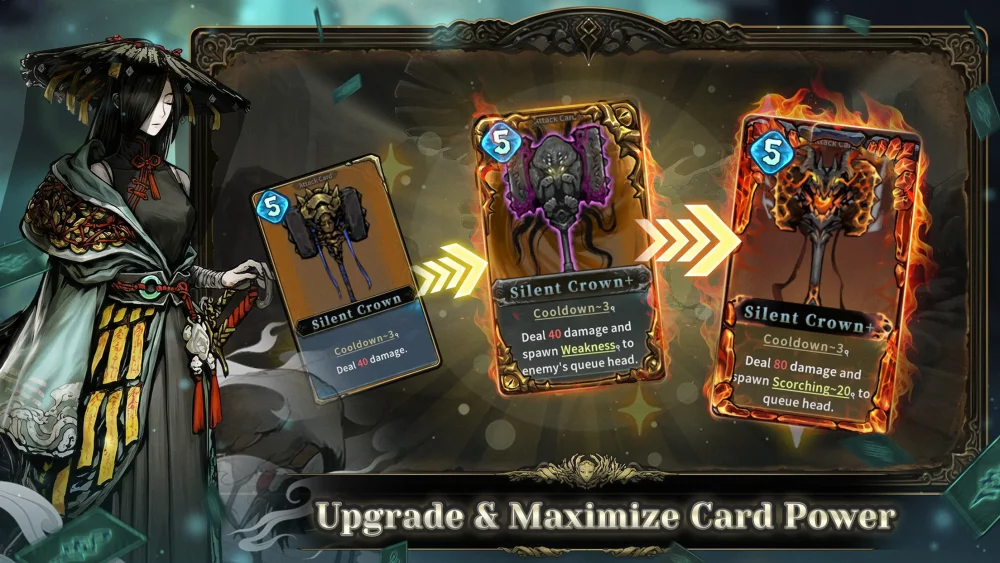
In the dark, unforgiving world of Abyssal Soul, crystals are more than just currency—they are the foundation of your deck-building power and survival. While many players exhaust themselves chasing the top 10 leaderboard spots, veteran players know that true power comes from economic stability rather than fleeting competitive status. By adopting the "Hoarder" strategy, you can reliably generate 3,000 crystals per hour through passive income optimization, effectively insulating your account from the volatile and often exploited competitive meta.
Why You Should Stop Chasing the Top 10
The leaderboard in Abyssal Soul is a trap for the unwary. High-tier rankings are frequently dominated by players utilizing unfair advantages, exploits, or unsustainable "resource bleeding." Resource bleeding occurs when a player spends more crystals on stamina refreshes, competitive buffs, and gacha pulls than they gain from their rank rewards, simply to maintain a position that offers no long-term ROI.
When you ignore the leaderboard, you reclaim your agency. The "Hoarder" mindset shifts your focus from external validation to internal account health. By removing the pressure to compete, you stop wasting resources on temporary boosts and redirect them toward permanent, compounding passive income streams. This strategy turns the game into a marathon, where your wealth grows exponentially while your competitors burn out and stagnate.
The Mechanics of the Hoarder Strategy
The Hoarder strategy is built on the principle of minimizing "active risk" in favor of "passive yield." In Abyssal Soul, the most consistent crystal income comes from non-competitive modules—specifically, your base-building upgrades, idle passive character abilities, and long-term expedition cycles.
To hit the 3,000 crystals per hour threshold, you must strictly adhere to the following operational priorities:
- Passive Income Modules: Focus your initial investment on buildings that provide hourly crystal production. In Abyssal Soul, these are often found in the "Citadel" or "Sanctum" tabs. Upgrade these first before spending on units.
- Idle Passive Synergy: Audit your character deck for units that possess "Resource Generation" passives. These units do not need to be in your main combat party to function, provided they are slotted into your support or expedition teams.
- Log-in Discipline: Resource nodes have storage caps. To maintain the 3,000/hour rate, you must log in at optimal intervals to collect your yield. If your storage hits its cap, your hourly generation effectively drops to zero.
Optimizing Your Crystal Yield: A Step-by-Step Approach
Transitioning to the Hoarder strategy requires a systematic removal of "noise"—the activities that provide negligible rewards compared to the time they consume.
- Audit Your Missions: Identify combat nodes that offer vanity rewards, such as cosmetic skins or titles, and stop running them. Focus only on nodes that provide currency or high-value materials.
- Calibrate Your Roster: Strip down your primary deck to the absolute minimum required to clear daily farming milestones. Every crystal spent on "over-leveling" units for PvP is a crystal lost from your hoard.
- The 24-Hour Cycle: Establish a routine where you collect your passive income at the exact moment your storage reaches 80% capacity. This prevents loss due to overflow and keeps your hourly generation consistent.
- Avoid the Gacha Temptation: The most common mistake is spending crystals on banners the moment you hit a pull threshold. Hold your crystals. The Hoarder strategy relies on a large capital base to fund massive, efficient spending phases during double-drop events or high-value banner releases.
Managing Trade-offs and Limitations
The primary trade-off of this strategy is the lack of "prestige" in the game’s competitive ranking. You will not see your name in the top 10, and you may find that some high-level players view the Hoarder approach as "anti-social." However, from an objective, analytical perspective, you are playing the game with higher efficiency than those at the top.
Limitations to consider:
- The Initial Setup Gap: It takes time to build your passive infrastructure. The first 48–72 hours of this transition will feel slower than your previous gameplay loop.
- Calibration Time: You may need to experiment with which character passives stack best for your specific account level. Not all accounts have the same access to passive-generating units, so you must re-calculate your hourly yield after each upgrade.
Long-Term Progression: Why Hoarding Works
The true strength of the Hoarder strategy lies in its future-proofing. Abyssal Soul is a game that frequently introduces power-creep through new character releases and meta shifts. While competitive players are forced to scramble for resources every time a new unit drops, the Hoarder has a massive reserve ready.
When a new, game-breaking unit or a high-efficiency farming event arrives, you will be the one prepared to capitalize on it immediately. You avoid the "fear of missing out" (FOMO) that drives poor spending decisions. Instead, you wait for the meta to stabilize, identify the most efficient purchase, and then spend your hoard. This ensures that every crystal you spend provides maximum value, keeping your account permanently ahead of the curve without the stress of chasing an unfair leaderboard.
By prioritizing consistent growth over competitive vanity, you take control of your Abyssal Soul experience. You aren't just playing the game; you are mastering its economy, ensuring that when you do decide to engage with higher-tier content, you do so from a position of absolute, undeniable strength.

Free Abyssal Soul Codes
Current active codes and how to redeem them.

Sarah Williams
Sarah specializes in RPG and collection games, explaining team building, character growth, and beginner-friendly ways to avoid expensive early mistakes.
COMMUNITY
Player Comments
75 players commented on this guide.
The tips are practical and easy to follow.
This helped me understand strategy much better.
This guide answered the exact question I had.
Can you add more details about strategy in a future update?