
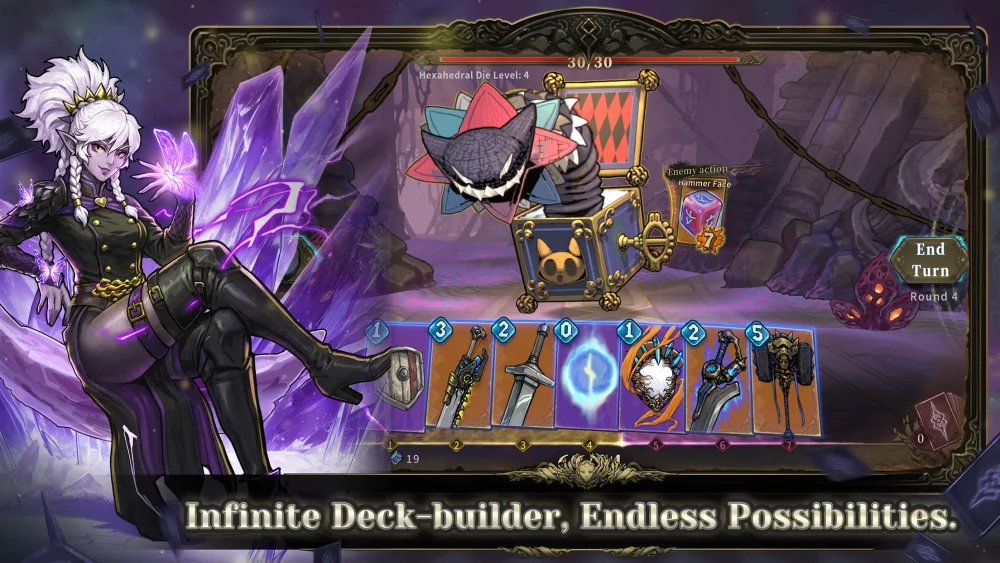
Success in Abyssal Soul relies on understanding how to manipulate your deck’s order to overcome increasingly difficult encounters. Unlike standard deck-builders where card draw is often randomized, the sequential nature of this title requires players to think several turns ahead.
Understanding Sequential Deck Mechanics
In Abyssal Soul, the "sequential" aspect of the combat system means that your deck order is not just a pool of options—it is a timeline. To survive, you must master the following principles:
- Predictable Sequencing: Learn the fixed order of your deck. If you know a high-damage card or a defensive shield is coming up, you can tailor your current turn to ensure you have the necessary action points (AP) ready to play it.
- Deck Thinning: Remove low-impact cards early in your run. A smaller, more refined deck ensures your strongest combo pieces reappear more frequently, allowing for more consistent turn-to-turn performance.
- Anticipating Enemy Intent: Every enemy in Abyssal Soul signals their next move. Use your sequential knowledge to hold back powerful attack cards if you know you will need to prioritize block or utility during a specific turn.
Strategic Card Drafting Priorities
When drafting cards after combat encounters, avoid picking cards simply because they have high damage values. Instead, prioritize synergy and the "flow" of your deck sequence.
| Card Type | Role | Drafting Priority |
|---|---|---|
| Generator | Provides AP or card draw | High (Essential for engine building) |
| Mitigation | Shields and defensive buffs | Medium (Draft only when the deck lacks sustain) |
| Finisher | High-cost, high-damage | Low (Draft only 1-2 to avoid hand clutter) |
| Utility | Debuffs or status effects | Variable (Draft based on boss counters) |
Managing the "Roguelike" Run Economy
Because Abyssal Soul features permanent progression elements alongside randomized runs, efficient management of your resources is key to long-term success.
- Prioritize Elites: If your current health allows, prioritize Elite combat nodes. These encounters provide superior card rewards and relics that are necessary for scaling into the later stages of the run.
- Health as a Resource: Don’t be afraid to take minor chip damage if it allows you to finish a fight faster. Spending health to end a combat encounter one turn earlier prevents the enemy from scaling their damage output.
- Relic Synergy: Always evaluate your current relics before selecting a card reward. A mediocre card can become a powerhouse if it triggers a specific relic’s passive bonus.
Combat Positioning and Turn Management
While Abyssal Soul focuses on cards, the tactical application of your skills is what separates successful runs from failed ones.
- Avoid Over-extending: Do not dump your entire hand of cards unless it secures a kill or hits a critical defensive threshold. Saving a single card can sometimes be the difference between a perfect turn and taking unnecessary damage.
- Staggering Buffs: If you have buffs that expire after a set number of turns, try to "stack" them immediately before a turn where you plan to use a high-damage finisher. This maximizes the value of your limited AP pool.
By shifting your focus from "playing cards" to "managing a sequence," you will find that the difficulty spikes in Abyssal Soul become significantly more manageable. Focus on building a deck that creates its own momentum through card draw and AP generation to dominate the later stages of your run.

Free Abyssal Soul Codes
Current active codes and how to redeem them.

Emily Johnson
Emily writes practical mobile strategy guides with a focus on resource planning, base progression, and the early decisions that shape a long-term account.
COMMUNITY
Player Comments
75 players commented on this guide.
This guide answered the exact question I had.
I tried this today and it worked better than my old setup.
The explanation is clear, especially for beginners.
This saved me time in the early game.