
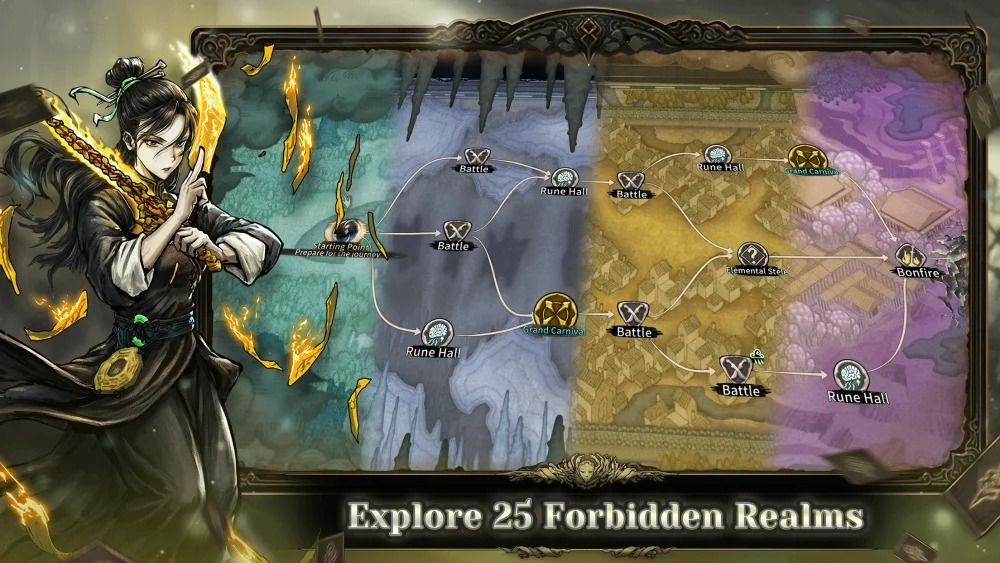
In Abyssal Soul, successfully navigating a run requires more than just drafting high-damage cards and optimizing your weapon crafting. As you progress through the sequential roguelike structure of Acts 1 through 4 (often referred to by the community as the four "Seasons" of a campaign), the game introduces complex map events that directly impact your combat difficulty. To survive the brutal mid-to-late game, you must prioritize "Drought Relief" map nodes over standard progression to stabilize the region, unlock the highly coveted "Name of the Goddess" relic, and ultimately suppress the Cangshan bandit faction.
This comprehensive guide breaks down how to manage your resources during these humanitarian crisis events, how to structure your deck for tactical grid combat against high-evasion enemies, and how to utilize companion synergies to defeat the Cangshan outlaw bosses.
Understanding the Seasonal Progression Loop
A standard campaign in Abyssal Soul is divided into four distinct phases or "Seasons," each introducing a new mechanical modifier to the map. During the early phases (Acts 1 and 2), the region is plagued by a severe drought. This isn't just a narrative backdrop; it is a mechanical hazard that alters node generation.
If you ignore the drought, local stability plummets, resulting in negative morale modifiers that carry over into combat. Enemies will gain passive buffs, and your card draw mechanics can be actively penalized. Conversely, addressing the crisis transforms a dangerous environmental hazard into a strategic advantage, setting up your deck and relics perfectly for the combat-heavy Acts 3 and 4 where the Cangshan bandits take over the map.
Mastering Drought Relief Nodes and the Goddess Status
Before engaging in aggressive elite hunting or expanding your deck too rapidly, you must address the needs of the population via Drought Relief nodes. These specific map encounters serve as the foundation for regional stability and dictate how difficult your final boss encounters will be.
How Drought Relief Nodes Work
When you land on a Drought Relief node, you are presented with a choice that costs resources—typically Gold, health (HP), or the permanent removal of a card from your deck. In exchange, you gain "Humanitarian Points."
To maximize your efficiency, allocate resources during the early phases of the run to stabilize the region:
- Resource Allocation: Direct your collected supplies (Gold and crafting materials) specifically toward these relief nodes. While it is tempting to spend early gold at the Merchant or Forge, securing Humanitarian Points is statistically more valuable for long-term survival.
- Unlocking "Name of the Goddess": If you accumulate enough Humanitarian Points by the end of Act 2, you are awarded the "Name of the Goddess" status. In gameplay terms, this is a legendary-tier persistent buff/relic that provides massive passive defensive stats, including a 15% flat damage mitigation layer and a unique shield generation mechanic at the start of every combat encounter.
- Strategic Timing: Complete these humanitarian tasks before triggering Act 3. The resulting stability allows you to focus entirely on clearing bandits and optimizing your tactical combat positioning without worrying about the civilian casualty modifiers that clutter your deck with "Unrest" curse cards.
Denying the "Underground Support" Buff
If you attempt to push into the Cangshan bandit territories without completing the prior relief missions, you will face severe consequences. The bandits will benefit from an "Underground Support" buff. Because the local population is desperate from the drought, they harbor the outlaws, granting enemy units significantly increased damage output, a 20% boost to their evasion rating, and a passive healing rate at the end of every turn. Securing the Goddess status completely negates this buff, turning an otherwise impossible boss rush into a manageable tactical encounter.
Deck Building and Tactical Combat for Bandit Suppression
Once the region is stabilized and you have secured your defensive buffs, your focus must shift to the suppression of the Cangshan outlaws. These encounters are not merely tests of brute force; they require precise execution of tactical combat mechanics and a carefully crafted deck.
The bandits in these zones possess naturally high evasion ratings. Standard wide-area-of-effect (AoE) attacks and heavy, inaccurate strikes will frequently miss, wasting your action points and leaving you vulnerable to counterattacks.
Countering High Evasion
To build a deck capable of dismantling the Cangshan bandits, prioritize the following card types and crafting upgrades:
- Precision Strikes: Draft attack cards that feature the "Unblockable" or "Guaranteed Hit" tags. While these cards typically have lower base damage, their reliability is mandatory against evasive targets.
- Weapon Crafting Optimization: When you visit the Forge, prioritize upgrading your primary weapon's Accuracy stat over Raw Damage. A weapon with a +30% Accuracy modifier will completely offset the bandits' natural dodge chance.
- Debuff Stacking: Utilize cards that apply "Vulnerable" or "Snared." Snared is particularly effective as it reduces enemy evasion to zero for two turns, allowing you to follow up with your high-cost, high-damage finisher cards.
Exploiting Grid Positioning and Choke Points
Abyssal Soul features a tactical grid combat system where positioning is just as important as the cards you play. The "Cangshan" map nodes feature narrow corridors and hazardous terrain that limit enemy movement.
Utilize "Row-Shift" and "Push/Pull" cards to funnel bandits into a choke point. By forcing multiple high-evasion enemies into a single grid column, you can trigger specific area-of-effect damage cards that target columns rather than wide rows. If you have denied them their Underground Support buff, they will not have the movement speed to escape these choke points before your turn ends.
Leveraging Companion Bonds and Synergies
Progressing through the map in Abyssal Soul involves navigating complex personal relationships that intersect with your military objectives. These "companion" or bond quests are critical mechanical layers that provide essential combat bonuses capable of turning the tide in difficult elite and boss fights.
When you reach the Act 4 stages where you must finally settle affairs with the local outlaw warlords, your active companion’s alignment and affinity level will heavily influence your combat capabilities.
- Affinity Leveling: At Campfire nodes, you can choose to level up your companion's affinity instead of healing or upgrading a card. While this feels like a steep trade-off in the short term, reaching Affinity Level 3 unlocks powerful passive synergies.
- Synergy Bonuses: Aligning your deck's damage type (e.g., Bleed, Fire, or Frost) with your companion’s specific combat style unlocks unique "Duo Finishers." These are zero-cost cards added to your hand once per combat that deal massive, unavoidable damage.
- The Trade-off: Pursuing these relationships can occasionally delay your raw stat progression, forcing you to choose between short-term power spikes (like an immediate card upgrade) and long-term narrative rewards. Always evaluate if the current level of your companion’s affinity provides enough utility to justify skipping a crucial weapon upgrade before the Act 4 boss.
Step-by-Step Strategy: Defeating the Cangshan Outlaw Boss
The final encounter of the Cangshan region is a grueling, multi-wave battle against the Bandit Warlord and his lieutenants. If you have followed the steps above, you will enter this fight with the Goddess status, a precision-focused deck, and a high-affinity companion.
- Phase 1: Funnel and Control. The boss will spawn with three high-evasion lieutenants. Do not attack the boss immediately. Use your positioning cards to pull the lieutenants into a single column. Apply the "Snared" debuff to strip their evasion, and eliminate them using column-based AoE attacks.
- Phase 2: Weathering the Storm. Once the lieutenants are down, the Warlord will begin charging a massive, map-wide AoE attack. This is where your early-game investments pay off. The "Name of the Goddess" mitigation layer, combined with a standard block card, will allow you to survive this burst without losing more than 10% of your maximum HP. Without the Goddess status, this attack is often a run-ending wipe.
- Phase 3: The Companion Finisher. After his massive attack, the Warlord will enter a "Fatigued" state, dropping his evasion and resistances. Play your synergy-enabling cards to stack your chosen status effect (e.g., Bleed), and unleash your zero-cost Duo Finisher to deplete his remaining health pool.
Common Mistakes to Avoid in High-Level Runs
The transition between the four Acts is the most dangerous time for a player. As the game shifts from drought conditions to bandit uprisings, many players make critical economic errors that doom their run.
- Over-spending Early Gold: Avoid the common mistake of spending all your gold on minor gear upgrades at the Act 1 Merchant. You must keep a reserve of resources to pay for the final Drought Relief nodes. If you run out of gold and have to sacrifice HP for Humanitarian Points, you will enter Act 3 too weak to survive standard encounters.
- Ignoring Sustain for Raw Damage: In the late-game mountain encounters, fights stretch out over multiple waves. Focusing purely on high-damage cards while ignoring block generation and the Goddess mitigation buff will result in a slow death by attrition. Focus on high-value gear that enhances sustain.
- Drafting Deck Bloat: Do not take a card at every reward screen. A bloated deck makes it significantly harder to draw your "Guaranteed Hit" cards and Companion synergy enablers when you need them most against the Cangshan elites. Keep your deck lean and focused.
By carefully managing your early-game resources to solve the humanitarian crisis, securing the Goddess status, and building a tactically sound deck, you will easily crush the Cangshan bandits and secure your victory in Abyssal Soul.

Free Abyssal Soul Codes
Current active codes and how to redeem them.

Michael Smith
Michael covers live-service games, events, reward systems, and efficient daily routines, turning frequent updates into clear actions for players.
COMMUNITY
Player Comments
46 players commented on this guide.
I wish I had read this before upgrading the wrong thing.
This helped me understand early game much better.
This guide answered the exact question I had.
Nice guide. I am checking the other Abyssal Soul articles next.