
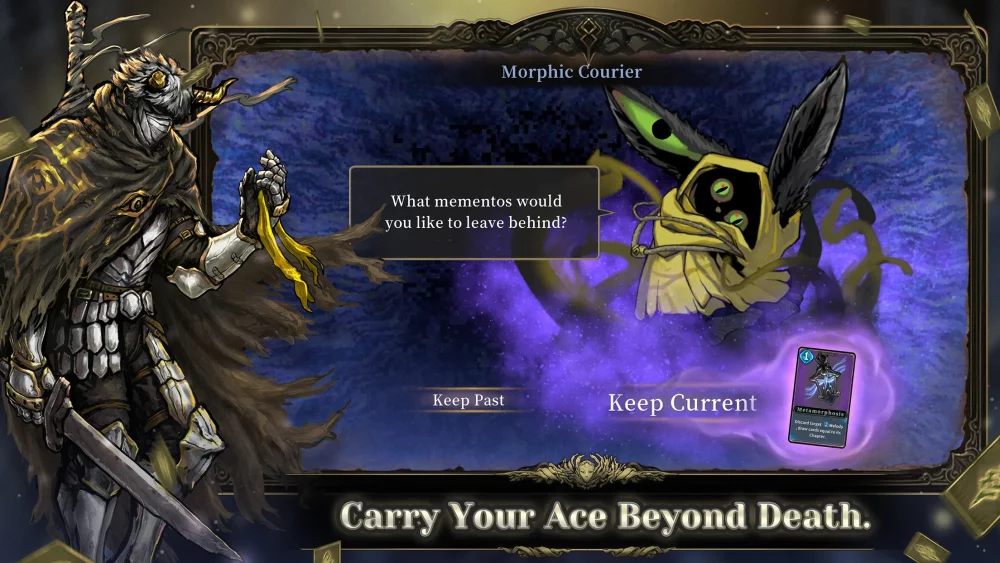
In Abyssal Soul, the Frost Watcher is often misunderstood as a traditional glass-cannon mage. However, the most effective way to play this character is to embrace the "Iron Wall" archetype. By prioritizing armor-stacking over burst damage spells, you can transform the Frost Watcher into an immovable object that scales its offensive output through sustained defensive turns. This guide breaks down exactly how to build, pilot, and optimize the Frost Watcher to turn your defense into your greatest offensive weapon.
The Defensive Philosophy: Why Armor is Your Primary Damage Source
In Abyssal Soul, the Frost Watcher’s kit contains hidden synergies that reward players for maintaining high armor pools. When you treat the Frost Watcher as a tank, you shift your win condition from "how much damage can I cast" to "how efficiently can I cycle my turns while shielded."
The "Iron Wall" strategy relies on the fact that many of the Frost Watcher’s passive traits trigger whenever you end your turn with active shield points. By stacking armor, you are not just mitigating incoming damage; you are fueling a passive damage engine that chips away at enemies without requiring you to expend energy on offensive cards. This creates a "set it and forget it" playstyle where you can confidently end your turn, knowing your defensive layers will absorb incoming hits and trigger retaliation effects simultaneously.
Mechanics of the "Fridge" (Armor-Stacking)
To successfully play the Frost Watcher, you must master the "Fridge" mechanic—the act of stacking armor to the point of near-invulnerability. This isn't about picking every defensive card you see; it is about selecting high-value, persistent shield generators.
Tactical Card Selection Priorities
- Persistent Mitigation: Prioritize cards that provide armor per turn rather than flat, one-time shield values. These allow you to scale your protection exponentially as the encounter progresses.
- Synergy Over Raw Power: Seek out relics and passives that amplify your shield generation based on the number of cards played. If a card offers a minor damage debuff alongside a massive shield boost, it is almost always mathematically superior to a pure damage spell.
- Deck Thinning: To maintain your shield engine, your deck must be lean. Remove low-impact cards that do not contribute to your armor-stacking or your energy efficiency. You want to draw your core defensive cards as often as possible.
Offense Through Durability: Ending Turns Faster
A unique aspect of the Frost Watcher is that the faster you complete your turn while fully shielded, the higher your total damage output becomes. This is because your damage is tied to your defensive state; every time you end your turn with full armor, you trigger automatic frost damage or elemental debuffs.
This "passive aggression" allows you to ignore complex attack rotations. Instead of spending your precious energy trying to micromanage offensive spells, spend it on your defensive cycle. By streamlining your deck to focus on high-value defensive spells, you reduce the time it takes to cycle through your turn. This speed-clearing approach is how you maximize the Frost Watcher’s potential, effectively turning your end-turn button into your most lethal weapon.
Strategic Progression and Gear Optimization
Your early-game progression should be laser-focused on acquiring gear that reinforces your defensive stats. Avoid the trap of picking up offensive gear that does not scale with your armor count.
Progression Tips:
- Early Game: Focus on acquiring cards that provide "Armor per turn" (APPT). This establishes your baseline survivability.
- Mid-Game: Seek out relics that grant bonuses for "Ending turns with X amount of Armor." This is where your damage output begins to outpace traditional builds.
- Late Game: Look for secondary mitigation tools. Even the best Frost Watcher build can face "true damage" or "armor-piercing" enemies. Keep a few crowd-control utility cards in your pocket to bridge the gap if your main engine is threatened.
Trade-offs and Limitations
While the Frost Watcher is a powerhouse, it is not without its weaknesses. Understanding these limitations is key to playing at a high level:
- Mobility Penalties: This build relies on standing your ground. Mechanics that require constant repositioning will disrupt your defensive cycle and cause your damage to plummet. If a boss forces movement, prioritize survival over maintaining your full "Fridge" state.
- Armor-Piercing Threats: Late-game enemies often feature abilities that bypass armor. In these encounters, rely on crowd control or status-effect removal to survive until your armor engine can recover.
- Burst Damage Requirements: In some niche scenarios where you must kill an enemy before they enrage, you may need to temporarily abandon the "Iron Wall" approach in favor of high-burst offensive spells. Always keep an eye on enemy health bars to know when to switch gears.
Expert Summary for High-Level Play
Mastering the Frost Watcher is about discipline. You must resist the urge to play like a standard mage and instead focus on the consistency of your defensive loop. By prioritizing cards that scale with your armor and keeping your deck lean, you create a character that is almost impossible to kill while simultaneously applying high-pressure damage. Remember: in Abyssal Soul, the Frost Watcher is at their most dangerous when they are at their most defensive. Keep your shield high, end your turns with purpose, and let your armor do the heavy lifting.

Free Abyssal Soul Codes
Current active codes and how to redeem them.

Sarah Williams
Sarah specializes in RPG and collection games, explaining team building, character growth, and beginner-friendly ways to avoid expensive early mistakes.
COMMUNITY
Player Comments
70 players commented on this guide.
Nice guide. I am checking the other Abyssal Soul articles next.
I tried this today and it worked better than my old setup.
This guide answered the exact question I had.
This helped me understand strategy much better.