
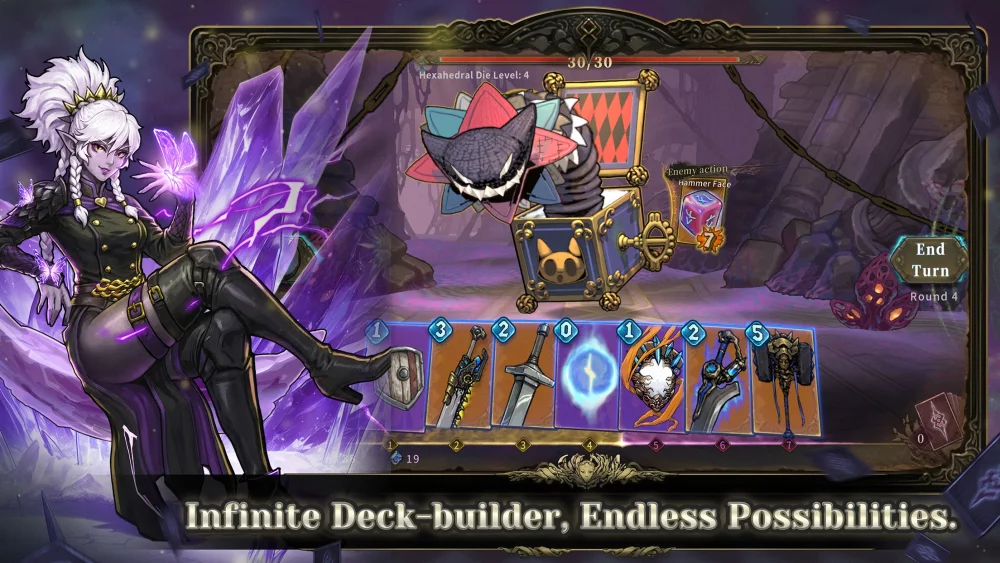
In Abyssal Soul, your success is defined as much by your character’s moral choices as by your deck-building prowess. The game’s unique "Karmic Debt" and "Soul Bond" systems create a web of consequences that directly impact your combat stats and progression. To thrive in the dark medieval fantasy world of Abyssal Soul, you must treat narrative choices not as flavor text, but as strategic resource management. If you ignore the ghosts of your past, you will find your character crippled by debuffs that make high-level encounters nearly impossible to clear.
Understanding Karmic Debt and Soul Bonds
The Karmic Debt mechanic is the primary driver of difficulty in Abyssal Soul. Every time you encounter an NPC linked to your character’s past life, you are presented with dialogue options that dictate your "Spiritual Alignment." Failing to fulfill requests or choosing paths that prioritize immediate gain over historical duty creates "Regret" stacks.
These stacks act as persistent debuffs. Each stack of Regret reduces your base "Soul Defense," making you significantly more vulnerable to the spectral and magic-heavy attacks common in the mid-to-late game.
Pro-Tip: Always check your "Promise Log" before entering a new region. If you see an outstanding promise, treat it as a priority quest. The penalties for neglecting these bonds far outweigh the cost of the materials required to settle them.
Resolving Thousand-Year Regrets
"Thousand-Year Regrets" are the ultimate test of your character’s narrative growth. These manifest when you ignore memory fragments found during exploration. If these fragments are left uncollected, they coalesce into a "Regret Manifestation"—a high-difficulty boss encounter that forces you to fight a distorted version of an ally you failed to save or honor.
To avoid this, you must engage with the world’s exploration phases systematically:
- Collect Memory Fragments: These are often hidden behind destructible environmental objects or guarded by minor mobs.
- Consult the Mirror of the Past: Use these mirrors to view the context of your character's failures.
- Choose the Vow: When prompted, "Fulfill the Vow" often requires rare items like "Ancient Spirit Dew." While this is a high cost, fulfilling the vow eliminates the Regret debuff permanently and frequently grants you a "Soul-Bound Blessing," which provides a flat percentage increase to your damage output for the remainder of that chapter.
Managing the Impact of Yin-Yang Separation
The Yin-Yang Separation state occurs during pivotal story moments where your character is stripped of their primary mentor or combat partner. Mechanically, this removes your "Synergy Bonus," which usually accounts for 20–30% of your total combat power.
To mitigate the dangers of this state, follow these strategies:
- Diversify Your Deck: Do not rely solely on synergy-based cards. Maintain a secondary set of "Independent Cultivation" cards that do not require an active partner to trigger.
- Use Soul Incense: This consumable item is essential during separation events. It provides a temporary shield that mimics the protection of your missing partner, preventing you from being one-shot by heavy-hitting enemies.
- Time Your Encounters: If the story indicates an upcoming separation, finish your major boss farming before triggering the narrative progression point.
Prioritizing Narrative-Driven Progression
Many players make the mistake of rushing toward the end-game, ignoring the "Mirror of the Past" sequences. This is a critical error. The "Insight" resource earned from these reflections is the only way to level up your "Soul Clarity" stat.
High Soul Clarity is vital for two reasons:
- Dialogue Checks: Late-game bosses often have dialogue-based triggers. High Soul Clarity allows you to influence these encounters, potentially bypassing the fight entirely or gaining a "First Strike" advantage.
- Cultivation Thresholds: You cannot progress your character’s core cultivation techniques (your primary source of damage scaling) if your Soul Clarity is too low. If you find your damage output has plateaued, check your history for unresolved bonds; a "Spiritual Blockage" is likely the culprit.
Balancing Trade-offs in Oath-Keeping
Strategic depth in Abyssal Soul comes down to the economy of your choices. You will frequently be forced to choose between upgrading your weapon or fulfilling a "Vow of the Past."
- The Power-Leveling Path: If you are struggling with a specific boss fight, skip non-essential Vows. Focus all your "Ancient Spirit Dew" on weapon crafting.
- The Completionist Path: If you want to unlock secret map areas and true endings, you must prioritize Vows. Many of the game’s most powerful artifacts are locked behind these narrative-heavy choices.
Common Mistakes to Avoid
- Ignoring the Promise Log: The most common cause of "Spiritual Blockage" is simply forgetting to resolve a pending oath from Chapter 1 or 2.
- Over-relying on Synergy: Players who build their decks solely around partner-based mechanics are often left helpless during the frequent Yin-Yang Separation story beats.
- Hoarding Rare Resources: Do not hoard "Ancient Spirit Dew" until the end of the game. The combat modifiers gained from fulfilling early-game Vows are essential to scaling your character effectively for the tougher encounters that follow.
By viewing your character’s history as a fundamental part of your build, you transform Abyssal Soul from a difficult slog into a masterclass in tactical role-playing. Remember: in this game, your past is your greatest liability, but if managed correctly, it becomes your most powerful weapon.

Free Abyssal Soul Codes
Current active codes and how to redeem them.

Emily Johnson
Emily writes practical mobile strategy guides with a focus on resource planning, base progression, and the early decisions that shape a long-term account.
COMMUNITY
Player Comments
132 players commented on this guide.
Good guide for Abyssal Soul players. The strategy part was useful.
The explanation is clear, especially for beginners.
This helped me understand strategy much better.
The tips are practical and easy to follow.