
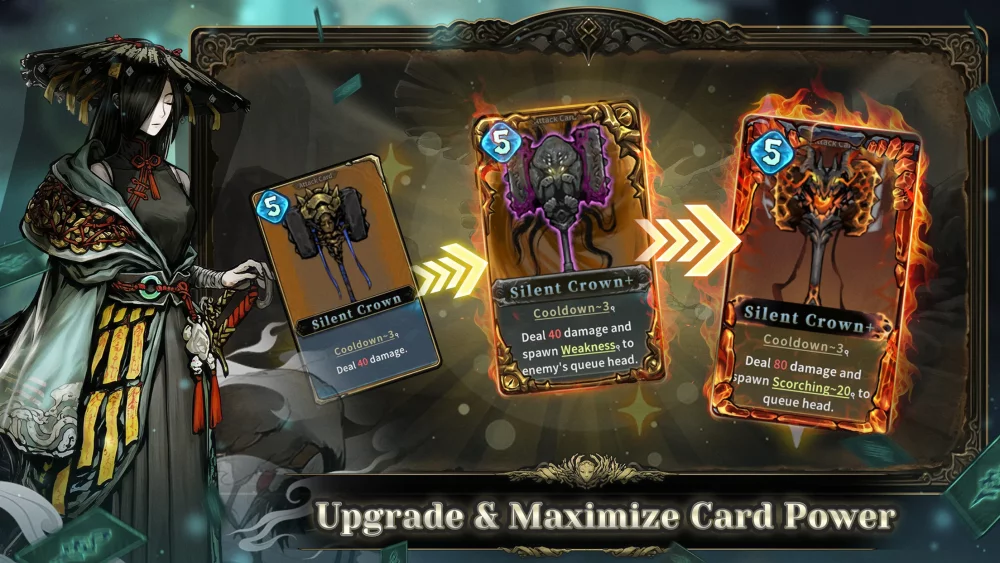
In Abyssal Soul, your character's combat effectiveness is defined by more than just your deck of cards. Success in later stages of a run depends heavily on how you manage your inventory of passive items, specifically Auras, Runes, and Charms. Understanding how these components stack and interact is critical for building a character capable of clearing high-difficulty encounters.
The Role of Passive Equipment
Unlike your active hand, passive equipment provides constant modifiers that influence every turn. To build an optimized character, you must learn to balance these three categories:
| Equipment Type | Primary Function | Tactical Priority |
|---|---|---|
| Auras | Global field effects or persistent stat modifiers | Used for foundational scaling |
| Runes | Specific ability enhancements or trigger effects | Used for specialized build crafting |
| Charms | Utility boosts and defensive thresholds | Used for survival and consistency |
Optimizing Passive Synergies
When selecting rewards after a combat encounter, players often default to cards. However, checking your current passive synergy should be your first priority.
- Aura Stacking: Auras often provide percentage-based increases to your base stats. If you have an Aura that increases your primary attack damage, look for Runes that trigger additional effects upon attacking. This creates a multiplicative damage increase rather than a simple additive one.
- Rune Trigger Management: Runes are most effective when they react to the card types you possess in your deck. If your deck relies on low-cost, high-frequency play, prioritize Runes that grant effects on "Card Played" or "Turn Start." Avoid Runes that require specific conditions you cannot reliably trigger.
- Charm Utility: Charms act as your safety net. In the mid-to-late game, enemy scaling can often result in one-shot scenarios. Use your Charm slots to mitigate weaknesses—such as adding damage reduction or status resistance—rather than purely chasing offensive stats.
Strategic Selection Tips
When navigating the procedural map in Abyssal Soul, prioritize encounter nodes that offer equipment rewards if your deck is already stable.
- Check for Overlap: Ensure your Auras do not conflict. If two Auras modify the same stat, calculate if they stack additively or if the game applies the higher value.
- Deck Alignment: If you find a rare Rune that significantly buffs a specific card archetype (e.g., Poison or Burn), pivot your subsequent card drafts to support that Rune. It is often more efficient to build around a powerful passive than to force a deck archetype that lacks synergy.
- Inventory Management: You have limited slots for these items. Do not be afraid to discard or replace lower-tier items for higher-rarity ones that provide broader benefits to your current build.
By focusing on how your Auras, Runes, and Charms modify your base performance, you shift your strategy from simply "playing cards" to creating a robust system that scales throughout your run. Always evaluate your passive loadout before finalizing your deck choices at the end of each stage.

Free Abyssal Soul Codes
Current active codes and how to redeem them.

Emily Johnson
Emily writes practical mobile strategy guides with a focus on resource planning, base progression, and the early decisions that shape a long-term account.
COMMUNITY
Player Comments
88 players commented on this guide.
The explanation is clear, especially for beginners.
Nice guide. I am checking the other Abyssal Soul articles next.
This saved me time in the early game.
Can you add more details about heroes in a future update?