
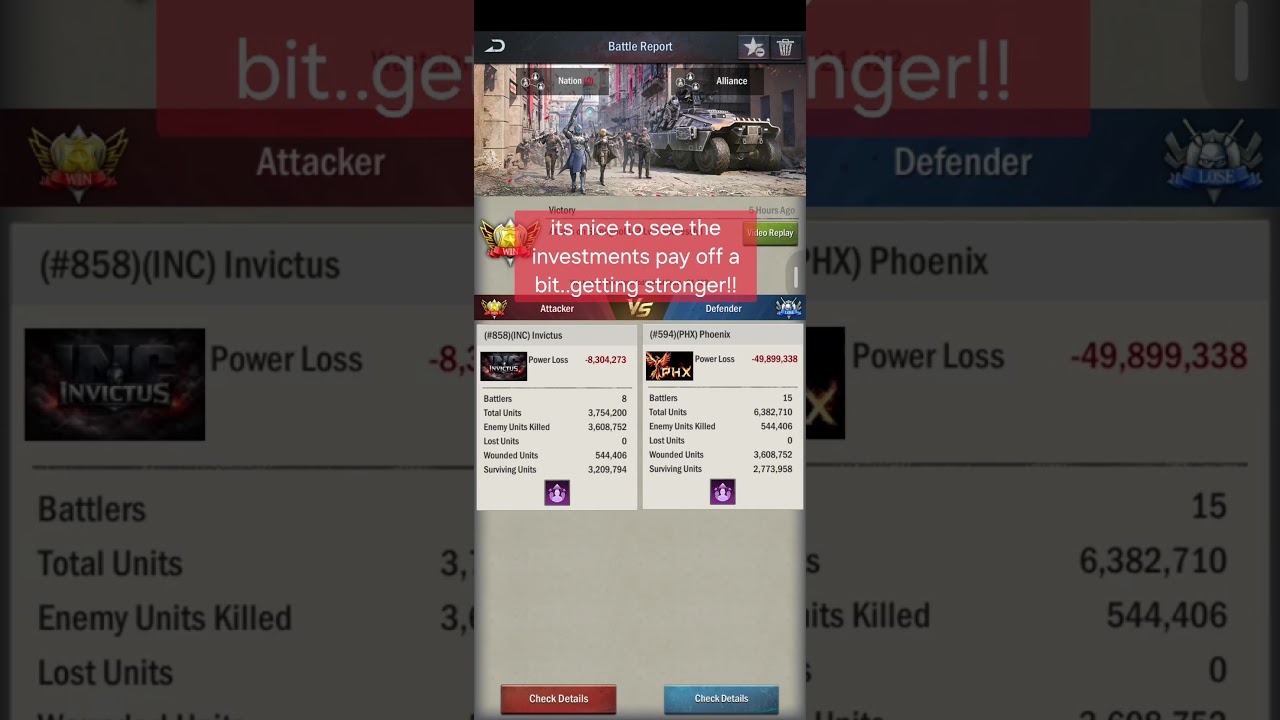
To stop fleet collapses in Age of Origins Wasteland combat, open your battle report and immediately check the casualty breakdown across your formation's rows. Because damage in Age of Origins resolves sequentially from front to back, catastrophic backline wipes almost always stem from an early frontline failure rather than inadequate backline defenses. If your front row is eliminated completely while your artillery or snipers take heavy casualties, your defensive buffer depleted before your primary damage dealers could dismantle the opposing vanguard.
How to Diagnose Frontline Collapse
Your first diagnostic priority is evaluating the survival of your frontline meat shields: Shredders, Tanks, and Armored Soldiers. When these units fall, incoming damage from opposing backline units and Titans shifts directly onto your fragile damage dealers.
A combat report showing 100% frontline losses alongside severe backline casualties indicates that your front row lacks sufficient hit points or sheer numbers. To correct this:
- Reinforce high-tier meat shields: Add higher-tier Shredders to absorb the initial enemy burst.
- Maintain tier padding: Include small increments of lower-tier frontline units to absorb multi-target damage and stall sequential attacks.
- Avoid over-defending: Dedicating too much fleet capacity to front-row defense lowers your total offensive output. If your frontline survives but the enemy takes minimal casualties, you have over-indexed on defense and must reallocate capacity back into offensive units.
Interpreting Mid-Range vs. Long-Range Performance
Combat reports show whether your damage composition aligns effectively with the enemy's formation. Compare individual unit kill tallies against incoming damage to determine whether to deploy Mid-Range Attack (MRA) or Long-Range Attack (LRA) fleets.
- Long-Range Formations (Snipers, Cannons): Standard setups deal consistent, safe damage from the rear. If Snipers survive fully but register low kills, the enemy's front-row defense or damage reduction exceeds your current attack attributes.
- Mid-Range Formations (Gunners, Storm Troopers): Mid-range units deliver higher burst damage against dense meat shields, but they sit closer to danger. If your Gunners suffer high casualties while dealing minimal damage, the frontline collapsed too quickly to support an MRA profile.
Use this breakdown to match report metrics to the proper fleet adjustment:
| Fleet Component | Primary Metric to Inspect | Diagnostic Indicator | Recommended Adjustment |
|---|---|---|---|
| Frontline (Shredders, Tanks) | Meat shield casualties | 100% loss alongside backline deaths | Increase frontline unit counts or upgrade Melee HP stats |
| Mid-Range (Gunners, Storm Troopers) | Unit casualties vs. kills | Heavy losses with low enemy damage | Add front-row shielding or switch damage core to Long-Range |
| Long-Range (Cannons, Snipers) | Total kill counts | Low kills despite full unit survival | Boost LRA modifiers or adjust targets to bypass armor |
| Support Titans & Warplanes | Ability activation & damage | Low skill impact before fleet routes | Prioritize defensive shields and reinforce basic troop counts |
Auditing Titan, Warplane, and Officer Stat Gaps
When fleet setups appear evenly matched but trade efficiency is drastically one-sided, inspect support units and passive modifiers in the report overview tab.
Titans and Warplanes
Review the combat log for skill activation timing. The Male Titan provides critical early-round mitigation and shields, while the Female Titan provides crowd control through shock and area-of-effect suppression. Warplane strikes add essential auxiliary damage. However, these assets multiply existing fleet performance; they cannot salvage an engagement if base troop counts and frontline bulk are severely outmatched.
Officer Modifiers and Equipment
Open the report's stat comparison screen to audit percentage discrepancies in Long-Range Attack, Melee HP, and overall damage reduction. Key combat Officers—such as Morgan, Saki, Zeus, and Alexandria—provide large percentage bonuses that significantly alter combat resolution. Additionally, high-tier Officer Equipment extensions provide specialized damage mitigation. If an opponent absorbs heavy attacks with minimal wounded counts, superior equipment and officer stats are neutralizing your damage regardless of fleet composition.
Step-by-Step Fleet Adjustments for the Next Battle
Follow this sequence to reconfigure your march after reviewing a Wasteland report:
- Check frontline survival: Confirm whether Shredders and Tanks survived the opening phases. If wiped out, increase frontline capacity by 5% to 10% on your next march.
- Select your damage profile: If the opponent fields heavy frontline armor, deploy MRA units to shred their vanguard, provided your front row can hold. If incoming burst damage is too high, retreat to an LRA configuration behind a reinforced meat shield.
- Compare modifier deltas: Check the stat comparison screen. If the enemy holds an insurmountable gap in Officer attack or HP percentages, avoid solo marches and coordinate alliance rally attacks instead.
- Monitor hospital capacity: Wasteland engagements produce massive wounded figures. Stop attacking before your city hospital overflows, as casualties taken past maximum capacity result in permanent troop loss.

Free Age of Origins Codes
Current active codes and how to redeem them.

Michael Smith
Michael covers live-service games, events, reward systems, and efficient daily routines, turning frequent updates into clear actions for players.
COMMUNITY
Player Comments
98 players commented on this guide.
I wish I had read this before upgrading the wrong thing.
Can you add more details about strategy in a future update?
Nice guide. I am checking the other Age of Origins articles next.
This guide answered the exact question I had.