
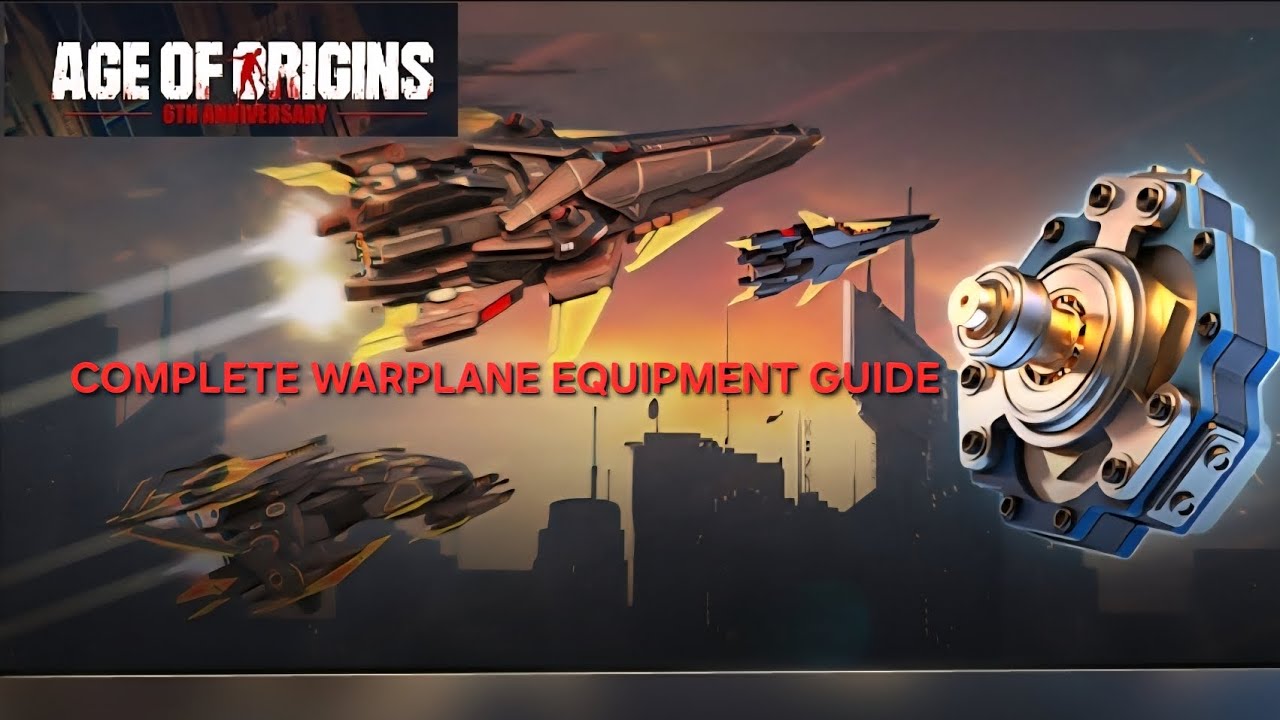
In Age of Origins, the Warplane is far more than a decorative fleet addition; it is a critical force multiplier that dictates the outcome of high-level skirmishes and alliance wars. To achieve dominance, you must move beyond basic upgrades and master the synergy between Warplane Components, Chips, and Cores. This guide provides the tactical blueprint for managing your resources, prioritizing stats, and ensuring your aerial support provides the maximum possible impact on your overall army combat efficiency.
Understanding the Warplane Equipment Hierarchy
The Warplane system functions as a modular enhancement layer for your fleet. Unlike officer skills or city structures, Warplane equipment provides percentage-based buffs that scale as your base stats grow. This makes them increasingly vital as you progress into the mid and late game.
The system is split into three core pillars:
- Components: These provide the secondary stat profile, crucial for filling gaps in your fleet's performance (e.g., specific unit damage or health).
- Chips: These act as fine-tuning modules that allow you to adapt your fleet to specific enemy compositions or defensive threats.
- Cores: The foundation of your aerial power. Cores act as a multiplier for all other equipment, making them the highest priority for long-term investment.
Maximizing Component Efficiency: The Power-to-Cost Ratio
Components are the backbone of your secondary stats. Many players make the mistake of leveling components randomly. Instead, you should adopt a "Universal First" strategy.
Strategic Component Priorities:
- Prioritize Attack and Damage: In Age of Origins, offense is the best defense. Focus resources on components that provide flat percentage bonuses to troop attack. These scale exponentially when paired with high-tier officers.
- Avoid Over-Specialization Early: While niche components (e.g., bonuses against specific unit types like Zombies or Raiders) are useful, they are dead weight in general PVP. Build a baseline of universal stat boosters before diversifying.
- The Power-to-Cost Threshold: Always evaluate the material cost against the stat gain. If a component upgrade provides a 0.5% boost for an exorbitant amount of rare materials, hold off. Use that capital to upgrade your Core instead, which will provide a greater return on investment for your total combat power.
Utilizing Chips for Tactical Flexibility
Chips are the most dynamic part of your Warplane loadout. While Components offer static, long-term growth, Chips should be treated as modular tools you swap based on your current combat environment.
Best Practices for Chip Management:
- Quality Over Quantity: It is significantly better to possess one high-level, refined Chip than a full loadout of low-level, unrefined ones. The stat bonuses on high-tier Chips are substantial enough to shift the outcome of a battle.
- Rotational Awareness: Keep a close watch on the event shop. Certain high-tier Chips appear during specific events or cycles. Save your event currency specifically for these items rather than spending them on general materials that can be farmed elsewhere.
- Counter-Building: If you are facing an opponent with high defensive resilience, swap in armor-piercing or damage-scaling Chips. Maintaining a small "arsenal" of different chips allows you to pivot your strategy without needing to reset your entire build.
The Role of Cores: The Engine of Combat Power
If Components and Chips are the tools, the Warplane Core is the engine. It is the most expensive, time-consuming, and impactful aspect of the entire system.
Why Cores Matter:
- The Multiplier Effect: A high-level Core increases the effectiveness of every other piece of gear equipped on your Warplane. Neglecting your Core while focusing solely on Components is a common mistake that leads to lower total power.
- Resource Management: Upgrading a Core creates a significant bottleneck for your city's economy. Never "all-in" your resources into a Core upgrade if it leaves you unable to heal troops or maintain your city’s defenses. Always keep a reserve of speed-ups and resources for emergency military production.
- Long-Term Planning: Treat the Core as a marathon project. Map out your material requirements over a two-week period. By aligning your resource consumption with recurring daily and weekly events, you can offset the costs and maintain steady progression without stalling your city's growth.
Strategic Planning and Common Pitfalls
To stay competitive in Age of Origins, you must avoid the "Resource Trap." Many players spread their resources thin across all three categories, resulting in a Warplane that is "jack of all trades, master of none."
Follow these steps to optimize your growth:
- Analyze Combat Logs: If your fleet is losing, check your combat logs. Are you lacking health (defensive longevity) or attack (killing power)? Upgrade the specific Component that addresses the weakness identified in your logs.
- Align with Events: Never perform major upgrades outside of events that offer rewards for power increases. The extra materials earned from event milestones can often pay for 20-30% of your next upgrade.
- Consistency is Key: Set a weekly goal. For example, aim to upgrade one component slot by one tier per week. This prevents the frustration of "stagnant power" and keeps your fleet scaling alongside your server's top players.
Final Verdict:
The Warplane system is the ultimate differentiator in Age of Origins. By prioritizing Cores for total power, Components for consistent stat scaling, and Chips for tactical versatility, you create a fleet that is prepared for any threat. Remember: strategy, patience, and event-based resource usage are the hallmarks of a top-tier commander. Focus your investment, monitor your combat logs, and evolve your Warplane to ensure you remain an unstoppable force in the wasteland.

Free Age of Origins Codes
Current active codes and how to redeem them.

Michael Smith
Michael covers live-service games, events, reward systems, and efficient daily routines, turning frequent updates into clear actions for players.
COMMUNITY
Player Comments
124 players commented on this guide.
Can you add more details about strategy in a future update?
The tips are practical and easy to follow.
I wish I had read this before upgrading the wrong thing.
Good guide for Age of Origins players. The strategy part was useful.