
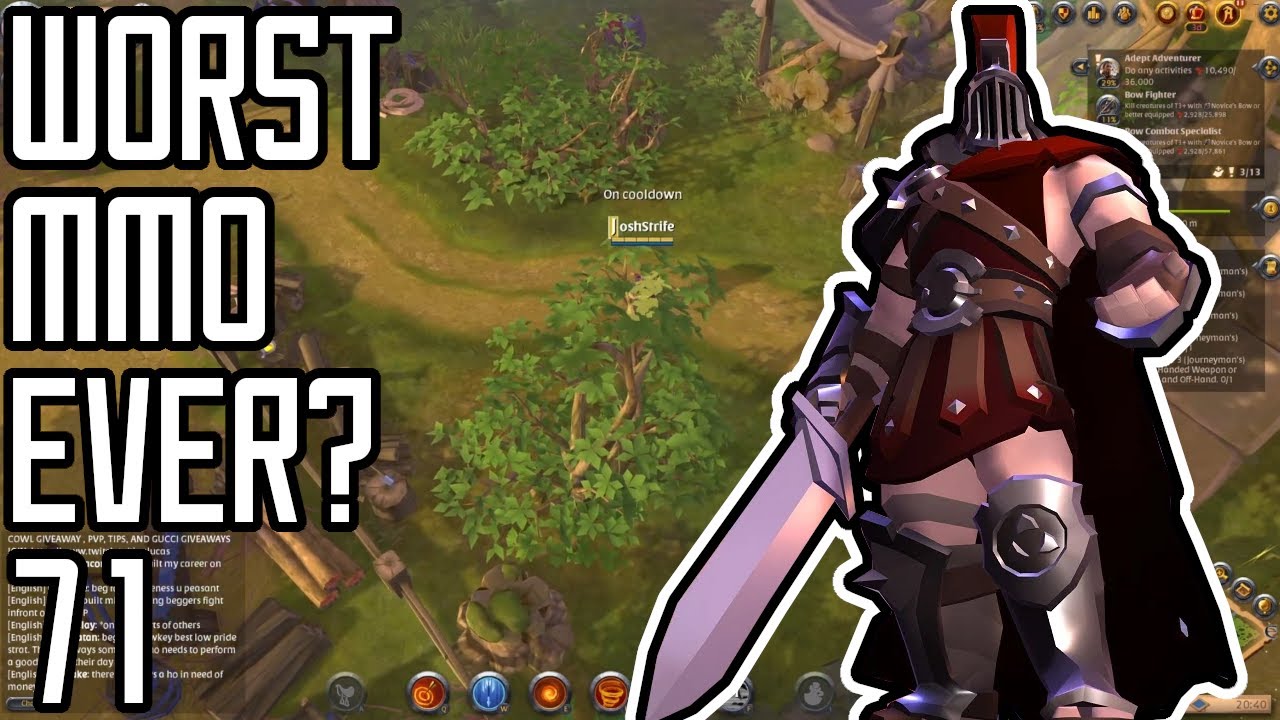
In Albion Online, the transition from a casual gatherer to a seasoned veteran is marked by a fundamental shift in perspective: you must stop viewing your gear as a permanent extension of your character and start treating it as a disposable tool for wealth generation. Albion Online is built on a ruthless, player-driven economy where full-loot PvP is the engine that drives consumption. If you are hoarding high-tier gear in your bank, you are not playing the game; you are merely delaying your inevitable transition into a more efficient, profit-oriented player.
The Psychology of "Gear Fear"
The greatest adversary in Albion Online is not a rival guild or a gank squad; it is "gear fear." This psychological barrier prevents players from entering dangerous zones, effectively locking them out of the game's highest-reward content.
To overcome this, you must decouple your self-worth from your inventory. In this sandbox, your true power is not found in a piece of armor, but in your specialization levels on the Destiny Board. When you die and lose your gear, you lose a temporary asset, but you retain the permanent combat proficiency you have earned. Once you accept that death is a mathematical certainty—a "tax" for entering high-reward territory—you can stop playing defensively and start playing optimally.
Standardize Your Loadouts: The "Set and Forget" Strategy
The most successful players in Albion Online do not hand-pick every item for every excursion. Instead, they utilize a "standard kit" strategy.
- Bulk Purchasing: Buy 10 to 20 identical sets of gear at a time. This reduces your time spent in the market and creates a psychological buffer; when you lose a set, you simply pull the next one from your bank without hesitation.
- Tier Optimization: Choose a tier you can afford to lose at least ten times without damaging your overall silver reserves. If you are constantly checking your wallet after a death, your loadout tier is too high for your current income stream.
- The "3-Death" Rule: If you cannot replace your entire gear set after three or four deaths using the profits from your activities, you are either in the wrong zone or your current activity is not profitable enough to sustain your risk level.
The Circular Economy: Why Your Loss Matters
Albion Online features a fully player-driven economy. Every sword, shield, and mount was crafted by a player, transported by a player, and sold by a player.
When you lose a set of gear in the Black Zone, you are not just losing silver; you are feeding the game's ecosystem. You are providing the "demand" that keeps gatherers and crafters employed. Conversely, when you win a fight, you are harvesting the assets of others. Viewing your gear as a consumable resource—much like a health potion or a meal—takes the sting out of a defeat. If you find yourself consistently losing more than you earn, pivot your gameplay toward the foundational pillars of the economy: gathering and refining. These professions provide the raw materials that allow the rest of the world to function, ensuring you have a steady income regardless of your PvP success.
Strategic Positioning and Risk Mitigation
Risk in Albion Online is never binary; it is a sliding scale based on geography and awareness. Mastering how to navigate these zones is the difference between a profitable session and a total loss.
- Yellow Zones: Best for learning combat mechanics and faction warfare with zero risk of total loss. Use these to test new builds.
- Red Zones: High risk, but with a "hostile player" counter that warns you when gankers are nearby. These are excellent for mid-game players looking to transition into dangerous territory.
- Black Zones: The endgame of Albion Online. There are no safety nets here. To survive, you must prioritize mobility—use fast mounts, keep an eye on the mini-map, and understand that any player who is not in your party is a potential threat.
Always have an exit strategy. If you are gathering, never stray too far from your mount, and always keep your dismount button ready. If you see a cluster of red names, do not wait to be engaged; reposition immediately.
Leveraging the Destiny Board for Long-Term Growth
The Destiny Board is the only true "permanent" progress in Albion Online. Because your combat effectiveness is tied to your mastery of specific weapon and armor lines, you should specialize early.
- Avoid the Jack-of-All-Trades Trap: Spreading your "Fame" across too many different weapon types will leave you underpowered. Focus on one or two weapon trees until you hit higher tiers.
- The Power-to-Cost Ratio: As you level up, you will find that you can perform better in lower-tier gear than a novice can in high-tier gear. This is your competitive advantage. High specialization allows you to wear "cheap" gear while still outputting enough damage to secure kills and survive encounters.
Practical Tips for Economic Sustainability
- Market Flipping: Use the market to your advantage by identifying regional price differences. Buy resources where they are cheap and transport them to cities where they are in high demand for crafting.
- Faction Warfare: Join a faction to participate in safe or high-risk warfare. Faction points can be converted into tradable goods, providing a consistent income stream that can offset your PvP gear losses.
- Repairing vs. Replacing: Always check the repair cost of your gear after a close call. Often, it is cheaper to sell damaged gear and buy a fresh set from the market than it is to pay the repair fee at a city vendor.
In Albion Online, the goal is not to avoid risk, but to manage it so that your gains consistently outweigh your losses. By treating your gear as a tool, specializing your skills, and respecting the circular nature of the economy, you will find that the "worst" parts of the game are actually the most rewarding. Embrace the risk, maintain your standard kits, and keep moving forward.
Free Albion Online Codes
Current active codes and how to redeem them.

James Brown
James focuses on Android gaming on PC, emulator setup, controls, performance tuning, and practical troubleshooting for longer play sessions.
COMMUNITY
Player Comments
64 players commented on this guide.
The tips are practical and easy to follow.
Can you add more details about strategy in a future update?
This helped me understand strategy much better.
I tried this today and it worked better than my old setup.