
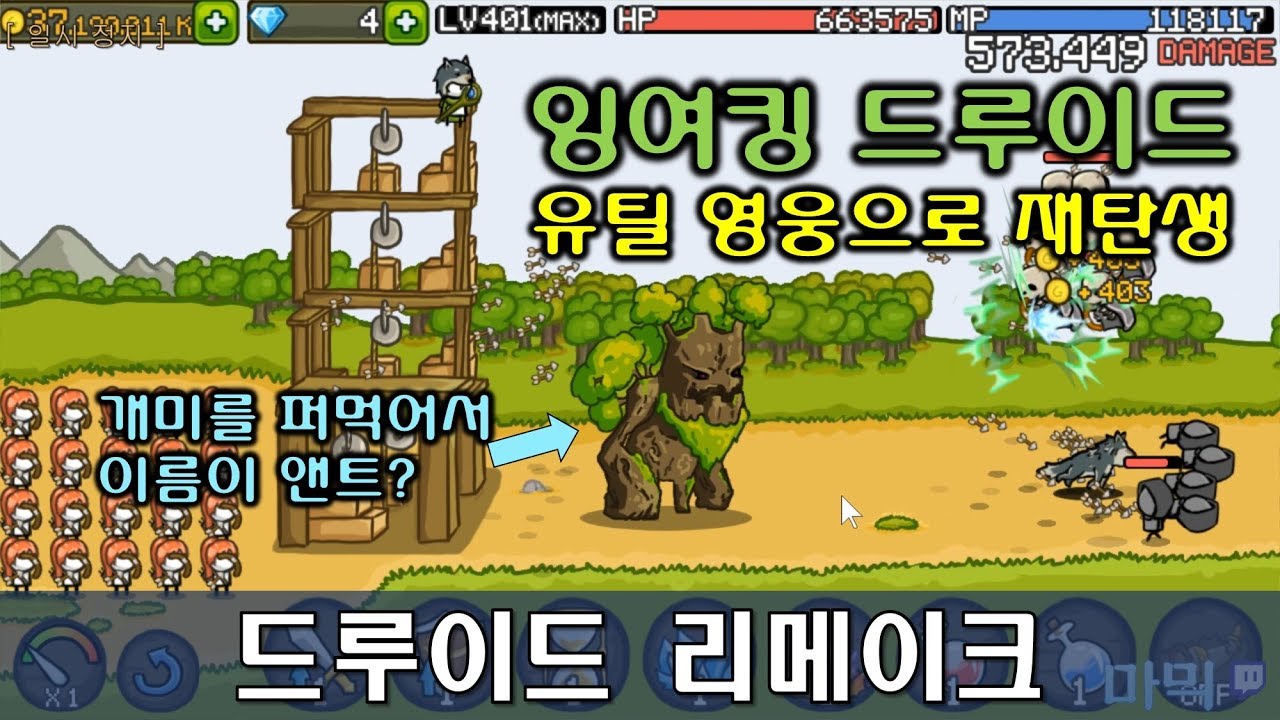
The recent update to Archer Castle has fundamentally transformed the Druid from a passive, mana-efficient unit into a top-tier utility powerhouse. Previously, the Druid’s only notable trait was his lack of mana consumption, which made him an underwhelming choice for mid-to-late-game players. The remake changes this dynamic entirely by introducing Ent summoning, a mechanic that provides essential crowd control and frontline survivability. For players looking to climb higher in siege ranks or push through difficult boss encounters, the Druid now occupies a vital role as a tactical disruptor.
The Evolution of the Druid: From Passive to Proactive
In the early days of Archer Castle, the Druid was often relegated to the bench because his contribution to damage was negligible. While he didn't drain your mana reserves, he also failed to impact the flow of battle. The remake shifts the Druid’s design philosophy toward "Battlefield Presence."
By trading his mana-less identity for a summon-based toolkit, the Druid now serves as a physical buffer. In a game where your castle walls are your ultimate health bar, having a hero who can place obstacles between you and the enemy is invaluable. This shift makes him a mandatory consideration for any deck composition that prioritizes survivability and lane control over raw, glass-cannon DPS.
Mastering the Ent Summoning Mechanic
The core of the Druid’s new kit is his ability to manifest Ents on the battlefield. These summoned units are not merely aesthetic; they function as temporary, high-health barricades that force enemy AI to recalculate their pathing or stop to engage.
Why Ents Change the Game:
- Aggro Drawing: Bosses and elite enemies often prioritize the nearest target. By summoning Ents, you effectively "taunt" enemies, drawing their attention away from your primary hero stack or your castle walls.
- Lane Stall: During intense siege waves, Ents act as speed bumps. Even a few seconds of delay allows your tower archers to deal significantly more damage before enemies reach your walls.
- Frontline Rotation: Because the Druid periodically refreshes his summons, you can maintain a near-constant frontline presence throughout a long battle, provided the Druid stays alive.
Strategic Placement for Siege Defense
In Archer Castle, positioning is everything. To maximize the Druid’s impact during siege defense, you must treat him as a "Frontline Anchor."
- Avoid the Backline: Placing the Druid too far behind your main archer stack can result in Ents spawning too late to intercept fast-moving ground units. Place him closer to the front ranks to ensure his summons materialize right in the enemy's path.
- Synergy with Slows: Pair the Druid with heroes that provide area-of-effect (AoE) slows or knockbacks. When enemies are slowed and blocked by an Ent, they become "sitting ducks" for your high-damage heroes to pick off without the risk of the enemies reaching your wall.
- Wave Timing: If your siege strategy involves holding for specific waves, save your Druid’s deployment (if using manual activation) for the moment the "elite" mob wave appears. The Ents will absorb the initial damage that would otherwise chunk your castle wall health.
Optimizing for Boss Encounters
Boss fights in Archer Castle require a delicate balance of DPS and survival. The Druid thrives here by serving as a sacrificial layer.
Many bosses have high-damage abilities that target the nearest unit. If you rely on glass-cannon heroes, one bad hit can end your run. By using the Druid, your Ents act as a buffer. If a boss is about to launch a devastating attack, a well-timed Ent summon can soak that damage, keeping your key utility heroes alive long enough to land their cooldown-heavy skills. Always ensure the Druid is positioned in a way that his summons manifest directly in front of the boss, effectively "tethering" the boss to a single spot.
Identifying Trade-offs and Limitations
While the Druid is a massive upgrade, he is not a "plug-and-play" solution for every situation. Understanding his limitations is key to high-level deck building:
- The "Slot" Cost: Every hero you add to your lineup competes for a slot. If your current deck is already clearing content quickly, swapping out a high-damage hero for the Druid might actually slow down your clear times. Only include the Druid if your primary issue is survivability or getting overwhelmed by ground units.
- AoE Vulnerability: Ents are durable, but they aren't immortal. If a boss or elite enemy features heavy AoE damage, the Ents may be destroyed instantly. In these cases, the Druid’s value drops significantly.
- Leveling Priority: Because the health of your summoned Ents scales with the Druid’s level, an under-leveled Druid will see his summons evaporate instantly against high-level mobs. Do not expect him to perform well unless you invest the gold to keep his level competitive with the rest of your deck.
Final Recommendations for Your Roster
To get the most out of the Druid in Archer Castle, follow these steps:
- Test the Buffer: Slot the Druid into your defensive formation for 5–10 waves. Observe where the Ents spawn. If they are consistently dying before they can block enemies, move the Druid forward.
- Evaluate DPS Loss: Compare your total damage output before and after adding the Druid. If your clear speed drops by more than 10%, the Druid is likely not the optimal choice for that specific farm node.
- Complement, Don't Replace: The Druid is a support unit. Do not build your strategy entirely around him. He works best as an insurance policy that allows your damage dealers to do their jobs safely.
By treating the Druid as a tactical tool rather than a damage dealer, you can leverage his remake to stabilize your defense, protect your most valuable heroes, and push Archer Castle content that previously felt out of reach.

Free Archer Castle Codes
Current active codes and how to redeem them.

James Brown
James focuses on Android gaming on PC, emulator setup, controls, performance tuning, and practical troubleshooting for longer play sessions.
COMMUNITY
Player Comments
86 players commented on this guide.
This helped me understand strategy much better.
The explanation is clear, especially for beginners.
I tried this today and it worked better than my old setup.
This saved me time in the early game.