
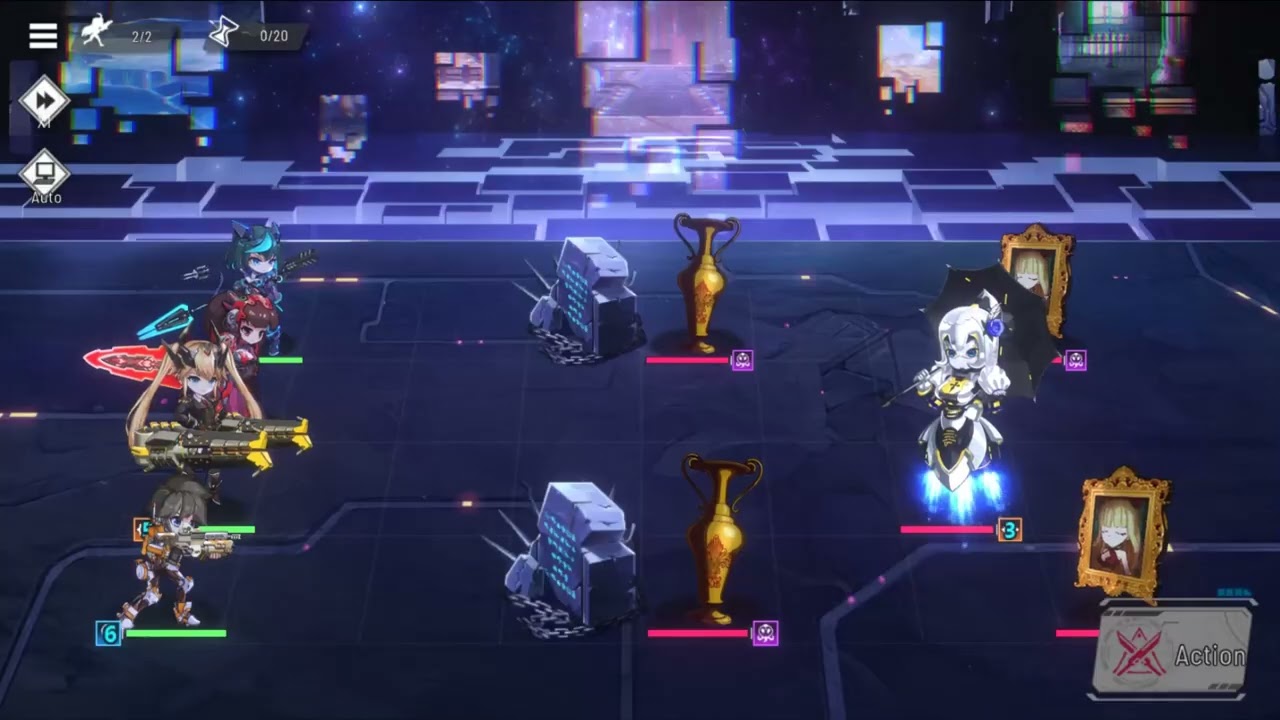
To dominate the Infinite War mode in Battlezone Saga: Gacha Diva, you must pivot from standard campaign tactics toward sustained damage output and survival-focused squad builds. Unlike fixed campaign stages, Infinite War functions as an endless scaling challenge where enemy stats inflate exponentially. Success requires moving away from "glass-cannon" compositions in favor of calculated hero synergies, resource management, and precise formation control. By optimizing for endurance, you can push further into the high-tier waves and maximize your seasonal rewards.
Understanding Infinite War Scaling Mechanics
The core challenge of Infinite War is its dynamic difficulty curve. As you progress through waves, the enemy’s health pools and damage output increase in a non-linear fashion. This creates a "stat check" environment that rapidly punishes teams lacking a comprehensive defensive or sustain component.
In the early waves, raw power might carry your squad. However, as the enemy scaling accelerates, you will notice that individual hero damage begins to plateau while incoming damage surges. To survive, you must move beyond thinking of combat as a static event and start viewing it as an attrition simulation. The key mechanic to respect here is the "Sustain Threshold"—the point at which enemy damage exceeds your team’s healing or damage-mitigation output. Your goal is to delay this threshold for as long as possible through smart hero selection and gear optimization.
The Optimal Squad Composition for Endless Waves
To push deep into the infinite tiers, your team composition must transition from individual hero strength to cohesive synergies. In Battlezone Saga: Gacha Diva, the most successful commanders build around a "Core Trio" and two utility slots.
- The Primary Tank (The Anchor): You need a hero with high physical and magical damage-reduction passives. Avoid tanks that rely solely on evasion, as high-wave enemies often have increased accuracy stats that make evasion-based builds unreliable.
- The Sustained Healer (The Lifeline): Your healer should have low-cooldown healing abilities or passive regeneration effects. Heroes who can provide party-wide shields are often more valuable than pure healers, as shields effectively increase the team’s maximum health pool, preventing one-shot deaths.
- The Damage Dealers (The Engines): Utilize heroes who possess stacking damage buffs. In long-form content like Infinite War, a hero who gains +5% damage for every basic attack is exponentially more valuable than a hero who deals a large burst of damage once every 30 seconds.
Recommended Formation:
- Vanguard: Primary Tank (Center)
- Mid-Line: High-Output Damage Dealer (Stacking focus)
- Mid-Line: Support/Debuffer (Focus on armor shred or slow effects)
- Back-Line: Dedicated Healer
- Back-Line: Secondary DPS (AoE focus to clear trash mobs)
Mastering Skill Timing and Cooldown Management
Resource management in Infinite War is the difference between clearing a wave and being overwhelmed. Because you face a continuous stream of enemies, using your Ultimate abilities on low-health "trash" mobs is a common mistake that leads to failure when elite waves spawn.
- The "Hold" Strategy: Always save your crowd-control (CC) abilities for when elite enemies or "boss-type" units appear. Staggering an elite unit while your team focuses fire can prevent the enemy from wiping your healer.
- Rotation Staggering: Do not fire all your Ultimate abilities simultaneously. By staggering your team’s heavy damage abilities, you create a "constant damage pressure" that keeps enemies in a state of hit-stun or broken armor, effectively reducing the damage your tank takes.
- Energy Cycling: Monitor your healer’s energy bar constantly. If you are approaching the end of a wave, stop using non-essential skills to ensure your healer enters the next wave with full energy, ready to mitigate the initial burst of the new encounter.
Navigating Trade-offs: When to Pivot
Not every high-tier hero is viable in Infinite War. Characters with high burst potential but long cooldowns often struggle to maintain relevance during high-speed, late-stage waves. If you find your progress stalling, look at your combat logs.
If your tank is dying too quickly, you may need to swap a DPS unit for a secondary support or a "bruiser" character who provides damage-reduction buffs. If you are reaching the time limit on waves, your team lacks the necessary "ramp-up" damage. In this case, ensure your DPS units have gear sets that prioritize Attack Speed or Critical Damage to maximize the effectiveness of their stacking passives.
Practical Tips for Efficiency
- Formation Shifting: Don't be afraid to experiment with your grid positioning. If a specific enemy type is focusing your healer, shift your healer to the opposite corner of the grid or place your tank directly in front of them to block line-of-sight attacks.
- Combat Log Analysis: After every failed run, review the death logs. If your healer is the first to fall, your back-line protection is insufficient. If your tank falls, your gear levels or mitigation buffs are the bottleneck.
- Seasonal Focus: Remember that Infinite War rewards are vital for upgrading your hero gear. Treat each run as an investment; even if you don't hit a new personal best, the materials gathered are essential for pushing your power level high enough to break your current ceiling.
By focusing on sustain, managing your skill rotations with discipline, and iterating on your squad composition based on specific enemy threats, you will successfully navigate the scaling challenges of Infinite War and secure your place among the top commanders in Battlezone Saga: Gacha Diva.

Free Battlezone Saga: Gacha Diva Codes
Current active codes and how to redeem them.

Sarah Williams
Sarah specializes in RPG and collection games, explaining team building, character growth, and beginner-friendly ways to avoid expensive early mistakes.
COMMUNITY
Player Comments
78 players commented on this guide.
This helped me understand heroes much better.
This guide answered the exact question I had.
Nice guide. I am checking the other Battlezone Saga: Gacha Diva articles next.
Can you add more details about heroes in a future update?