
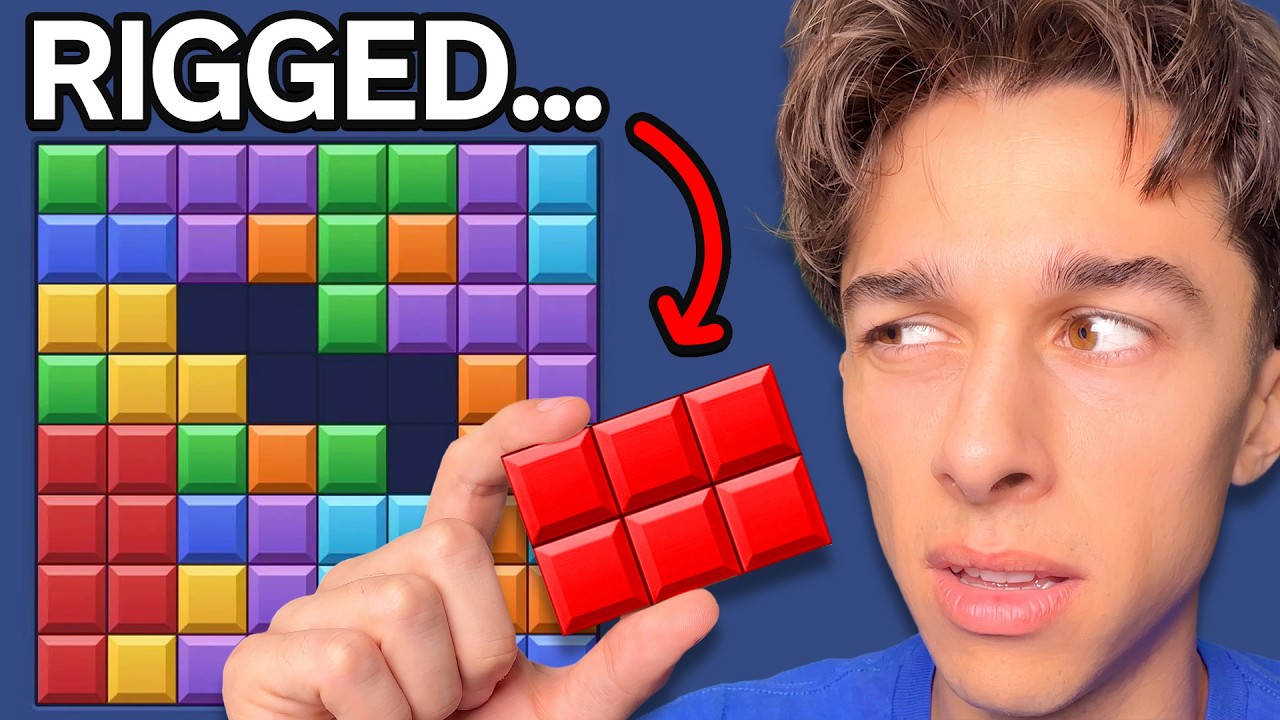
In Block Blast!, piece generation is not a random draw from a standard bag. Instead, the game's spawning routine scans your 8x8 board in real time to generate batches of three pieces based on your open coordinates, empty clusters, and board density.
Because the algorithm only checks whether at least one piece in a new trio can legally fit on the board, it frequently generates combinations that cannot all be placed. To prevent sudden game-overs, you must proactively manage open space to accommodate bulky pieces before the algorithm locks your grid.
The Single-Piece Validation Rule
The engine generates each trio by filtering shape candidates against your current empty tiles. However, the generator evaluates pieces independently rather than simulating a complete three-turn sequence:
CanPlace(Piece 1) OR CanPlace(Piece 2) OR CanPlace(Piece 3) == TRUEIf a single piece fits into an available opening on the current board, the generator approves the entire trio. It does not check whether placing that first block will consume the only available space required by the remaining two blocks. If you place a small filler first, you can easily eliminate the only valid placement for the other two shapes, causing an instant loss on a turn that was mathematically locked from the moment the tray spawned.
How Score and Combos Shift Piece Weights
As your cumulative score climbs and combo streaks continue, the spawner shifts its probability weights toward bulky, awkward shapes that accelerate board congestion.
| Piece Category | Grid Footprint Examples | Spawner Behavior |
|---|---|---|
| Micro Fillers | 1x1 dot, 1x2 domino, 2x2 square | Appears frequently early in runs or right after a full board clear. |
| Elongated Strips | 4x1 and 5x1 lines | Weighted heavily during high scores to punish boards missing open edge-to-edge lanes. |
| Heavy Shapes | 3x3 square, large L-shapes, T-blocks | Injected aggressively during combo chains to break up fragmented perimeter layouts. |
Clearing rows exclusively through the center while leaving edges cluttered creates broken negative space. The engine detects this fragmented layout and responds by queuing 3x3 blocks and 5-tile bars, which require contiguous clearance to place.
Core Habits to Counter Algorithmic Lockouts
To survive higher difficulty weightings, structure your board so it continuously satisfies the spawner's clearance checks:
- Place the most restrictive piece first. Because the generator only validates against the board state at the start of the trio, deploy your largest or most awkward block immediately while available space is at its peak.
- Preserve a permanent 3x3 safe zone. Keep at least one 3x3 area clear in a corner or quadrant. Maintaining contiguous space prevents heavy square spawns from ending your run instantly.
- Avoid isolated single-tile holes. Creating checkerboard patterns leaves small gaps that larger multi-tile blocks cannot fill. A grid full of disconnected pockets restricts placement options and makes subsequent drops much harder to clear.
When to Use the Second-Chance Revive
Sudden lockouts feed directly into the game's revive prompt, offering a continue in exchange for watching an ad. Accepting a revive clears an isolated cluster—often near the center—but does not reset the overall density of your board.
Only accept a revive if the cleared space immediately allows you to complete a full row or column clear on your next move. If your outer borders remain clogged with mismatched shapes, the spawner will evaluate the same congested board conditions and produce another terminal trio within one or two cycles.
Free Block Blast! Codes
Current active codes and how to redeem them.

Michael Smith
Michael covers live-service games, events, reward systems, and efficient daily routines, turning frequent updates into clear actions for players.
COMMUNITY
Player Comments
40 players commented on this guide.
The explanation is clear, especially for beginners.
Can you add more details about updates in a future update?
I wish I had read this before upgrading the wrong thing.
This saved me time in the early game.