
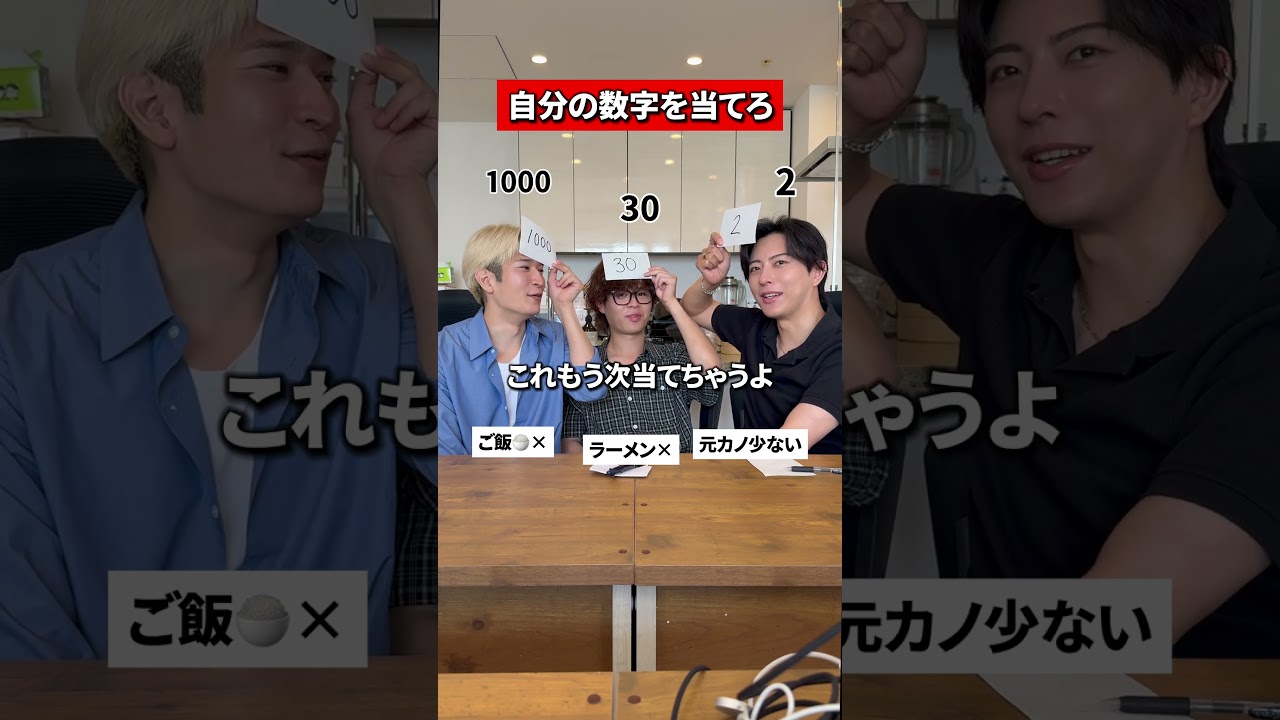
To deduce your secret number card in Charades - Family & Party Game, ask binary bisection questions that cut your active range in half every turn, then calibrate your exact value using relative scale analogies and group reaction tells. Establishing strict mathematical boundaries early prevents wasted turns and isolates your target value before round timers expire.
Narrowing the Field with Binary Halving
The fastest deduction method is splitting the active numerical range in half on your opening turn. When you hold an outward-facing number card that only your teammates can see, ask whether your secret integer sits strictly above or below the arithmetic midpoint. In a standard 1 to 100 round, asking whether your number is greater than 50 immediately eliminates half the board. Repeating this split narrows fifty remaining candidates to twenty-five, then twelve, and then six.
Avoid using early turns on discontinuous properties, such as asking if the number is odd or if it is a multiple of five. While these questions technically eliminate cards, they leave the remaining possibilities scattered across the entire board. Contiguous binary halving maintains a firm upper and lower boundary, confining your card to an ever-shrinking corridor.
Calibrating Numbers with Relative Scale Prompts
When house rules or round formats prohibit asking direct numerical questions, prompt the room with contextual analogies across an agreed-upon real-world scale. Asking teammates to rate your card on an intuitive spectrum—such as temperature, daily inconveniences, or emotional intensity—allows the collective consensus of the room to anchor your relative position.
| Anchor Bracket | Target Pool | Scenario Prompts | Expected Room Feedback |
|---|---|---|---|
| Low Anchor | 1% to 25% | Freezing winter chill, untied shoelace, minor paper cut | Quick headshakes, light laughter, effortless dismissal |
| Mid-Low Anchor | 26% to 50% | Room temperature, missing a green light, doing laundry | Slight nods, calm consensus, mild affirmation |
| Mid-High Anchor | 51% to 75% | Hot bathwater, flat tire on a workday, winning a raffle | Energetic agreements, engaged posture, decisive nods |
| Peak Anchor | 76% to 100% | Scorching desert heat, house fire, lottery jackpot | Wide eyes, intense vocal reactions, unanimous alarm |
You can refine narrow margins by contrasting two adjacent scenarios. For instance, asking whether a situation is worse than burning dinner but milder than getting your car towed forces teammates to evaluate a compact twenty-point window without speaking raw numbers.
Reading Hesitations and Social Reaction Tells
Monitoring how quickly your group responds reveals when your secret number sits directly on a boundary line.
- Instant, unified replies: An immediate chorus of "Yes" or "No" indicates your card is comfortably inside safe territory, far from your proposed test boundary.
- Hesitations and murmurs: If the room pauses, exchanges glances, or offers conflicting murmurs after a threshold question, your card is likely straddling that line. For example, a two-second hesitation when testing the number 70 usually places your card between 71 and 74.
- Extreme emotional tells: Sudden laughter or collective smirks often accompany floor values like 1, 2, or 3, whereas gasps and wide eyes signal ceiling numbers near 99 or 100.
Deduction Protocols by Deck Size
Adjust your questioning cadence to fit the active deck size so you balance speed against accuracy:
- 1 to 10 Micro Decks: Probe the center value at 5 on your first turn. Check an odd/even attribute or extreme pole adjacency on your second turn, then declare your final number on turn three.
- 1 to 20 Standard Decks: Test the 10 threshold immediately. Halve the remaining cluster at either 5 or 15 on turn two, and test a three-card boundary on turn three before locking in your answer.
- 1 to 100 Extended Decks: Execute two rapid splits at 50, followed by 25 or 75. Switch to contextual scale comparisons once your bracket drops under fifteen cards, and declare an exact match only after two separate anchors align.
Avoiding Common Deduction Mistakes
Two primary mistakes waste turns during deduction rounds:
- Premature exact guessing: Calling out a specific number like "Is it 43?" when five or six viable candidates remain eliminates only one possibility if incorrect. Instead, phrase the question as a threshold—such as "Is it 43 or higher?"—to cut the remaining pool in half regardless of the answer.
- Relying on a single player's bias: Individual teammates often disagree on subjective scales. Address your prompts to the group as a whole and wait for a consensus nod rather than reacting to the first vocal response.
Free Charades - Family & Party Game Codes
Current active codes and how to redeem them.

Michael Smith
Michael covers live-service games, events, reward systems, and efficient daily routines, turning frequent updates into clear actions for players.
COMMUNITY
Player Comments
126 players commented on this guide.
The explanation is clear, especially for beginners.
Nice guide. I am checking the other Charades - Family & Party Game articles next.
Can you add more details about strategy in a future update?
This helped me understand strategy much better.