
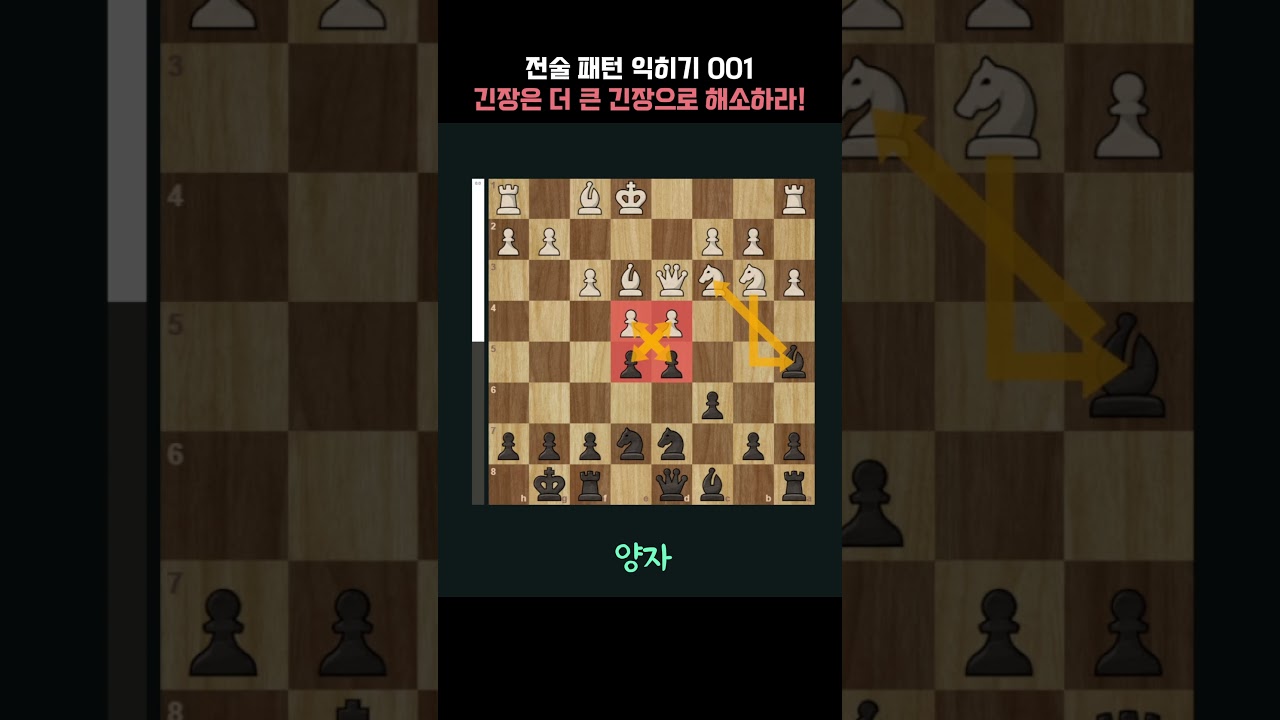
When pawns and pieces clash in the center of the board in Chess.com - Play and Learn, the most effective response is often to maintain or escalate the tension by creating a stronger counter-threat rather than immediately simplifying the position. Automatic trades clarify lines for your opponent, relieve their calculation burden, and frequently concede the initiative. Instead of capturing or retreating defensively, calculate forcing in-between moves (Zwischenzug) against higher-value enemy targets.
Why Premature Simplification Hurts Your Position
Inexperienced players often resolve central tension prematurely to reduce mental fatigue. When opposing pawns confront each other on central squares such as d4 and e5, trading pieces immediately eliminates overlapping calculation lines, but it also frees your opponent's position.
Releasing tension early carries several tactical drawbacks:
- Relieves calculation pressure: It narrows the branching variations your opponent must consider under clock pressure.
- Activates passive pieces: Automatic pawn recaptures often clear open files for enemy rooks or create forward outposts for minor pieces.
- Surrenders the initiative: A player who responds defensively allows the opponent to steer the direction of the middlegame.
Holding unresolved pressure forces your opponent to calculate multiple reciprocal threats simultaneously.
| Tactical Response | Player Action | Practical Outcome |
|---|---|---|
| Premature Capture | Immediately taking the attacking central piece | Simplifies defensive calculations for the opponent and relieves central pressure. |
| Passive Retreat | Pulling the threatened piece back to safety | Gives up spatial control and grants the opponent tempo to dictate development. |
| Escalated Tension | Creating an equal or higher-priority threat elsewhere | Overloads opponent calculation and retains the initiative through forcing lines. |
Step-by-Step Decision Process for Central Clashes
Before capturing or retreating a challenged piece, work through this calculation checklist to evaluate counter-attacks:
- Check for undefended targets: Scan your opponent's board for hanging pawns, loose minor pieces, and vulnerable files before addressing the attacked square.
- Seek higher-value counter-threats: Look for moves that threaten an enemy piece of equal or greater value than your own challenged piece, such as the opponent's queen, an active rook, or an exposed king.
- Calculate mutual capture outcomes: Evaluate what the resulting material and structural balance looks like if both sides execute their threats. Confirm that your line preserves king safety and maintains tempo.
- Execute the forcing move: If the counter-threat cannot be comfortably answered with a check or a defensive capture that wins material, play the counter-attack and transfer the tactical dilemma to your opponent.
When Not to Escalate Central Tension
Escalating tension carries significant tactical risk and should be avoided in specific board states:
- Compromised king safety: If your king is uncastled or exposed to intermediate checks, opening multiple simultaneous threats can result in an immediate tactical loss.
- Material lead: When you already hold a decisive material advantage, such as an extra rook, escalating tension adds unnecessary tactical volatility. In that scenario, simplifying toward a clean endgame is the safer choice.
- Severe time deficits: Complex, unresolved positions require deep calculation. In fast time controls, navigating multi-piece tension can drain your remaining clock.
Training Counter-Tension on Chess.com - Play and Learn
You can build comfort with high-tension positions using built-in practice and analysis tools on Chess.com - Play and Learn:
- Thematic Tactical Puzzles: Set custom puzzle filters to themes like Zwischenzug, Counter-Attack, and In-Between Moves to train your tactical vision away from reflexive trades.
- Post-Game Engine Review: Examine moves labeled as Inaccuracies where you traded early in the center. Use the evaluation bar and engine suggested lines to see if maintaining tension with a counter-threat was preferred.
- Bot Practice from Sharp Openings: Set up unrated training games against bots from tension-heavy systems, such as the French Defense or King's Indian Defense, and deliberately practice holding piece contact for multiple moves before resolving captures.

Free Chess.com - Play and Learn Codes
Current active codes and how to redeem them.

Sarah Williams
Sarah specializes in RPG and collection games, explaining team building, character growth, and beginner-friendly ways to avoid expensive early mistakes.
COMMUNITY
Player Comments
134 players commented on this guide.
I tried this today and it worked better than my old setup.
I wish I had read this before upgrading the wrong thing.
The tips are practical and easy to follow.
The explanation is clear, especially for beginners.