
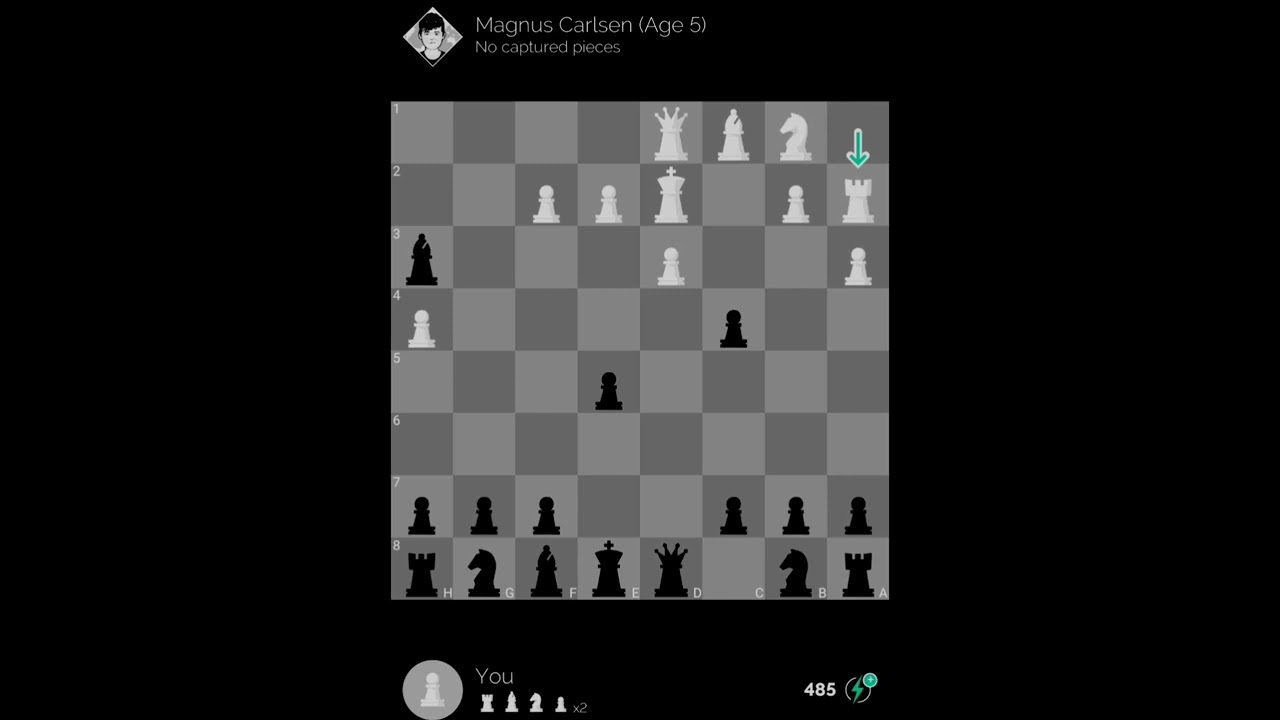
To execute a decoy tactic (also known as an attraction sacrifice) in Chess.com - Play and Learn, offer a piece on a square that forces a critical enemy defender onto a compromised tile. Once the opponent captures your sacrificed piece, follow up immediately with checks, forks, or pins to recover greater material or deliver checkmate.
Spotting Weak Targets in Quiet Positions
Decoy opportunities often appear in locked or dry middlegames where standard pawn breaks are unavailable. Players frequently let down their guard when a position appears stable, leaving key pieces one step away from tactical vulnerability.
Scan the board for these specific defensive weaknesses:
- Exposed or uncastled kings: A king stranded in the center or lacking defensive pawn shelter.
- Overloaded defenders: A queen or rook assigned to protect multiple pieces or guard a back-rank mate simultaneously.
- Clustered major pieces: High-value pieces resting on the same file, rank, or diagonal.
- Compromised color complexes: Deficiencies left when a fianchettoed bishop is traded away, leaving nearby squares undefended.
When you identify an enemy piece near a dangerous square, calculate whether a sacrifice can compel that piece to step forward into your line of fire.
Common Decoy Patterns and Follow-Ups
An effective decoy relies on forcing moves, primarily checks or direct mating threats, that give your opponent no viable alternative to accepting the bait.
| Target Scenario | Sacrificial Piece | Forced Response | Tactical Follow-Up |
|---|---|---|---|
| Weak f7 or f2 square | Bishop or knight sacrifice | King captures to prevent immediate loss | Queen and knight check with tempo |
| Open central e-file | Rook sacrifice on open square | King captures isolated piece | Discovered check with rook or bishop |
| Castled corner (h7 or h2) | Bishop sacrifice ("Greek Gift") | King forced to capture on h-file | Battery invasion with queen and knight |
| Defended back rank | Deflecting queen sacrifice | Rook or king forced to accept | Immediate back-rank checkmate |
Exploiting Decoyed Targets
Once you lure the target piece onto the vulnerable square, strike immediately before the opponent can consolidate:
- Knight Forks: Pull an enemy queen, king, or rook onto a square within striking distance of your knight to win material.
- Absolute Pins: Drag a high-value piece onto the same line as the enemy king, freezing it in place so pawns or minor pieces can attack it.
- Skewers: Force a higher-value piece in front of an unprotected lower-value piece, winning the trailing piece when the lead piece moves.
Verification Checklist Before Sacrificing
A failed decoy sacrifice leaves you permanently down material. Before committing a piece, evaluate the position against potential defensive resources:
- Is the capture mandatory? If the opponent can decline the piece, ensure you retain positional control, a material advantage, or an ongoing attack.
- Does the opponent have an in-between move? Check for counter-checks or intermediate attacks (zwischenzug) that break your calculation.
- Is there a secondary defender? Verify that an overlooked piece cannot recapture safely while avoiding your tactical follow-up.
- Can you follow up with tempo? Ensure your next move attacks the newly lured target directly, leaving no time for the opponent to reorganize.

Free Chess.com - Play and Learn Codes
Current active codes and how to redeem them.

Sarah Williams
Sarah specializes in RPG and collection games, explaining team building, character growth, and beginner-friendly ways to avoid expensive early mistakes.
COMMUNITY
Player Comments
54 players commented on this guide.
The tips are practical and easy to follow.
This saved me time in the early game.
This helped me understand strategy much better.
Nice guide. I am checking the other Chess.com - Play and Learn articles next.