
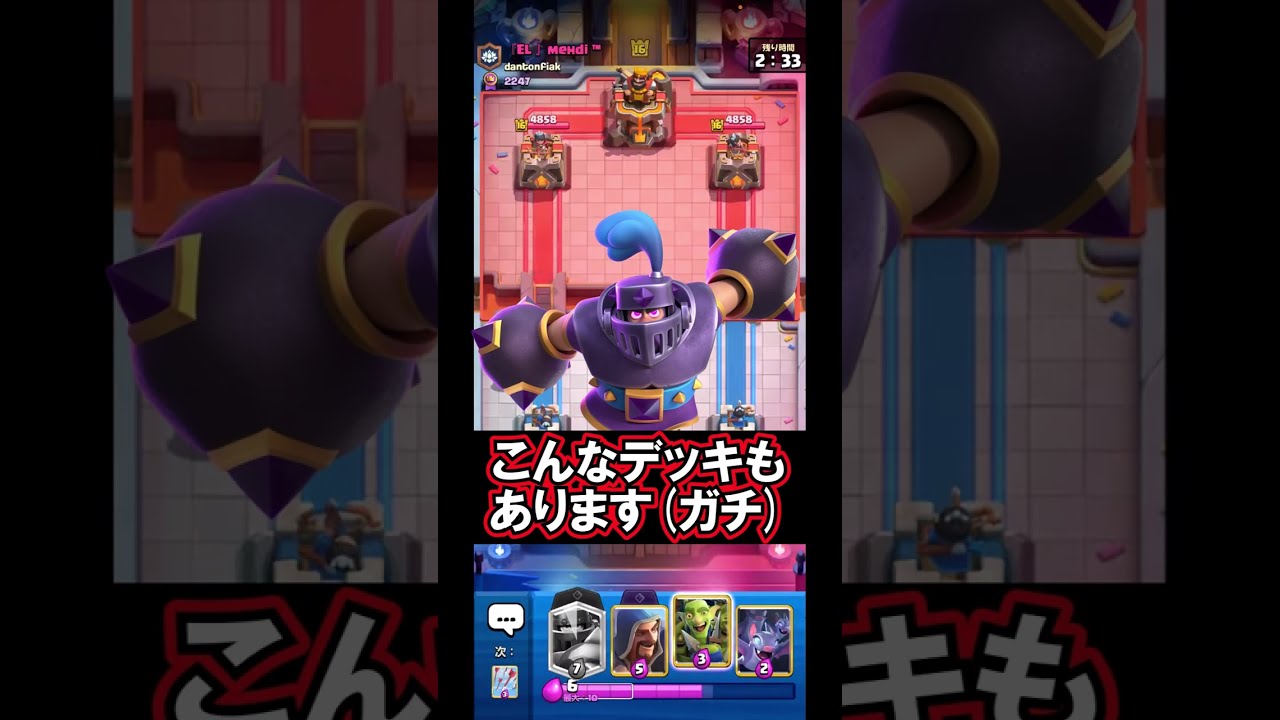
To win with a Mega Knight and Royal Recruits deck in Clash Royale, play reactively during single elixir, defend your towers with positive elixir trades, and delay full dual-lane offensive pushes until double and triple elixir. Because both Mega Knight and Royal Recruits cost seven elixir, premature offensive deployments will deplete your reserves and leave your arena towers defenseless against fast counter-attacks.
Match Phase Strategy
Because this archetype relies on two heavy seven-elixir cards, you must pace your spending according to match time and elixir generation rates.
| Match Phase | Primary Objective | Key Deployments | Common Failure Points |
|---|---|---|---|
| Single Elixir (0:00–2:00) | Make conservative trades and preserve tower health | Mega Knight onto enemy pushes; Recruits behind King Tower at 10 elixir | Dropping heavy cards at the bridge; leaking elixir |
| Double Elixir (2:00–3:00) | Shift from defense into dual-lane counter-attacks | Split Recruits in the back; place support troops behind Mega Knight | Funneling all elixir into a single lane |
| Triple Elixir (3:00+) | Overwhelm opposing defensive cycles through constant pressure | Stagger Recruits near the river; cycle Mega Knight to tank opposing threats | Over-committing to ground and ignoring incoming air troops |
Single Elixir (0:00–2:00)
Never initiate an attack with Mega Knight or Royal Recruits at the bridge. If you reach the 10-elixir cap and need to prevent elixir leaking, deploy Royal Recruits behind your King Tower. Their slow movement speed across the arena allows you to regenerate elixir before they reach the river. If the opponent mounts an aggressive ground push, drop Mega Knight directly onto their attacking cluster to absorb the attack through spawn damage.
Double and Triple Elixir (2:00+)
Once elixir production doubles, you can afford to reinforce both lanes simultaneously. Absorb an enemy push using Mega Knight on one side, then let the natural split of your Royal Recruits pressure the opposite lane. Opponents typically lack the elixir regeneration needed to defend both lanes at once, forcing them to concede significant tower damage.
How to Coordinate Defenses and Counter-Pushes
Mega Knight and Royal Recruits handle distinct defensive roles that set up counter-pushes:
- Use Mega Knight against grouped ground swarms: Deploy Mega Knight directly onto clustered units such as Royal Hogs, Elite Barbarians, or support troops positioned behind a mini-tank. His entry splash damage neutralizes supporting units, while his high health pool and jump mechanic turn him into an immediate front-line counter-attacker.
- Use Royal Recruits to isolate heavy single-target hitters: Royal Recruits carry wooden shields that absorb full hits from heavy single-target attackers such as P.E.K.K.A, Prince, and Sparky without dying instantly. Surrounding these threats with Recruits buys time for your ranged support or Mega Knight to clean up the field.
- Split surviving troops across both bridges: After clearing an attack, do not stack all remaining resources behind one push. Surviving Recruits will automatically march down both lanes. If the opponent expends their main tank counter on Mega Knight, reinforce the opposite-lane Recruits to secure tower damage.
Matchup Adjustments
- Air Beatdown (such as Lava Hound or Balloon): Mega Knight and Royal Recruits cannot target aerial units. Preserve your anti-air support troops exclusively for opposing air win conditions. Apply ground pressure with Royal Recruits in the opposite lane to force the opponent to spend elixir defending instead of building an overwhelming aerial push.
- Fast Ground Cycle (such as 2.6 Hog Cycle): Do not spend seven elixir reactively against low-cost chip pushes. Use cheaper cards to manage chip threats and activate the King Tower when possible. Once the match reaches double elixir, fast cycle decks struggle to keep pace with continuous waves of shielded Recruits and high-health Mega Knights.
Free Clash Royale Codes
Current active codes and how to redeem them.

Emily Johnson
Emily writes practical mobile strategy guides with a focus on resource planning, base progression, and the early decisions that shape a long-term account.
COMMUNITY
Player Comments
62 players commented on this guide.
Can you add more details about strategy in a future update?
Good guide for Clash Royale players. The strategy part was useful.
I wish I had read this before upgrading the wrong thing.
This guide answered the exact question I had.