
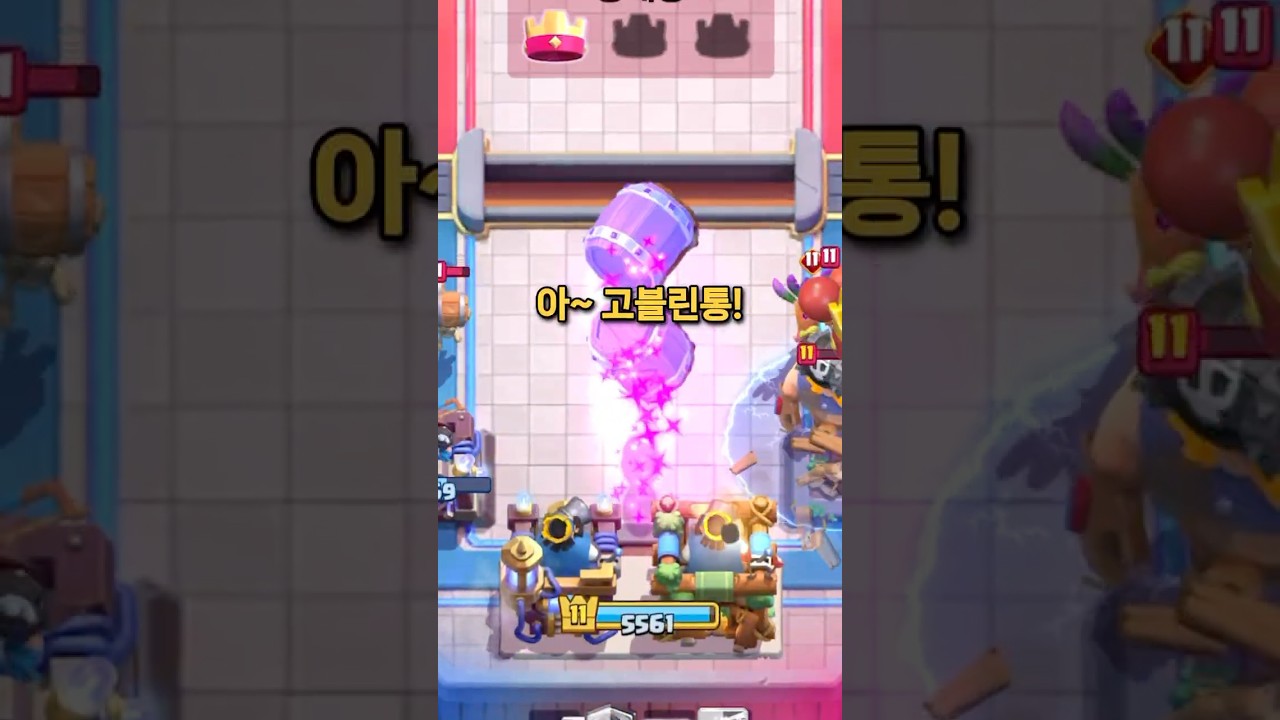
To win 2v2 matches using Goblin Barrel bait in Clash Royale, coordinate with your teammate to stagger barrel deployments, drain the opposing team's small spells, and split lane pressure. In 2v2 arenas, opponents must share defensive duties across two separate card cycles. Exploiting this dynamic by baiting an opponent into spending a cheap spell—such as The Log or Arrows—leaves both defenders vulnerable to an immediate secondary swarm before their card rotation resets.
Staggering Barrels and Placement Variations
Never launch dual Goblin Barrels into the same tile at the same moment. Landing two barrels simultaneously allows a single Log, Arrows, or well-timed Firecracker to clear six elixir worth of offense for an instant positive elixir trade.
Instead, delay your second launch by two to three seconds or alter your target coordinates:
- Standard Surround: Center the barrel directly onto the Princess Tower so the goblins land in an equilateral triangle. This forces the tower and defending troops to target goblins individually.
- Deep Corner Placement: Launch the barrel into the far back corner behind the Princess Tower. If an opponent drops a predictive Log rolling forward from the river, the barrel impacts completely outside the roll path.
- Dual-Lane Split Pressure: Launch one barrel at the left Princess Tower while your teammate targets the right. Forcing defenders to react simultaneously on opposite sides of the board introduces miscommunication over who should spend elixir.
Structuring Complementary 2v2 Bait Decks
A dependable 2v2 bait team requires complementary roles rather than two identical decks. One player provides rapid cycle swarms to provoke spells, while the partner anchors defense against heavy beatdown pushes.
| Role Component | Player 1: Fast Bait Cycle | Player 2: Defense & Control Anchor |
|---|---|---|
| Win Condition | Goblin Barrel | Goblin Barrel or Miner |
| Bait Enablers | Princess, Dart Goblin | Goblin Gang, Skeleton Army |
| Defensive Frontline | Knight, Ice Spirit | Valkyrie or Mega Knight, Inferno Tower |
| Spells | The Log, Rocket | Arrows, Fireball or Mirror |
Player 1 plays Princess at the bridge or Dart Goblin near the river to demand immediate answers. Once an opponent expends their small spell on these support cards, Player 2 immediately launches a Goblin Barrel. When defending, Player 2 uses tank-melting structures like Inferno Tower alongside frontline splash units like Valkyrie to halt counterattacks.
Punishing Opponent Overcommitments
The primary attack window occurs when an opposing player spends heavy elixir in the back of their arena. If an opponent drops a high-cost tank—such as Golem, Giant, or Electro Giant—behind their King Tower, execute a split-second counter-push in the opposite lane:
- Drop a mini-tank (Knight or Valkyrie) directly at the bridge to absorb oncoming Princess Tower fire.
- Launch a Goblin Barrel onto that lane's tower immediately behind the tank.
- Keep two elixir ready for The Log or Ice Spirit to clear emergency swarm defenses like Skeleton Army.
Because the defending team just committed five or more elixir to a slow-moving tank, they cannot coordinate an effective two-player defense against high-DPS swarm troops without taking substantial tower damage.
Adapting Against Heavy Splash and Triple-Spell Decks
When opponents bring redundant counters like The Log, Arrows, and Bowler, direct barrel launches rarely connect. In these hard-counter matchups, adjust your strategy:
- Switch to Rocket Cycling: During double and triple elixir, rely on low-cost troops to defend centrally, and cycle Rocket onto the enemy's lowest-health tower whenever an opposing troop walks past it.
- Create Central Kill Zones: Place defensive buildings like Inferno Tower in the middle of your arena to pull tanks into range of both King and Princess Towers.
- Bait Before Committing: Send auxiliary bait units like Princess or Goblin Gang to force the opposing team's small spells out of rotation before risking a barrel throw.
Free Clash Royale Codes
Current active codes and how to redeem them.

Emily Johnson
Emily writes practical mobile strategy guides with a focus on resource planning, base progression, and the early decisions that shape a long-term account.
COMMUNITY
Player Comments
155 players commented on this guide.
Can you add more details about strategy in a future update?
The tips are practical and easy to follow.
I wish I had read this before upgrading the wrong thing.
This guide answered the exact question I had.