
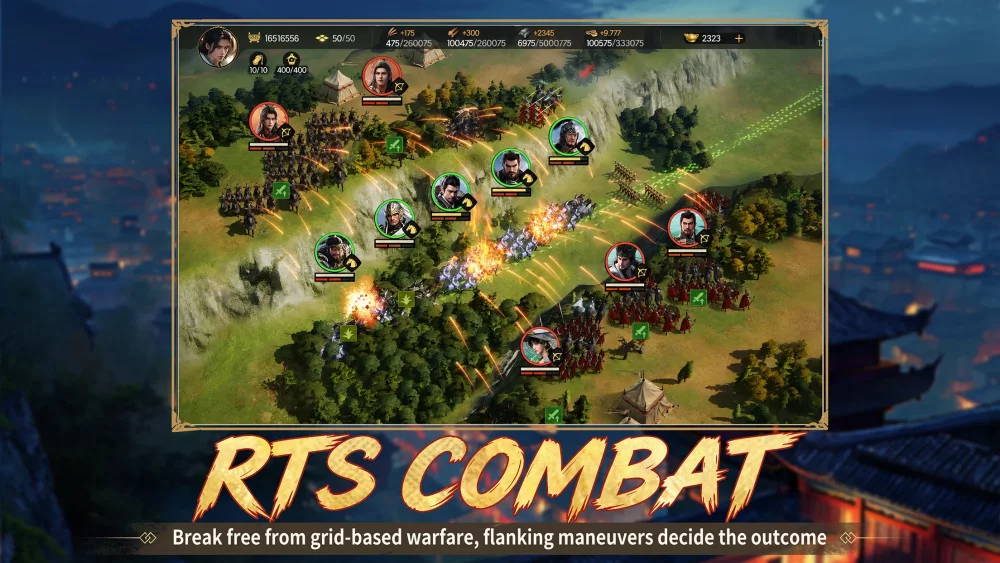
In Conquest of Nine Kingdoms, the transition from mid-game expansion to the high-stakes S1 Luoyang endgame often forces smaller or mid-tier alliances into a desperate, defensive posture. Facing numerically superior factions is not a death sentence, but it requires a fundamental shift in strategy. Instead of seeking direct confrontations, you must adopt a "war of attrition" mindset where the goal is to make every inch of ground prohibitively expensive for your attacker. This guide breaks down the tactical requirements for holding your ground when the odds are stacked against you.
Centralizing Command for Alliance-Wide Coordination
When your alliance is outnumbered, individual heroics are rarely enough to stop a coordinated enemy push. Effective defense is entirely dependent on a centralized command structure. Without a unified leader directing troop movements, your defenses will inevitably experience "fragmentation"—where one sector collapses because players are responding to threats in isolation rather than as a cohesive unit.
- Dedicated Communication: Use Discord or in-game channels exclusively for reporting enemy coordinate movements. Eliminate chatter; focus on identifying the enemy’s main axis of attack.
- The "Choke Point" Philosophy: Never spread your forces thin across a wide border. Identify natural map bottlenecks—mountain passes, river crossings, or narrow corridors—and concentrate your entire defensive force there. By forcing the enemy to funnel their massive numbers into a small space, you effectively negate their numerical advantage, as they can only engage a fraction of their total army at any given time.
Mastering Active Troop Rotation
A common mistake in Conquest of Nine Kingdoms is the "death-stall," where players leave their best units on the front line until they are utterly depleted. In a long-term siege, once your stamina and durability hit zero, you become a liability rather than a defender.
To survive, you must implement a formal rotation schedule:
- Front-Line Guards: Assign specific players to "active defense" shifts. When their units drop to 50% stamina, they must retreat to a rear-line village or city to recover.
- The Quick Reaction Force (QRF): Designate a core group of high-stamina, high-damage players to remain in reserve. They do not engage in standard skirmishes. Instead, they act as a "fire brigade," moving rapidly to reinforce any section of the wall that shows signs of breaking.
- The Staggered Retreat: If a sector is lost, do not fight to the last man. Order a staged retreat to your secondary defensive layer. This preserves your combat power and forces the enemy to reset their momentum, buying you precious time.
Leveraging Geographic Obstacles and Fortifications
Geography is the most overlooked force multiplier in Conquest of Nine Kingdoms. When defending, you should never fight in open fields if a structural alternative exists.
- Forced Siege Timers: Position your defensive lines directly behind or inside city walls and fortified outposts. Every second the enemy spends breaking down a gate is a second they aren't dealing damage to your troops.
- Layered Defense (Depth): Do not build your entire defense on the front line. Establish a "primary" line to soak up initial damage, and a "secondary" line 10–15 tiles back. If the front line is breached, the enemy will be overextended and likely exhausted by the time they reach your secondary line, making them vulnerable to a counter-push.
Resource Management and Economic Sustainability
Long-term sieges are won by the alliance that runs out of resources last. If you are constantly spending your reserves to repair walls and heal units, you will eventually collapse.
- Strategic Sacrifices: Be prepared to abandon outer territories. If a remote outpost is being swarmed by a superior force, cut your losses early. Do not waste precious troop stamina trying to hold a territory that provides little strategic value. Focus on consolidating your core.
- Healing Efficiency: During a siege, prioritize healing units with high-tier tech or high officer levels. Low-tier, disposable units should be used as "speed bumps" to delay the enemy, while your elite units are saved for critical defensive maneuvers.
Managing Morale and Siege Psychology
The most dangerous enemy during a siege is often player burnout. When a war drags on for days, players become frustrated and prone to making reckless mistakes. As an alliance leader, you must frame the conflict in manageable, short-term goals.
- Set Micro-Objectives: Instead of promising a "victory," set goals like "Hold this gate until 10:00 PM" or "Successfully rotate all front-line squads before midnight." Achieving these small, tangible objectives keeps morale high and prevents the feeling of hopelessness.
- The Power of Attrition: Remind your members that every unit the enemy loses is a unit they have to spend time and resources to replace. If your alliance manages to inflict heavy losses while keeping your own core intact, you are winning the war of attrition, even if you are technically losing territory.
Conclusion: Playing for the Endgame
Surviving the S1 Luoyang phase is about proving you are a "hard target." Large alliances often look for the path of least resistance. If you force them to pay a massive price in troops and time for every single tile they take, they will eventually look for an easier target elsewhere. By mastering troop rotation, utilizing the map’s natural bottlenecks, and maintaining a disciplined command structure, you can survive even the most overwhelming odds in Conquest of Nine Kingdoms. Focus on the long game, keep your core strong, and let your enemy exhaust themselves against your walls.
Free Conquest of Nine Kingdoms Codes
Current active codes and how to redeem them.

Emily Johnson
Emily writes practical mobile strategy guides with a focus on resource planning, base progression, and the early decisions that shape a long-term account.
COMMUNITY
Player Comments
70 players commented on this guide.
Nice guide. I am checking the other Conquest of Nine Kingdoms articles next.
This helped me understand strategy much better.
This guide answered the exact question I had.
Can you add more details about strategy in a future update?