
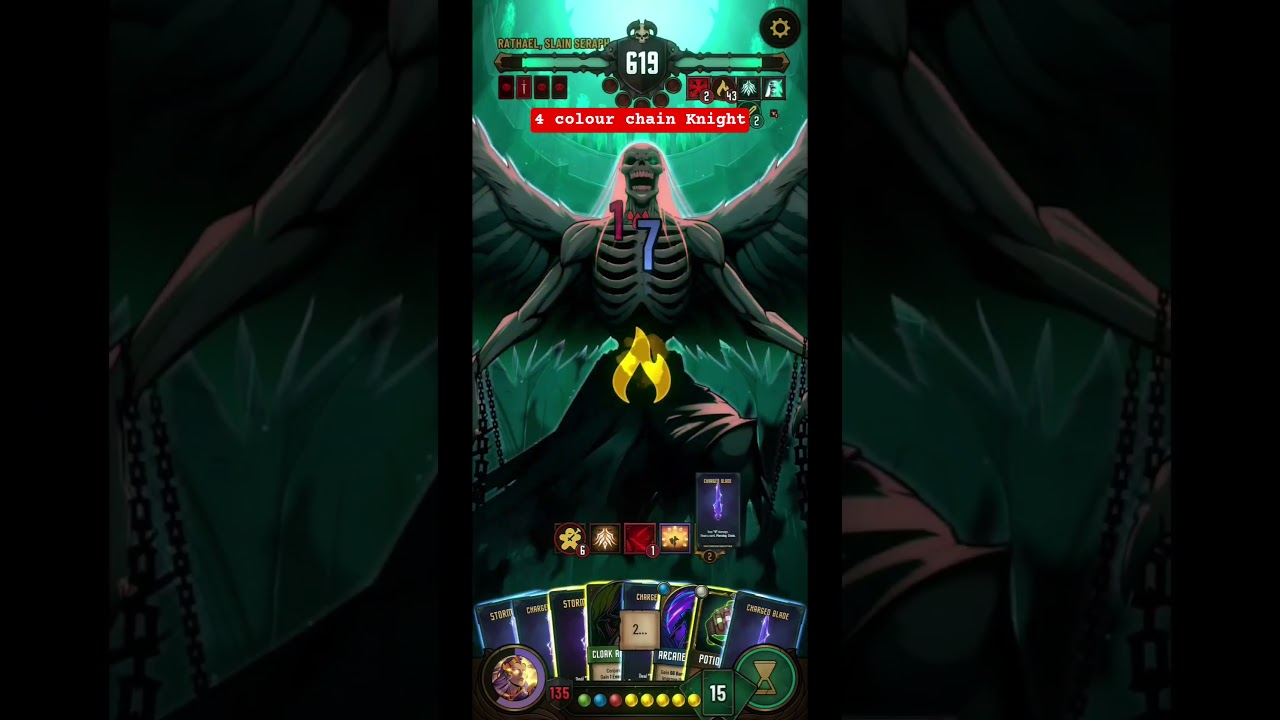
To pilot a four-color Chain Knight in Dawncaster: Deckbuilding RPG, you must resolve multi-affinity energy constraints early, trim your deck down to 10–14 cards, and cycle low-cost cantrips into scaling finishers. Splashing Agility (Green) and Intellect (Blue) into the Knight's baseline Strength (Red) and Holy (Yellow) card pool provides the card draw and energy acceleration needed to play prolonged combo turns.
Energy Roles and Color Conversion
A multi-color engine fails if you draw off-color cards without the specific energy required to play them. Because the Knight's starting base favors Holy and Strength, treat every non-native card draft as an energy liability until conversion tools are active.
| Energy Affinity | Primary Deck Role | Key Draft Targets |
|---|---|---|
| Red (Strength) | Finishers and baseline burst | Heavy strikes, weapon scaling, combo payoffs |
| Yellow (Holy) | Defense and sustain | Shields, healing, passive turn mitigation |
| Green (Agility) | Card velocity and cycling | Zero-cost cantrips, card draw, evasion |
| Blue (Intellect) | Resource replenishment | Energy restoration, cooldown reduction |
Prioritize talents and merchant relics that generate prismatic (wild) energy or convert excess resources into usable colors. When prismatic generation is unavailable early in a run, draft colorless cards or cards with the Quickcast keyword so you can cycle your hand without exhausting specialized energy pools.
Core Turn Engine and Card Synergies
Do not draft expensive, high-cost cards that stall your cycling. A functional chain deck relies on low-cost cantrips that replace themselves immediately, creating an alternating loop between draw and resource recovery:
- Initiate with Agility Cantrips: Play zero-cost or draw-neutral Green cards to dig through your deck.
- Restore Energy with Intellect Spells: Cast Blue utility cards to refund spent energy points as your hand expands.
- Finish with Strength and Holy Payoffs: Once your total card count for the turn peaks, play Red strikes or Yellow finishers that scale their damage or shield generation directly from the number of actions played that turn.
Talent Priorities Across Cantos
Talents should solve resource consistency and reward card volume rather than granting passive, static defense.
- Early Cantos (Resource Fixing): Select talents that convert surplus energy into wild resources or lower the costs of cross-class cards. If no energy-fixing options appear, choose talents that provide unconditional turn-one card draw.
- Late Cantos (Damage Scaling): Pick talents that multiply damage based on threshold card counts reached within a single turn. Avoid any talent that penalizes off-class cards or enforces single-color playstyles.
Deck Thinning Rules
A bloated deck prevents you from drawing combo starters and color fixers in the proper sequence. Maintain a total deck size of 10 to 14 cards using the following priorities:
- Remove Starter Cards First: Cut basic attacks and baseline shields at campfires and shrines as soon as functional cantrips are acquired.
- Transmute Clunky Drops: Use event transmutation to reroll unplayable high-cost cards into low-cost utility actions.
- Skip Situational Rewards: Reject non-replacing cards and high-cost cards that lack draw or energy-generating tags.
Piloting Around Boss Mechanics
Before committing resources on your turn, examine the enemy's passives:
- Retaliation and Thorns: If an enemy deals damage back per card played, calculate your net survivability before initiating long chains. Ensure your Holy secondary effects generate enough armor to absorb the counter-damage.
- Reactive Shields: When bosses gain armor per action, pause your chain after establishing core defenses. Float energy and coordinate your full-burst combo in a single turn once the enemy's defensive windows drop.
- Floating Energy: Never spend your final energy point on an attack unless it confirms a kill or you hold a guaranteed energy refund card in hand.

Free Dawncaster: Deckbuilding RPG Codes
Current active codes and how to redeem them.

James Brown
James focuses on Android gaming on PC, emulator setup, controls, performance tuning, and practical troubleshooting for longer play sessions.
COMMUNITY
Player Comments
103 players commented on this guide.
Good guide for Dawncaster: Deckbuilding RPG players. The early game part was useful.
Can you add more details about early game in a future update?
I tried this today and it worked better than my old setup.
This helped me understand early game much better.