
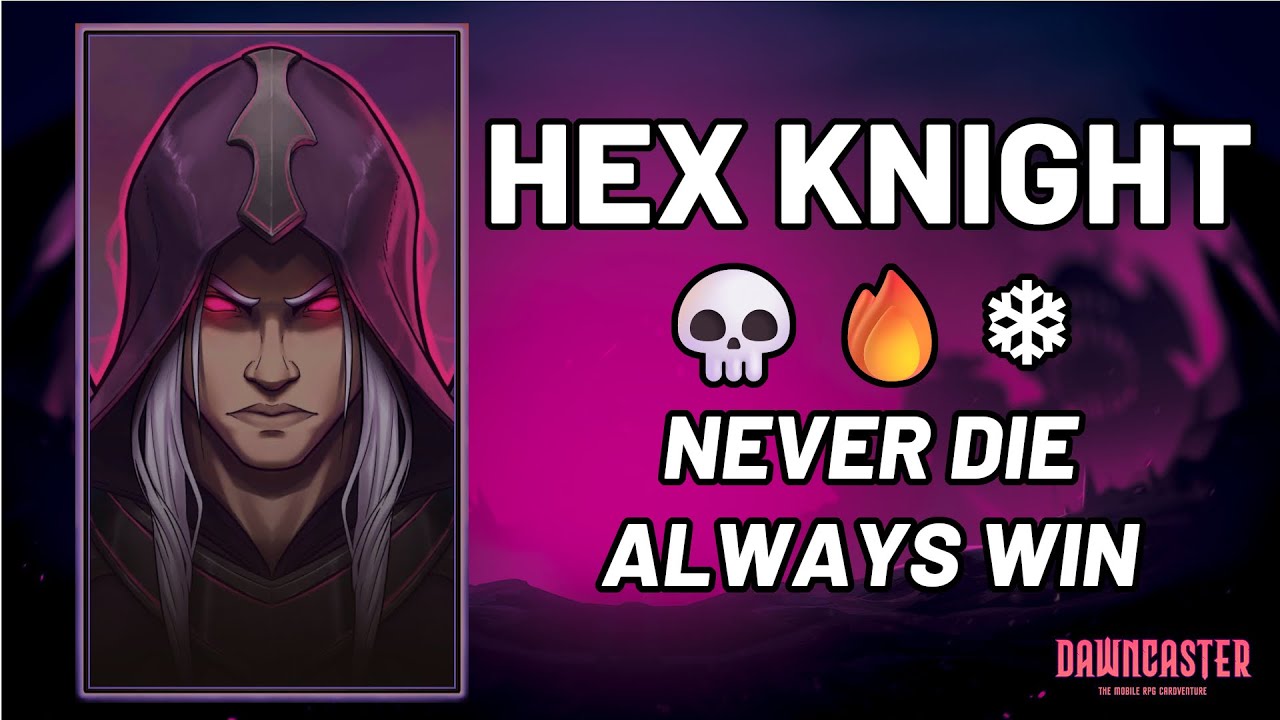
The Hex Knight build in Dawncaster: Deckbuilding RPG pairs two-handed martial weapon attacks—specifically the Claymore—with status-inflicting dark magic. Instead of stacking traditional armor cards or pursuing pure Holy burst, this archetype suppresses hostile damage using Weaken, Dread, and frost effects while chipping away at enemy health through compounding afflictions.
Core Mechanics: Martial Cleaves and Affliction Stacking
Pure caster decks often struggle with slow ramp-up speeds in early campaign combats, whereas conventional melee builds can stall against high-armor or evasive late-game encounters. The Hex Knight resolves both issues by weaving curse applications directly into weapon strike sequences.
Applying hexes before or alongside Claymore attacks ensures your physical hits land on already crippled targets. As status effects accumulate, recurring damage triggers erode enemy health pools passively, allowing you to maintain sustained pressure without exhausting your hand on high-cost offensive cards alone.
Weapon Imbuement: The Frozen Claymore
Imbuing the Knight's Claymore with frost transforms standard heavy kinetic swings into elemental control tools. Chill effects disrupt enemy turn pacing, creating the breathing room necessary to apply multi-card curse setups safely.
| Weapon Setup | Damage Profile | Primary Defensive Benefit | Deck Requirement |
|---|---|---|---|
| Standard Physical Claymore | Direct kinetic burst | Armor generation via martial cards | Heavy Strength card investment |
| Frozen / Hex Claymore | Mixed elemental and status damage | Freeze, chill, and debuff damage suppression | Balanced Dark Arts and weapon synergy |
Chilling hostile targets limits incoming attack strings from multi-hit bosses. When paired with hexes that trigger secondary damage whenever an enemy acts or takes a hit, swinging an imbued Claymore detonates existing afflictions and accelerates combat resolution.
Drafting Priority: Assembling the Engine
To build a consistent deck, draft cards in an order that secures debuffs and energy efficiency before adding situational utility:
- Primary Debuff Hexes: Draft spells that apply Weaken and Dread immediately to neutralize opening burst turns from elite encounters.
- Recurring Affliction Triggers: Acquire cards that inflict passive damage or punish the enemy whenever they attempt to play attack cards.
- Weapon Imbuements: Add elemental chill or curse triggers to your basic weapon strikes so martial actions actively advance your status engine.
- Energy Generation and Draw: Pick up low-cost cantrips and energy-positive cards to ensure you can execute heavy Claymore swings and cast spells within the same turn.
Defensive Layering Without Raw Armor Stacking
Standard Knight builds rely on stacking heavy armor to absorb incoming blows, but this approach remains vulnerable to armor-piercing strikes and escalating enemy scaling. The Hex Knight mitigates damage at the source by lowering the enemy's attack values before damage reaches your health pool.
Stacking Weaken and Dread significantly reduces enemy damage ceilings, turning lethal boss attacks into manageable strikes. Simultaneously, affliction synergies generate passive barriers or sustain based on the number of active status effects on the field. Because your survivability scales with applied debuffs rather than the specific armor cards drawn each round, turn-to-turn defensive consistency remains stable.
Campaign Progression and Deck Management
Managing your deck size and energy curve across the early and mid-game acts prevents hands where expensive weapon strikes crowd out vital hex applications.
- Act I: Rely on the Claymore's baseline physical damage to clear early minions quickly. Use campfires and merchant opportunities to aggressively purge basic strikes that do not contribute to status stacking.
- Act II: Transition fully into your Dark Arts synergy. Prioritize energy upgrades and card draw so your hand can support both high-cost weapon swings and curse loops in a single combat round.
- Late Game: Refuse unaligned martial cards or generic defensive buffs that lack affliction synergy. Every draw that fails to apply a hex, inflict chill, or swing an imbued blade dilutes the deck engine.

Free Dawncaster: Deckbuilding RPG Codes
Current active codes and how to redeem them.

Sarah Williams
Sarah specializes in RPG and collection games, explaining team building, character growth, and beginner-friendly ways to avoid expensive early mistakes.
COMMUNITY
Player Comments
53 players commented on this guide.
This saved me time in the early game.
I wish I had read this before upgrading the wrong thing.
This guide answered the exact question I had.
Nice guide. I am checking the other Dawncaster: Deckbuilding RPG articles next.