
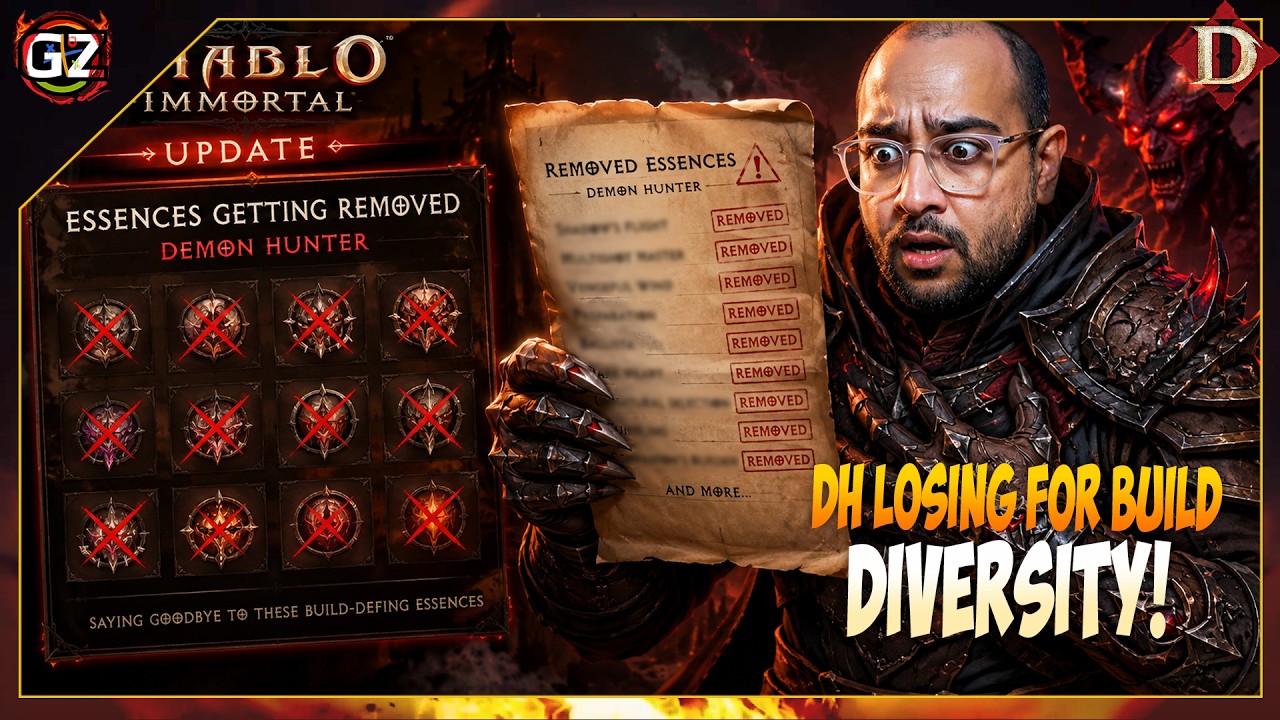
The most effective way to maintain your edge as a Demon Hunter in Diablo Immortal following recent balance updates is to immediately audit your equipment for retired legendary essences. When developers cycle out or deprecate specific gear modifiers, your character’s power level can plummet if you are unknowingly running "dead" slots. To stay competitive in high-difficulty dungeons, raids, and PvP arenas, you must pivot your loadout to accommodate the current meta.
This guide details how to identify impacted gear, why these changes happen, and the strategic steps required to reconstruct a top-tier Demon Hunter build.
Identifying Retired Demon Hunter Essences
In Diablo Immortal, the Essence Transfer system is the backbone of character customization. However, when an update retires an essence, that item's unique passive or active bonus is effectively neutralized. If you have an item equipped that has been deprecated, you are essentially fighting with a "blank" gear slot, losing a critical damage multiplier or utility effect.
How to verify your current loadout:
- Visit the Essence Transfer NPC: Locate the Essence Transfer vendor in Westmarch.
- Review the Library: Check your extracted essences list. Any items that previously provided essential synergy but are no longer functioning will appear with altered or missing text.
- Check for "Red" Notifications: If your current gear has been affected, the game UI often highlights these items as non-functional or outdated.
- Compare Tooltips: If a skill’s behavior has reverted to its base performance despite an essence being equipped, that essence is no longer providing its modifier.
Assessing the Impact on Build Efficiency
When a core essence—such as one modifying Multishot, Strafe, or Vengeance—is retired, it creates a "synergy gap." A Demon Hunter’s strength lies in chaining legendary effects to create massive burst windows or sustained crowd control. When one piece of that chain breaks, the entire rotation often fails.
- PvE Impact: You will notice a significant drop in "time-to-kill" (TTK). If you relied on an essence to provide armor penetration or area-of-effect (AoE) scaling, you will struggle to clear dense mob packs in Challenge Rifts or Helliquary raids.
- PvP Impact: In the Rite of Exile or Battlegrounds, losing a mobility or crowd-control modifier can make you a "glass cannon" with no way to escape or peel for yourself.
Before discarding your entire build, determine if the skill itself is still worth keeping. If the skill only functioned because of the now-retired essence, it is time to pivot your entire skill bar to a more viable alternative.
The Strategic Rebuilding Process
Recovering from a balance update requires a methodical approach. Do not panic-salvage your gear; instead, follow these steps to stabilize your Demon Hunter:
- Prioritize Primary Damage Slots: Start with your main hand and off-hand weapons. These slots typically house the most impactful damage modifiers. Find the current top-tier essence for your primary skill and extract it to replace the retired one.
- Evaluate Utility Overlap: Look for essences that provide similar effects to the ones you lost. For example, if you lost a movement speed buff, look for defensive essences that grant damage reduction while moving.
- Test in the Training Grounds: Before queuing for a competitive match, head to the Training Grounds in Westmarch. Test your new rotation on the dummy to ensure your cooldowns and damage output align with your expectations.
- Consult the Codex: Use the in-game Codex and community leaderboards to see what top-ranked Demon Hunters are currently using. If 90% of the top players are using a specific essence, it is likely the new meta standard.
Balancing Your Gear and Gems
When you swap out a legendary essence, you may inadvertently break the synergy with your secondary gear (Set Items) and Legendary Gems.
- Secondary Stats: If your new essence changes a skill from "Physical" to "Fire" or "Cold" damage, ensure your set bonuses and secondary stats support this. For instance, some sets provide bonuses based on critical hit damage, while others focus on continuous damage.
- Legendary Gems: Certain gems, like Everlasting Torment or Seled’s Weakening, require specific skill interactions to trigger. If your new essence no longer triggers these gems effectively, you must swap your gem loadout to match your new playstyle.
Long-Term Maintenance: The Fluid Build Philosophy
The most successful Diablo Immortal players treat their builds as living, evolving projects rather than static templates. By maintaining a deep library of extracted essences, you can future-proof your character against inevitable balance adjustments.
Expert Tips for Long-Term Success:
- Hoard Essences: Never salvage a legendary item without first extracting its essence, even if you don't think you need it right now. You never know when a future patch will buff an underperforming skill, making that specific essence "meta" overnight.
- Diversify Your Loadouts: Aim to have at least two distinct builds: one for sustained PvE farming and one for high-burst PvP. This ensures that when one build is nerfed or retired, you have a secondary setup ready to go.
- Stay Informed: Follow official Diablo Immortal patch notes. Developers frequently signal which playstyles they intend to shift, giving you time to prepare your gear before a major update lands.
By proactively managing your Essence Transfer library and staying flexible with your skill choices, you ensure that your Demon Hunter remains a top-tier threat regardless of how the game's balance meta shifts. Adaptation is the most important skill in Diablo Immortal; embrace the change, refine your setup, and continue to dominate the battlefield.

Free Diablo Immortal Codes
Current active codes and how to redeem them.

Michael Smith
Michael covers live-service games, events, reward systems, and efficient daily routines, turning frequent updates into clear actions for players.
COMMUNITY
Player Comments
158 players commented on this guide.
This saved me time in the early game.
I wish I had read this before upgrading the wrong thing.
Good guide for Diablo Immortal players. The strategy part was useful.
Can you add more details about strategy in a future update?