
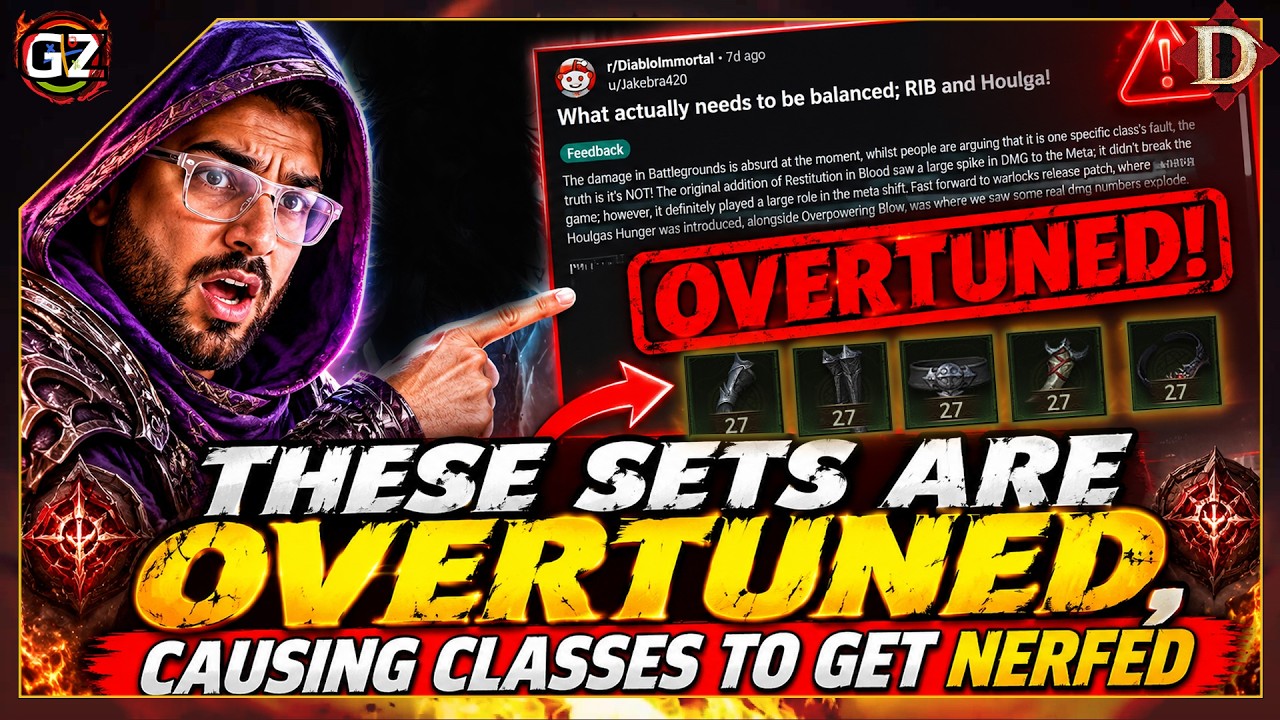
To exploit overtuned secondary gear sets like RIB and Houlga without leaving your character vulnerable to reactionary class nerfs in Diablo Immortal, equip modular two-piece and four-piece configurations rather than full six-piece sets. Combine this approach with targeted resource conservation, stockpiling Fabled Wisps and keeping staple secondary sets stored in your stash so you can pivot immediately when balance updates arrive.
How RIB and Houlga Distort Combat
In high-end Battlegrounds and competitive content, secondary gear sets supply supplemental damage procs on top of baseline class abilities. When sets like RIB and Houlga offer disproportionate proc scaling, rapid-hitting classes trigger them at unintended frequencies. This compresses the effective time-to-kill and bypasses standard damage reduction and defensive shield mechanics.
Because balance patches frequently target skill cooldowns, attack animations, or crowd-control durations instead of modifying secondary set numbers directly, classes that rely entirely on these sets suffer when adjustments hit.
| Set Setup | Primary Strength | Balance Vulnerability |
|---|---|---|
| RIB | Delivers rapid burst procs tied to consecutive offensive skill activations. | Vulnerable to class nerfs targeting attack cadence and animation speed. |
| Houlga | Scales heavy impact and secondary tick damage against health pools. | Prone to abrupt meta shifts when developer patches adjust proc values. |
| Hybrid (2/4 Split) | Combines baseline damage amplification with secondary offensive triggers. | Produces unreactable burst windows that attract immediate developer scrutiny. |
Optimizing Builds for Modular Flexibility
Exploiting current burst setups requires matching your class cadence to set triggers without overinvesting resources into single-purpose gear.
- Match Class Cadence: Equip RIB pieces on high-cadence classes like Tempest, Blood Knight, or Demon Hunter to leverage rapid multi-hit mechanics. Use Houlga bonuses on burst-focused caster setups or heavy physical initiations to secure eliminations during crowd-control windows.
- Retain Core Legendary Essences: Avoid converting your primary skill setup exclusively into niche builds that function only alongside overtuned sets. Keep versatile, high-utility skill essences upgraded and accessible.
- Favor Split Configurations: Run split two-piece and four-piece set bonuses instead of committing fully to a six-piece bonus. Modular slots allow you to replace an altered set piece without destabilizing your entire secondary gear layout.
- Limit Material Consumption: Farm specific dungeon drops for target set slots, but avoid expending all your crafting materials rerolling minor secondary attributes on items likely to face balance passes.
Building a Stockpile for Future Patches
Protect your account's combat rating and competitive standing by maintaining a dedicated reserve of crafting currencies and foundational secondary sets.
- Save Difficulty-Tier Fabled Wisps: Hoard Fabled Wisps corresponding to your current difficulty tier. When a balance patch alters an active set bonus, a reserve of Wisps lets you craft replacement pieces immediately without grinding dungeons.
- Preserve Evergreen Sets: Keep well-rolled pieces of reliable, standard sets in your stash:
- Vithu’s Urges: Extends buff durations and enhances attack speed.
- Banquet of Eyes: Amplifies damage against enemies taking damage-over-time effects.
- Feasting Baron’s Pack: Increases duration and damage dealt against crowd-controlled targets.
- Untouchable Mountebank: Provides defensive shielding to counter burst sequences.
- Swap Loadouts Post-Patch: If a balance update adjusts RIB or Houlga mechanics, immediately equip your stored evergreen sets to maintain consistent baseline performance.
Tactical Positioning and Match Trade-offs
Running overtuned offensive sets forces your character into an extreme glass-cannon profile. These setups lack the passive survival tools and crowd-control resistance provided by defensive sets like Untouchable Mountebank.
To prevent opponents from punishing this low survivability in Battlegrounds:
- Wait for Engagement Openers: Never initiate solo into grouped opponents. Enter the fight after frontline allies establish crowd control.
- Execute Hit-and-Run Sequences: Deploy your proc-triggering burst sequence during confirmed crowd-control windows, then immediately rotate behind defensive teammates while your primary skills reset.
- Monitor Cheat-Death Triggers: If target immunities or cheat-death mechanics absorb your initial burst window, disengage immediately rather than overextending with your secondary procs on cooldown.

Free Diablo Immortal Codes
Current active codes and how to redeem them.

Sarah Williams
Sarah specializes in RPG and collection games, explaining team building, character growth, and beginner-friendly ways to avoid expensive early mistakes.
COMMUNITY
Player Comments
146 players commented on this guide.
This guide answered the exact question I had.
Good guide for Diablo Immortal players. The strategy part was useful.
The tips are practical and easy to follow.
This saved me time in the early game.