
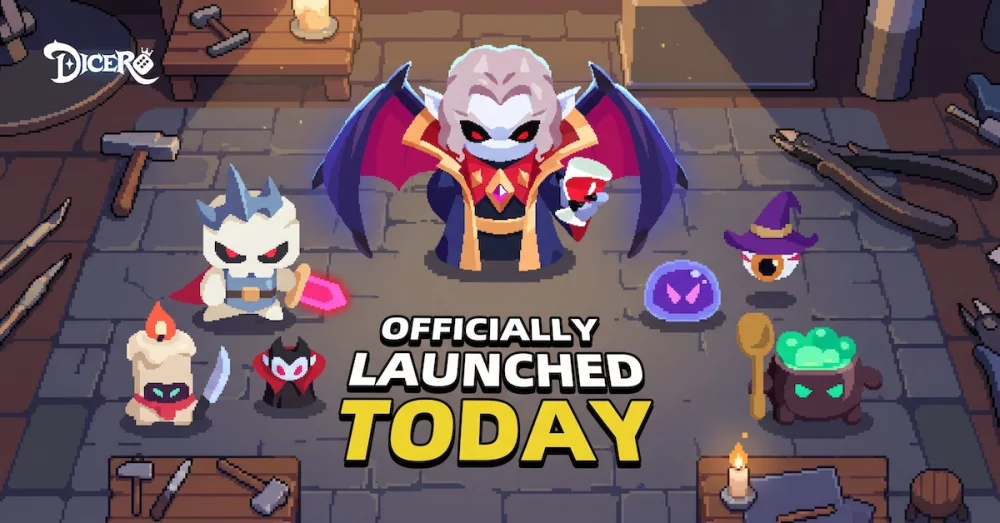
If your heroes are failing to clear stages in Dicero!! despite having high-tier units, you are likely hitting a progression wall caused by neglected secondary growth mechanics. Many players focus exclusively on leveling their heroes while overlooking the intricate gear and dice-rolling systems that define late-game success.
Breaking through these plateaus requires a shift from passive play to tactical optimization. By auditing your gear enhancement levels, aligning passive bonuses, and mastering the efficiency of your skill rotations, you can significantly increase your damage output and survivability without relying on lucky gacha pulls.
Audit Your Gear Enhancement and Refinement Levels
The most common culprit behind a "damage wall" is under-leveled equipment. In Dicero!!, high-rarity gear provides negligible benefits if the base enhancement level remains low. You must prioritize spending your gold and refinement stones on your primary DPS heroes’ weapons first, as these provide the flat attack bonuses necessary to overcome the armor thresholds of later-stage enemies.
- Weapon Priority: Always max out the weapon enhancement for your highest-damage hero. The damage-per-second (DPS) increase is exponential compared to defensive gear.
- The Refinement Trap: Do not stop at basic enhancements. Use the refinement tab to roll for secondary stats like Critical Hit Rate or flat Attack Power. These "hidden" stats provide the numerical edge required to clear boss stages that seem impossible.
- Gear Matching: Ensure your gear set bonuses align with your hero’s primary role. A DPS unit equipped with defensive-focused gear is a waste of potential, regardless of rarity.
Align Hero Passives with Combat Objectives
Dicero!! is not a game of brute force; it is a game of synergy. If your team is struggling to clear a stage, the issue is often a misalignment between hero passives and the level’s win conditions.
Review the passive skills of your active roster. If you are running a high-burst team but the stage requires sustained healing or damage mitigation, your heroes will inevitably fold under pressure. If you are dying before reaching the boss, swap in a unit with crowd-control (CC) or damage-reduction passives. Conversely, if you are timing out, replace your defensive units with heroes whose passives grant multi-hit bonuses or attack speed buffs. Matching these passives to the specific enemy defense type is consistently more effective than simply deploying a high-rarity hero with no synergy.
Master Skill Chains and Dice Roll Efficiency
Combat in Dicero!! revolves around how your skill chains interact with your dice rolls. Clicking skills as soon as they become available is a classic beginner mistake that wastes your highest-damage cooldowns on low-impact turns.
- Wait for the Multiplier: Hold your "Ultimate" or high-cost skills for turns where your dice roll provides the maximum damage multiplier or attribute buff.
- Manual Deployment: Practice manual deployment for at least one round to identify which dice combinations trigger your heroes’ most powerful passive effects.
- Visual Cues: Watch the combat log or visual indicators above your heroes. Once you recognize the pattern of when a hero’s damage is amplified, you can proactively save your most potent skills for those specific windows.
Manage Resource Allocation for Consistent Growth
Resource hoarding is a trap that leads to stagnation. While it is tempting to save all your materials for a "better" hero or piece of gear, the opportunity cost is your current progression speed. You need to spend resources to stabilize your team’s power level.
- Level Secondary Heroes: If you are hard-stuck, spend your accumulated upgrade materials to bring your secondary heroes up to par with your main carry. This provides a consistent increase in account-wide stats.
- Daily Surplus: If you have excess gold after daily maintenance, dump it into flat stat upgrades (like gear refinement) rather than letting it sit idle.
- Support Utility: Do not ignore support gear. Low-tier support gear often offers vital utility stats like cooldown reduction, which can be the difference between a successful skill rotation and a failed one.
Correcting Common Tactical Errors
When you are consistently failing a stage, stop resetting and observe the enemy’s patterns. High-difficulty stages often introduce specific mechanics, such as shields or self-healing, that require a dedicated counter-measure in your skill rotation.
- Shield-Piercing: If an enemy keeps shielding, you need to swap in a hero with shield-piercing abilities or timing-based burst damage that hits harder than the shield can mitigate.
- Check Event Buffs: Often, players fail simply because they ignore the small, temporary power spikes provided by daily login rewards or limited-time events. Check the event menu for active buffs that might be applied to your specific faction or hero type. These temporary boosts are often designed to help you push through the exact content you are currently stuck on.
- Enemy Typing: Pay attention to the element or type of the enemies. Dicero!! includes a soft-counter system; bringing a team that is disadvantaged against the stage’s enemy type will make your stats feel significantly lower than they actually are.
Final Thoughts on Progression
Mastering Dicero!! is about minimizing waste. Whether it is wasting a high-damage skill on a low-multiplier dice roll, or failing to refine gear to maximize your secondary stats, every small inefficiency adds up. If you find yourself at a plateau, take a step back from pushing the stage. Audit your gear, look for better passive synergies, and ensure you are playing your skill rotations with intent. By focusing on these core pillars, you will naturally find the power boost needed to progress through even the most challenging content.

Free Dicero! Codes
Current active codes and how to redeem them.

Emily Johnson
Emily writes practical mobile strategy guides with a focus on resource planning, base progression, and the early decisions that shape a long-term account.
COMMUNITY
Player Comments
54 players commented on this guide.
I tried this today and it worked better than my old setup.
This guide answered the exact question I had.
This saved me time in the early game.
I wish I had read this before upgrading the wrong thing.