
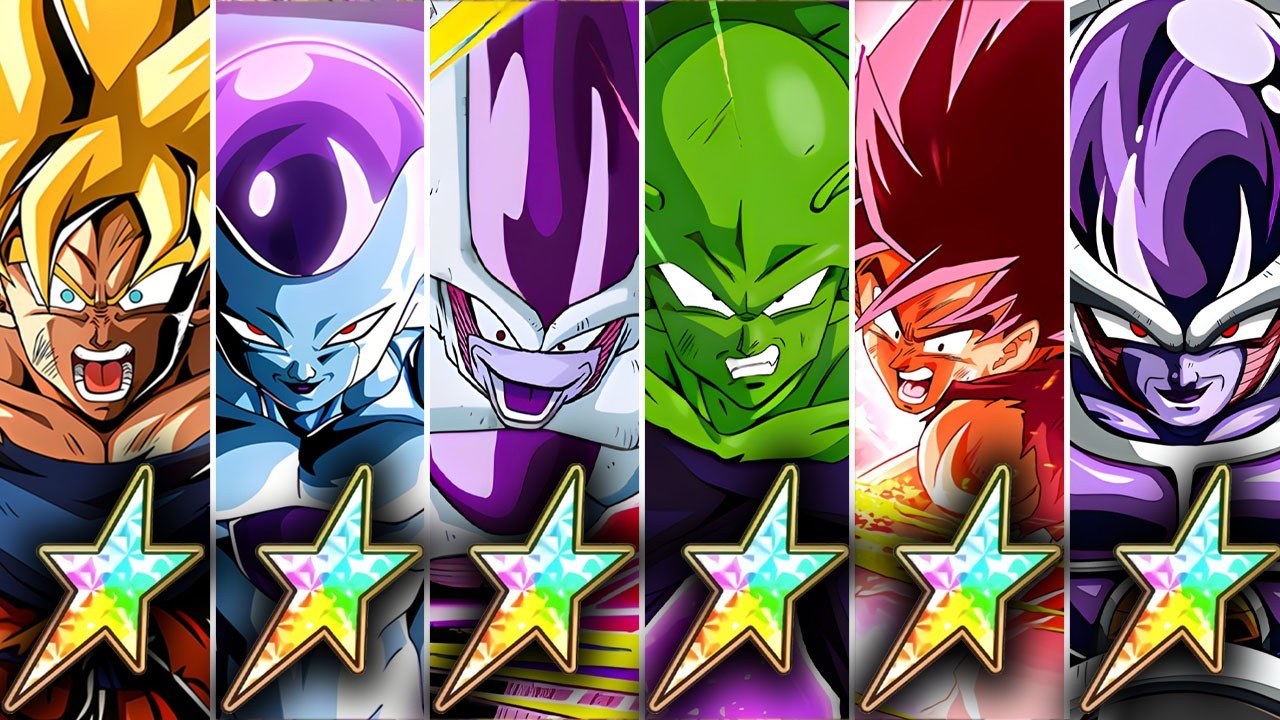
In the evolving meta of DRAGON BALL Z DOKKAN BATTLE, the Planet Namek Saga category has transitioned from a nostalgic fan favorite into a powerhouse capable of clearing the most grueling end-game content. To succeed in modern stages, you must move beyond simply picking your favorite units and instead focus on the mathematical foundations of the game: the 220% leader skill threshold, maximum link-level synergy, and precise defensive rotation management.
This guide provides the tactical framework required to turn your Planet Namek Saga roster into a cohesive, high-performance team.
Mastering the 220% Leader Skill Meta
The modern DRAGON BALL Z DOKKAN BATTLE meta is governed by the 220% leader skill multiplier. This massive stat inflation is the barrier between a team that struggles against basic phase attacks and one that reliably tanks Super Attacks from end-game bosses.
When constructing your Planet Namek Saga squad, your choice of leader is the most critical decision. You must ensure that every member of your team falls strictly under the category umbrella provided by your lead. Even a minor deviation—using a "guest" unit that only receives a partial boost—creates a "weak link" that bosses will exploit.
Expert Insight: Prioritize leaders who offer the 220% buff specifically to the Planet Namek Saga category. If you are forced to run a secondary leader with a lower percentage, ensure they are a support-heavy unit whose utility (such as damage reduction or Ki generation) offsets the loss in raw HP and ATK stats.
The Power of Level 10 Link Skills
Link skills are the engine of your team. In DRAGON BALL Z DOKKAN BATTLE, moving from Link Level 1 to Level 10 is not just a marginal gain; it is a fundamental shift in unit capability. At Level 10, links like Prepared for Battle or Fierce Battle provide the necessary Ki and damage multipliers that allow your team to fire off consecutive Super Attacks.
Focus your training resources on your "link bridges." These are units that share 4–5 links with your primary damage dealers. By maximizing these connections:
- Ki Consistency: You eliminate the "dead turns" where units fail to launch their 12-Ki or 18-Ki Super Attacks.
- Stat Ceiling: Level 10 links unlock the maximum potential for ATK and DEF percentages, which are calculated multiplicatively with your leader skill.
- Synergy Anchors: Identify units that act as the glue for your rotations. Maxing their links ensures that even when your rotation is slightly disrupted by enemy mechanics, your core damage dealers remain supported.
Defensive Rotations: The Science of Slot Positioning
In current high-difficulty events, raw damage is secondary to defensive stability. Managing your rotations is the most effective way to protect your team from sudden defeat.
The Three-Slot Strategy
- Slot 1 (The Tank): This position takes the most incoming attacks. Always place units here that possess inherent damage reduction, high DEF stacking, or "guard" abilities.
- Slot 2 (The Carry): This position is the safest and allows for the most consistent damage. Place your heavy hitters here, ensuring they are linked optimally with the unit in Slot 1.
- Slot 3 (The Support/Utility): Your "floater" unit. Use this spot for support units that provide Ki or stat buffs to the team. Because they attack last and are hit the least, this minimizes the risk of them being caught in a high-damage enemy barrage.
Pro Tip: If you have a unit that builds DEF upon Super Attacking, they are risky in Slot 1 before they have attacked. In these cases, consider sacrificing a turn of optimal links to place a defensive juggernaut in Slot 1, keeping your stacking unit safe in Slot 2 until they have built sufficient defense.
Investing in the 100% Potential System
Achieving 100% in the Potential System is the gold standard for late-game viability in DRAGON BALL Z DOKKAN BATTLE. A unit at 100% potential is significantly more reliable due to the increased frequency of Additional Attacks and Critical Hits.
- Critical Hits: Essential for high-difficulty stages where bosses have high DR (Damage Reduction). A critical hit ignores the enemy’s defensive stats entirely.
- Additional Attacks: Vital for units that stack DEF or ATK on their Super Attack. Launching a second Super Attack essentially doubles the defensive value gained in a single turn.
- Dodge vs. Additionals: While dodging is powerful, it is RNG-dependent. Whenever possible, prioritize Additionals on units that rely on stacking mechanics. Only pivot to Dodge if the unit has no defensive utility and needs a "safety net" to stay on the team.
Navigating Power Creep and Limitations
Even a perfectly optimized Planet Namek Saga team faces challenges from power creep. Some older, high-potential units may crumble against modern bosses that feature "Disable Dodge" mechanics or massive type-disadvantage strikes.
Strategic Flexibility:
- Adaptability: Do not be afraid to bench a "favorite" unit if a new event requires specific mechanics like sealing (locking the boss's Super Attack) or lowering ATK.
- Active Skill Timing: Use Active Skills as defensive tools, not just for damage. Sometimes, the transformation or ultimate attack is best used to bypass a boss's "nuke" phase, effectively skipping a turn of damage taken.
- Rotation Management: If you see a rotation that is weak against a specific boss phase, do not be afraid to float a main unit for one turn to fix your setup. It is better to lose a turn of maximum damage than to lose the run to a Super Attack against a weak defender.
By focusing on these structural elements—leader skill optimization, link-level grinding, and disciplined rotation management—you can ensure your Planet Namek Saga team remains a top-tier contender in DRAGON BALL Z DOKKAN BATTLE. Consistent, data-driven team building is the key to mastering the game's most challenging encounters.

Free DRAGON BALL Z DOKKAN BATTLE Codes
Current active codes and how to redeem them.

Emily Johnson
Emily writes practical mobile strategy guides with a focus on resource planning, base progression, and the early decisions that shape a long-term account.
COMMUNITY
Player Comments
38 players commented on this guide.
The tips are practical and easy to follow.
Can you add more details about strategy in a future update?
Nice guide. I am checking the other DRAGON BALL Z DOKKAN BATTLE articles next.
The explanation is clear, especially for beginners.