
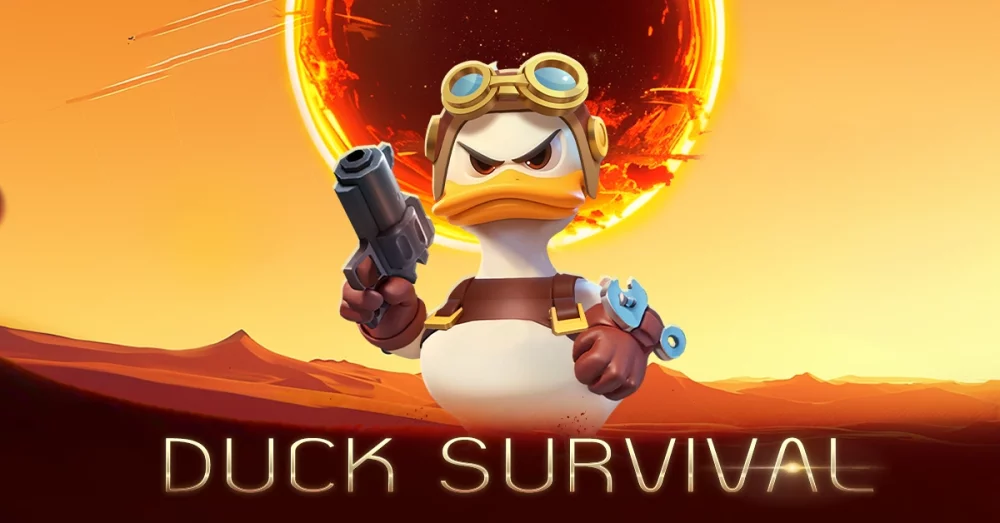
To survive the disaster sequence in Duck Survival, have all three ducks contribute to a shared shelter before the hazard arrives. Treat the shelter as the trio’s first priority, then keep the group close enough to react together when a tsunami or another natural disaster appears. The source supports a cooperative shelter-first approach rather than splitting up and trying to outrun every hazard alone.
Build One Shared Shelter Before the Disaster
A shared shelter gives the trio a central place to regroup when a natural disaster appears. The source specifically shows the ducks working together to create protection from hazards such as a tsunami, so construction should come before unnecessary exploration.
Use this priority order:
- Find a suitable location for the shelter.
- Gather the materials needed for construction.
- Build the shelter as a group.
- Keep all three ducks near the finished structure.
- Prepare to return immediately when the warning signs of a disaster appear.
Avoid spreading the trio across the map while the shelter is unfinished. A divided group may make it harder to respond quickly when the environment becomes dangerous.
Keep the Trio Together During Disaster Preparation
The safest formation is a compact group near the shelter. Since the scenario centers on three ducks surviving together, coordination matters more than individual movement.
Before a disaster:
- Confirm that all three ducks are accounted for.
- Finish shelter construction before wandering far away.
- Avoid sending one duck on a long solo trip.
- Use the shelter as the group’s meeting point.
- Keep the route back to the shelter clear and familiar.
The goal is not to make every duck perform the same task forever. Instead, make sure any gathering or exploration does not leave the group unable to reunite before the hazard arrives.
Use the Shelter as Your Disaster Response Point
When a tsunami or another natural disaster appears, stop gathering resources and return to the shelter. The shelter should function as the trio’s immediate response point rather than simply being a construction objective.
A simple response plan is:
| Situation | Best response |
|---|---|
| The shelter is unfinished | Prioritize construction and regroup the trio |
| Resources are still needed | Gather only what is necessary, then return |
| A tsunami warning appears | Stop exploring and move back together |
| One duck is separated | Regroup before taking further risks |
| The disaster passes | Check the trio before resuming exploration |
Do not assume that building the shelter makes the trio invulnerable. It is a survival measure shown in the source, not a reason to ignore the hazard or abandon group coordination.
Choose Safety Over Extra Exploration
The trio should give up optional exploration when a disaster is approaching. Natural hazards create a different priority from ordinary resource gathering: surviving the event comes first.
Before leaving the shelter, ask:
- Does the group have a clear reason to move?
- Can all three ducks return together?
- Is the shelter easy to find again?
- Is the trip worth risking separation?
- Has the current disaster threat ended?
If the answer is unclear, remain near the shelter. A shorter resource run is usually easier to manage than recovering a separated duck during a disaster.
Recover as a Group After the Hazard
Once the danger has passed, regroup before rebuilding your plans. Check that all three ducks are together, then decide whether the shelter needs attention or whether the group can safely continue gathering resources.
A reliable post-disaster routine is:
- Confirm all three ducks are present.
- Return to the shelter if the group was displaced.
- Recheck the area before exploring.
- Resume resource gathering only after the trio is organized.
- Keep the shelter as the default fallback location.
This prevents the group from immediately splitting apart after surviving one event and being caught unprepared by the next hazard.
Duck Survival Trio Shelter Checklist
Use this quick checklist before a natural disaster:
- [ ] The trio is together.
- [ ] A shared shelter has been built.
- [ ] The shelter’s location is familiar to every duck.
- [ ] Optional exploration has stopped.
- [ ] The group has a clear route back.
- [ ] No duck is left gathering alone.
- [ ] The trio is ready to regroup after the disaster.
The key lesson from the source is straightforward: in Duck Survival, a trio should build shelter first, stay coordinated, and treat natural disasters such as tsunamis as a reason to return to safety rather than continue exploring.

Free Duck Survival Codes
Current active codes and how to redeem them.

Emily Johnson
Emily writes practical mobile strategy guides with a focus on resource planning, base progression, and the early decisions that shape a long-term account.
COMMUNITY
Player Comments
122 players commented on this guide.
The tips are practical and easy to follow.
I wish I had read this before upgrading the wrong thing.
The explanation is clear, especially for beginners.
I tried this today and it worked better than my old setup.