
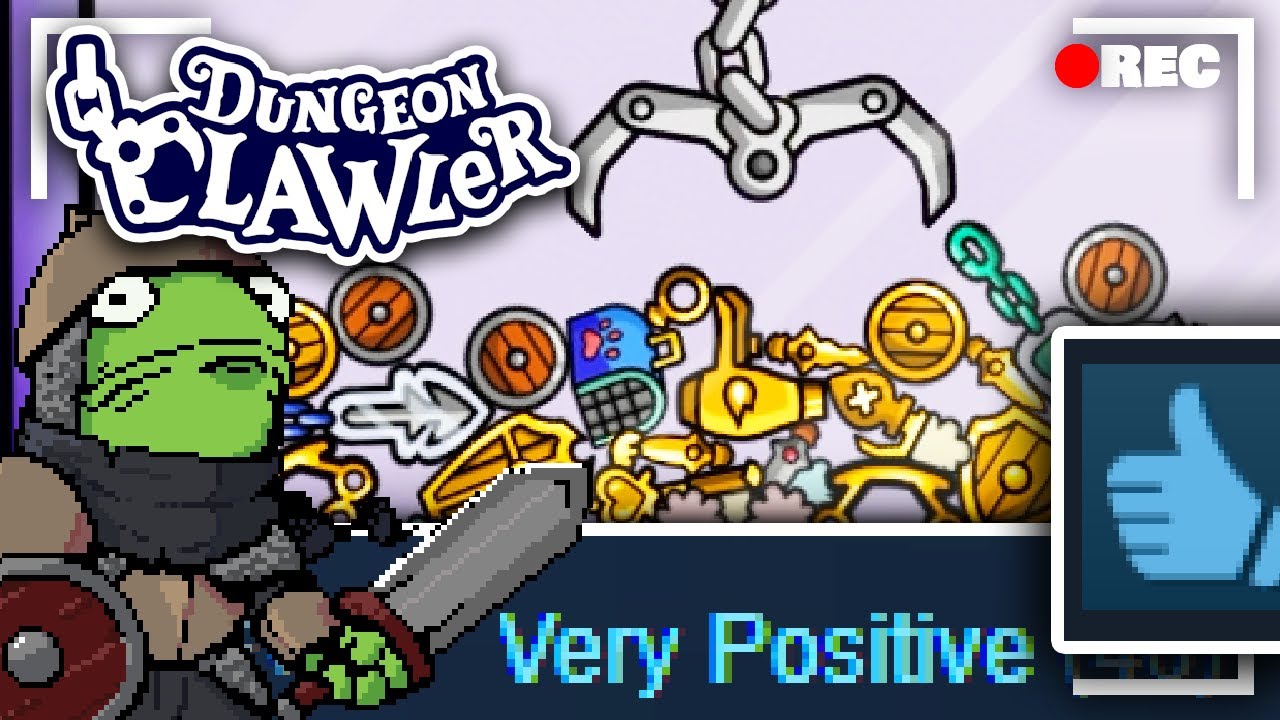
In Dungeon Clawler+, your success is defined by how effectively you bridge the gap between the physical dexterity of the claw machine and the strategic depth of card-based deckbuilding. Unlike traditional roguelikes where resources are earned through combat alone, Dungeon Clawler+ forces you to treat the claw machine as your primary engine for growth. To maximize your run potential, you must move beyond grabbing the first shiny object you see and instead cultivate a "resource-first" mentality that prioritizes mechanical stability and passive economic scaling.
The Foundation of Success: Prioritizing Passive Income
In the early stages of a run, the most common mistake players make is over-investing in low-impact offensive cards. While a +3 damage buff feels satisfying in the first dungeon floor, it will rarely carry you through the mid-game. Instead, your priority must be securing items that provide consistent passive income or mechanical utility.
Passive income relics act as the "interest" on your run’s savings account. By securing items that generate gold per turn or grant free claw attempts, you effectively lower the cost of every interaction.
- Why it works: Every extra attempt you have in the claw machine is a roll of the dice for a rare card or a high-tier relic.
- The Strategy: Always favor relics that provide "per-turn" bonuses over combat-only buffs. If a shop offers a relic that generates 5 gold per turn versus a card that deals 10 damage, take the relic. Over the course of a 10-turn floor, that relic has essentially paid for a future shop purchase, whereas the card has only served a single immediate purpose.
Optimizing Claw Machine Control and Physics
The claw machine in Dungeon Clawler+ is a physical simulation. If you cannot reliably retrieve items, your deck-building options become severely limited. Upgrades that improve the claw’s stability, reach, or grip strength are arguably the most valuable items in the game because they increase the "hit rate" of your primary resource pipeline.
Key Mechanical Upgrades to Target:
- Stability Dampeners: These reduce the "swing" physics of the claw. High-value items often spawn near the edges of the machine; a stable claw allows for precise, predictable drops.
- Increased Claw Speed: Faster movement reduces the chance of items shifting out of place before you can trigger the grab.
- Extended Reach: These allow you to penetrate deeper into the pile, letting you bypass low-value "clutter" items to snag high-tier loot buried at the bottom.
When you invest in these control-focused upgrades, you are essentially increasing your "luck" through mechanical reliability. A player with a stable claw will consistently pull rare cards, whereas a player with high-damage cards but a shaky claw will eventually stall out when they can no longer reach the necessary items.
Leveraging Synergistic Item Combinations
Mid-game momentum in Dungeon Clawler+ is maintained by creating feedback loops. A feedback loop occurs when your items interact to generate more resources than they consume. For instance, pairing an item that rewards "board clears" with an item that "refills attempts" creates a cycle where you can clear the entire board in a single turn, generating massive gold and card gain.
| Item Category | Primary Benefit | Why It Matters |
|---|---|---|
| Economy Relics | Gold/Attempt gain | Provides the capital for shop rerolls. |
| Control Upgrades | Claw stability | Ensures you actually get what you pay for. |
| Scaling Cards | Damage growth | Converts your wealth into combat lethality. |
Look for items that trigger off the act of grabbing, not just the result. If you have an item that grants +1 gold for every item grabbed, a "multi-grab" (grabbing two items at once) effectively doubles the value of that turn. Identifying these multiplicative relationships is what separates a standard run from an "infinite" power build.
Navigating Boss Encounters and Risk Mitigation
Boss fights act as a check on your build. Unlike standard dungeon floors, bosses often introduce hazards to the claw machine—moving obstacles, blocked paths, or timed triggers. Your strategy must shift from "greedy gathering" to "targeted extraction."
During boss fights, your stockpiled attempts and passive bonuses are your only safety net. If you have been following a resource-heavy strategy, you should have a surplus of attempts. Use these to "clear the field" of hazards early, even if it means missing out on a minor gold drop.
- The Golden Rule of Bosses: Never prioritize a rare item if it requires a risky grab that could result in a failed turn. If you miss, you lose tempo, and the boss will punish you with heavy damage.
- Defensive Sacrifice: If you are offered a choice between a high-damage card and a defensive relic that prevents damage during claw-machine misses, take the defensive relic. It is better to have a slightly slower kill time than to have your run ended because you missed a single, high-stakes grab.
Strategic Mistakes to Avoid
Many players fall into the trap of "Value Hoarding." This is the practice of keeping low-tier cards in your deck because they have a high damage value. In Dungeon Clawler+, deck size and consistency are more important than individual card power. If your deck is clogged with basic, low-synergy cards, you will never draw the powerful combos you need to finish the game.
- Prune Your Deck: Use shops not just to buy, but to remove weak cards. A smaller, focused deck ensures that your powerful items and synergies appear more frequently.
- Don't Over-Draft: Just because a card is "Rare" or "Epic" doesn't mean it belongs in your deck. If it doesn't support your primary synergy or help your economy, it is dead weight.
By maintaining a lean, synergistic deck and prioritizing the reliability of your claw machine interactions, you transform Dungeon Clawler+ from a game of chance into a game of calculated execution. Focus on the tools that make your output predictable, and the game’s procedural difficulty will become manageable, no matter how deep into the dungeon you descend.

Free Dungeon Clawler+ Codes
Current active codes and how to redeem them.

Sarah Williams
Sarah specializes in RPG and collection games, explaining team building, character growth, and beginner-friendly ways to avoid expensive early mistakes.
COMMUNITY
Player Comments
160 players commented on this guide.
This guide answered the exact question I had.
The explanation is clear, especially for beginners.
I tried this today and it worked better than my old setup.
Can you add more details about early game in a future update?