
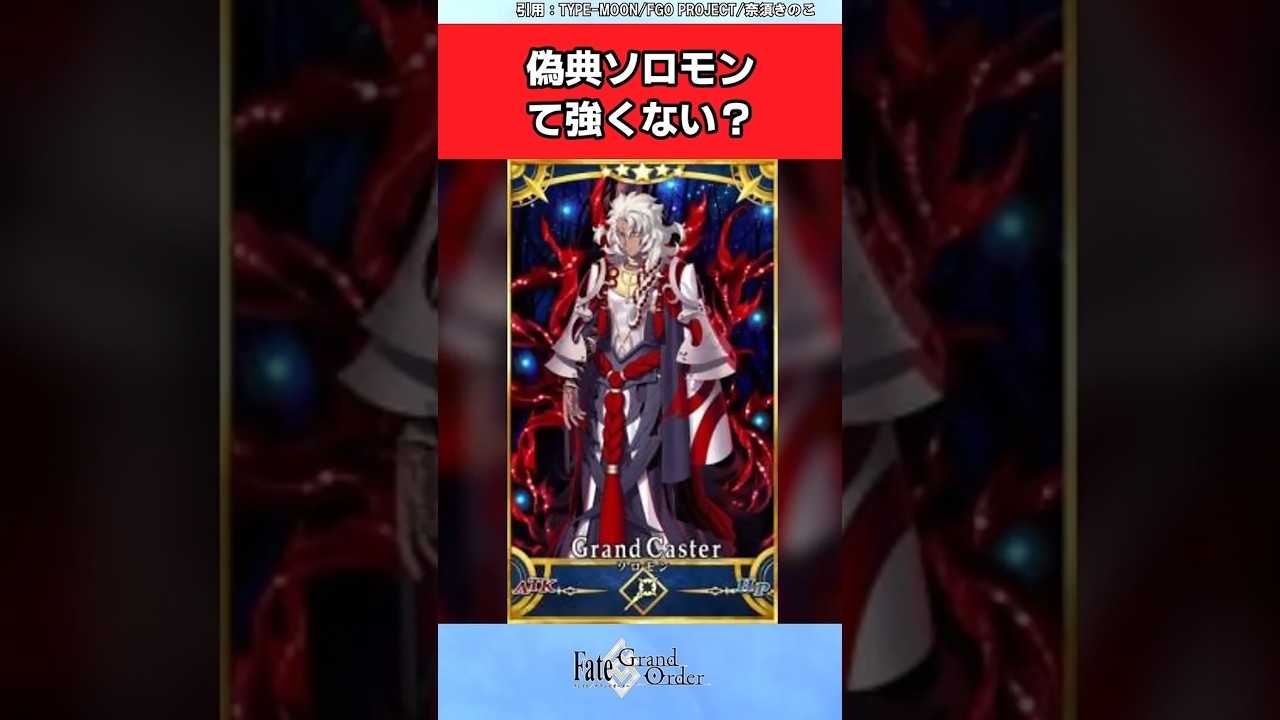
Pseudepigrapha Solomon is a theoretical community concept in Fate/Grand Order rather than an obtainable Servant. In lore discussions, this archetype is considered overpowered because apocryphal texts like the Testament of Solomon depict the Mage King as an aggressive, active subjugator who commands demons, directly resolving the passivity that allowed Goetia to revolt in TYPE-MOON canon. Furthermore, framing this variant as an apocryphal Pretender bypasses the Saint Graph erasure caused by Ars Nova.
Because Pseudepigrapha Solomon exists solely as community theory based on external folklore, do not save Saint Quartz or alter summon budgets for this entity. Instead, use the concept to understand high-value challenge quest mechanics—specifically anti-Demonic trait coverage, skill seals, and buff blocks—when evaluating confirmed Servant banners.
Canonical Grand Caster vs. Apocryphal Solomon
The power disparity between the canonical Mage King and the community's apocryphal concept comes from their fundamental behavior and relationship with spirits.
In Fate/Grand Order canon, Marisbury Animusphere summoned King Solomon as a Grand Caster during the First Fuyuki Holy Grail War. Canonical Solomon lived strictly as a passive instrument of God. Bound by divine revelation and wielding Clairvoyance EX alongside God's Ten Rings, he exercised no personal pride or individual will. This total passivity left his 72 familiar spirits unmanaged, enabling the hive-mind Goetia to take over his corpse and initiate the Incineration of Humanity.
Apocryphal folklore presents the opposite dynamic. In texts such as the Testament of Solomon, the king directly interrogates demons, exploits their planetary weaknesses, and forces them into physical labor to construct the Temple of Jerusalem.
| Attribute | Canonical Grand Caster (FGO) | Pseudepigrapha Solomon (Apocrypha) |
|---|---|---|
| Operational Stance | Completely passive; acts solely on divine revelation | Aggressive occultist and active subjugator |
| Demon Management | Left familiar spirits unmanaged, enabling Goetia's revolt | Actively interrogates, seals, and enslaves demons |
| Primary Relics | Ten Rings of God, Revelation EX, Clairvoyance EX | Ring of the Archangel Michael, Bronze Vessel Seal |
| In-Game Availability | Permanently erased via Ars Nova | Unofficial community theory (Pretender or Ruler) |
The Ars Nova Paradox and the Pretender Classification
The primary reason discussions rely on pseudepigrapha (texts falsely attributed to an author) is that the historical King Solomon cannot return to the Throne of Heroes. During the Salomon Singularity, Romani Archaman activated his first Noble Phantasm, Ars Nova: The Time of Crowning Hath Come, He Is the One Who Setteth the World Free. Returning God's ten rings erased Solomon from existence across the past, present, and future.
A pseudepigraphic variant circumvents this restriction through specific lore mechanics:
- Phantom Attribution: Because the texts are apocryphal, the resulting entity is not the historical king, but a conceptual Phantom Spirit formed by centuries of cultural belief in Solomon the demon-tamer.
- The Pretender Container: Just as Oberon Vortigern demonstrated the viability of deceptive or attributed identities, a Pretender container allows a spirit to embody the name and dominating authority of Solomon without restoring the erased historical man.
- Innocent Monster Effects: Cultural folklore overrides the historical figure's passive nature, resulting in a combat-ready spirit with conceptual absolute negation against non-human entities.
Theoretical Kit Design vs. Master Gacha Strategy
Community proposals model Pseudepigrapha Solomon as a high-difficulty disruptor in the Pretender or Ruler class, utilizing field-wide lockdowns rather than standard Arts farming loops:
- Ring of the Archangel: Party Noble Phantasm charge paired with targeted NP seals and buff removal resistance.
- Demon Subjugation Authority EX: Broad damage multipliers against Demonic, Undead, and Divine traits, alongside guaranteed skill locks.
- Bronze Vessel Containment: Stacking defense debuffs and unremovable status locks designed to negate break-bar triggers.
What Masters Should Do Next
While narrative arcs in Ordeal Call (such as Paper Moon, Id, and Archetype Inception) show that TYPE-MOON regularly utilizes conceptual anomalies and unconventional class containers to explore side lore, unannounced Servants should never influence your resource management.
- Ignore Speculative Banners: Do not skip confirmed meta supports or damage dealers to stockpile resources for unconfirmed lore concepts.
- Prioritize Trait Advantage: Apply the logic behind the concept to existing rosters. Servants featuring broad anti-Demonic coverage, trait overrides, and hard skill or NP seals consistently provide the highest return on investment for late-game challenge quests.
- Monitor Official Campaigns: Only adjust summon targets when official TYPE-MOON or Fate/Grand Order broadcast streams confirm a Servant's class, kit, and release date.
Free Fate/Grand Order Codes
Current active codes and how to redeem them.

James Brown
James focuses on Android gaming on PC, emulator setup, controls, performance tuning, and practical troubleshooting for longer play sessions.
COMMUNITY
Player Comments
89 players commented on this guide.
This helped me understand strategy much better.
I tried this today and it worked better than my old setup.
This saved me time in the early game.
The tips are practical and easy to follow.