
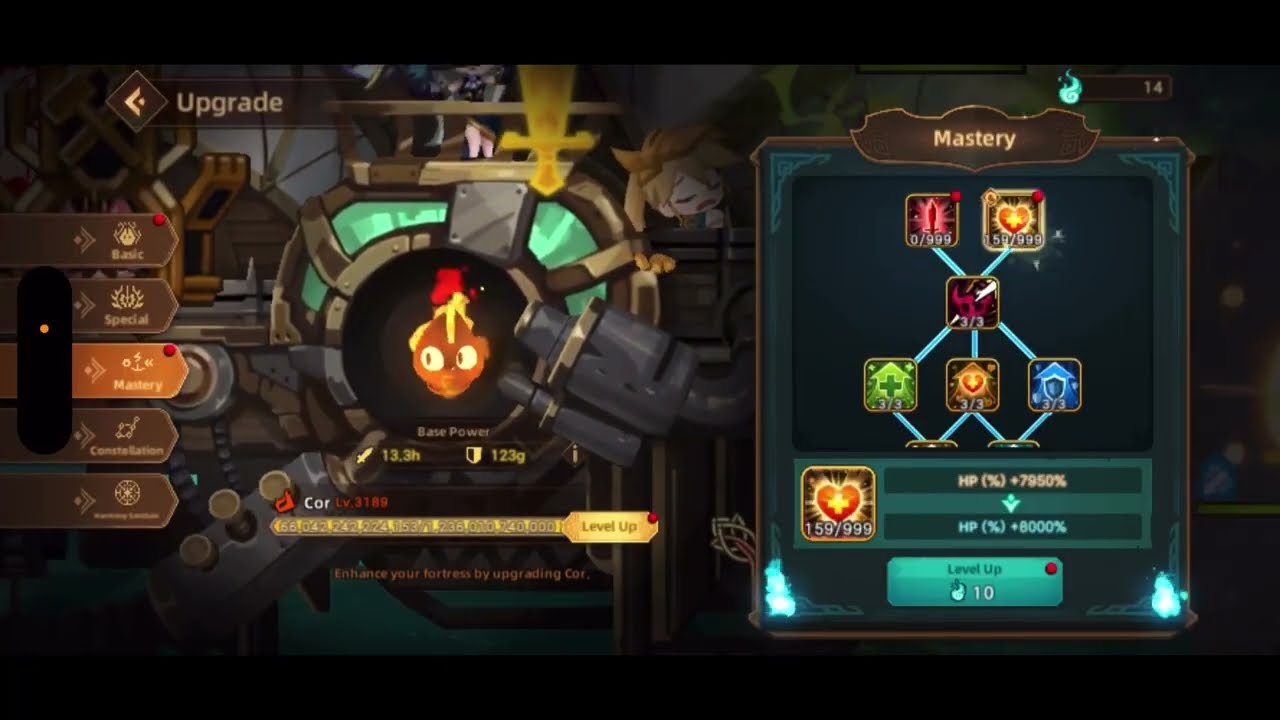
To run a Fortress HP build in Fortress Saga, stack percentage-based Fort HP on your vehicle parts and research nodes while staffing heroes that heal or shield the chassis based on maximum health. This setup creates a resilient frontline that prevents stage wipes caused by high boss burst damage and area-of-effect attacks.
Why Fortress HP Scaling Matters
A stage immediately fails if your fortress falls, regardless of how many heroes remain alive. Investing directly into the fortress chassis provides an absolute fail-safe for campaign progression.
Stacking raw Fort HP directly enhances skills that scale off maximum vehicle health:
- Percentage-based repairs: Support heroes restore larger flat amounts of health per tick when your base pool is higher.
- Chassis barrier skills: Shields keyed to maximum Fort HP absorb heavier burst spikes from bosses and siege hazards before damaging the hull.
Recommended Part Slots and Stat Priorities
Fortress parts supply your core health pool and defensive substats. Once past the early game, prioritize percentage bonuses over flat values, as percentage rolls scale with account research and guild perks.
| Part Slot | Ideal Main Stat | Target Sub-Stats |
|---|---|---|
| Hull / Body | Fort HP % | Fort HP %, Fort DEF %, Damage Reduction |
| Engine | Fort HP / Repair % | Fort HP %, Fort DEF %, Cooldown Reduction |
| Cannon / Catapult | Fort ATK / Fort HP | Fort HP %, Crit Resist, Fort ATK % |
| Wheels / Tracks | Fort DEF / Fort HP | Fort HP %, Damage Reduction, Fort DEF % |
Target Hull and Wheel parts with native Fort HP percentage main stats, and lock those slots when rerolling substats.
Hero Roles and Team Synergies
A Fortress HP build requires heroes whose skill kits actively interact with the vehicle rather than relying solely on personal Hero HP scaling.
- Percentage Repairers: Heroes that restore a fixed percentage of Fort HP ensure high recovery efficiency against sustained incoming damage.
- Chassis Shielders: Defensive units that deploy barriers over the fortress hull absorb burst attacks, allowing repair cooldowns to cycle safely.
- Knockback and Crowd Control: Displacers prevent melee crushers from sitting within striking distance of the hull, cutting down sustained enemy damage per second.
Avoid heroes that depend purely on their own Hero HP for damage unless they provide crowd control or direct defensive benefits to the fortress chassis.
Research, Facility, and Potential Upgrades
Allocate your permanent upgrade currencies to support fortress durability:
- Laboratory Nodes: Maximize base Fort HP nodes before investing heavily into defense reduction. Enemy bosses often carry armor penetration or true damage, making raw HP a more reliable buffer than defense alone.
- Facility Rooms: Prioritize maintenance and engineering rooms that grant passive fortress stats. Assign crew members who possess Fort HP bonus traits to these slots.
- Potential Rerolls: Lock in S-tier or A-tier Fort HP percentage rolls on primary chassis slots before rolling for secondary utility lines.
Build Trade-offs and Limitations
Before fully committing resources to a Fortress HP setup, consider its key operational limits:
- DPS Check Timers: Allocating primary stats to survival lowers offensive output, which can cause stage bosses to enter their rage state before you defeat them.
- Backline Vulnerability: While the chassis can survive sustained hits, piercing assassin mechanics can still kill unshielded backline heroes if you lack adequate crowd control.
- Switching Costs: Pivoting between a Fort HP build and a Hero HP build requires spending reroll materials to reconfigure potentials, parts, and facility staff.

Free Fortress Saga Codes
Current active codes and how to redeem them.

Emily Johnson
Emily writes practical mobile strategy guides with a focus on resource planning, base progression, and the early decisions that shape a long-term account.
COMMUNITY
Player Comments
77 players commented on this guide.
I tried this today and it worked better than my old setup.
Can you add more details about strategy in a future update?
This helped me understand strategy much better.
The explanation is clear, especially for beginners.