
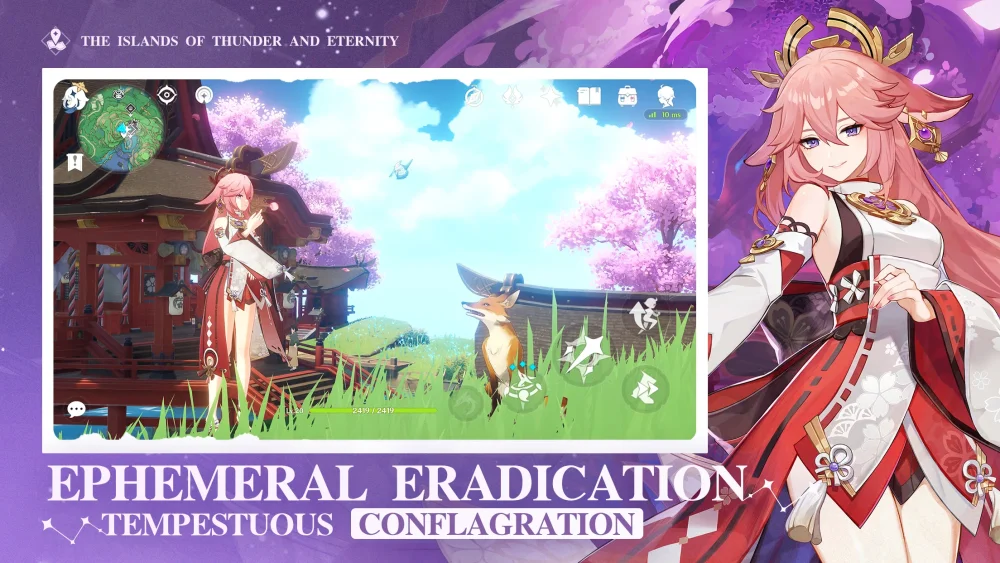
Conquering high-level endgame content like the "Deep Abyss" in Genshin Impact requires more than just meta-defining teams; it demands absolute versatility. When faced with restricted character pools or randomized team generation—often seen in community challenges or specialized event modes—players must shift their focus from static "best-in-slot" rotations to fundamental mechanical understanding. This approach allows you to clear challenging combat stages by identifying core synergies on the fly, regardless of whether your roster consists of top-tier five-star units or underutilized four-star characters.
Embracing the Random Team Challenge
The primary obstacle in randomized combat challenges is the lack of traditional synergy. Players often rely on rigid "National" or "Hypercarry" team templates, which become unavailable when restricted by random selection. To succeed, you must prioritize elemental application over raw damage numbers.
Even a sub-optimal roster can clear difficult content if you can trigger consistent elemental reactions, such as Vaporize, Melt, or Quicken. Start by identifying the elemental infusion capabilities of your randomly assigned units. If you have a character capable of off-field elemental application, they become your foundation. Build your rotation around enabling their reaction potential rather than forcing a specific character to perform a role they aren't equipped for.
When building a team from random characters, treat the "Flex" slot as your highest priority. Look for utility units—those who provide healing, shielding, or crowd control—to anchor the team. Even if your DPS units are not perfectly optimized for the current Abyss cycle, a stable defensive core ensures you survive long enough to generate the necessary energy particles to sustain your elemental bursts, which is the engine of any successful high-difficulty run.
Assessing Mechanical Priorities in Combat
In high-difficulty modes, your priority must shift from maximizing DPS to managing uptime. Randomized teams rarely have perfect Energy Recharge (ER) balance. Consequently, you should prioritize standardizing your rotations around the character with the longest cooldown or the highest energy requirement.
If your random team lacks a dedicated battery, adjust your playstyle to compensate for longer rotation intervals. This might mean using basic attacks to trigger Favonius weapon passives or performing extra skill casts to ensure your most important support effects remain active during key damage windows.
Tactical Adaptability
Adaptability is the most critical skill for these challenges. Use the following priority list when evaluating a random hand:
- Reaction Consistency: Can you trigger a multiplicative reaction (Vaporize/Melt) or a transformative one (Hyperbloom/Aggravate) reliably?
- Survival Uptime: Do you have a healer or shielder? If not, prioritize characters with high stagger resistance or defensive passives.
- Crowd Control (CC): If the team lacks AOE, use environmental geometry to trap enemies against walls or use knockback mechanics to group them manually.
- Shield Breaking: Always prioritize the element that counters the current floor’s primary enemy shields.
Utilizing the Full Roster for Endgame Sustainability
One of the most effective strategies for long-term progression is to avoid over-investing in only your top three teams. By periodically testing your under-leveled or less-used characters in high-difficulty content, you gain a deeper understanding of their niche mechanics. This knowledge becomes invaluable when you are forced to use them in randomized challenges, as you will already know their optimal range, Internal Cooldown (ICD) limitations, and energy generation potential.
Furthermore, recognize the value of "budget" supports. Characters like Bennett, Xingqiu, or Sucrose are often the glue that holds randomized teams together. When you identify these units in your random pool, prioritize their field time to maximize their buff uptime. Even with low investment, these characters provide multiplicative value that exceeds the additive damage of a poorly supported main DPS. Always check your assigned teammates for these "anchor" units before starting the combat encounter.
Identifying and Managing "Dead" Teams
While randomized team challenges provide excellent training, they come with significant limitations. You will inevitably encounter "dead" teams that lack the necessary damage output to meet the time requirements of the Deep Abyss.
When this happens, follow these steps to salvage the attempt:
- Focus on Survival: If a three-star clear is impossible, transition to a "survival-first" mindset to test your mechanical limits against enemy patterns.
- Identify Elemental Deadlocks: Some floors are designed to be impenetrable by certain elements. If your team is locked out of a reaction (e.g., mono-Cryo against Cryo-immune enemies), recognize this early to avoid wasting resources.
- Stalling Strategies: If your team cannot break shields effectively, use your bursts—which provide invincibility frames (i-frames)—to dodge attacks and stall until you find a window to deal chip damage.
The Role of Character Knowledge in Randomization
The secret to success in Genshin Impact randomized challenges is understanding the hidden stats of your units. Every character has a specific role in an elemental reaction chain. For example, knowing which character in your random team has the "stronger" elemental application—or the ability to apply elements without an ICD—is the difference between a successful Melt reaction and a wasted skill.
When playing a random team, take a moment to review your assigned characters' talent descriptions. Look specifically for:
- Off-field application: Skills or Bursts that persist after switching characters.
- Energy generation: Which units provide the most particles for the team?
- Buffing capabilities: Does a character increase Elemental Mastery or Attack?
By identifying these roles, you can construct a "pseudo-rotation" on the fly. Start with your buffers, apply your off-field elemental source, and finish with your primary DPS. This logic holds true regardless of the characters involved, turning a chaotic randomized team into a functional, if unconventional, combat unit.
Conclusion: Mastery Through Chaos
Randomized team challenges in Genshin Impact force you to move past the crutch of "meta" teams. By focusing on elemental fundamentals, energy management, and the unique utility of your entire roster, you become a more well-rounded player. Every failed attempt provides data on why a specific combination failed, and every successful clear provides a masterclass in game mechanics. Treat every random team as a puzzle, prioritize your core defensive and reaction-based anchors, and you will find yourself clearing content that once seemed insurmountable.

Free Genshin Impact Codes
Current active codes and how to redeem them.

Michael Smith
Michael covers live-service games, events, reward systems, and efficient daily routines, turning frequent updates into clear actions for players.
COMMUNITY
Player Comments
69 players commented on this guide.
This helped me understand heroes much better.
Nice guide. I am checking the other Genshin Impact articles next.
The explanation is clear, especially for beginners.
This guide answered the exact question I had.