
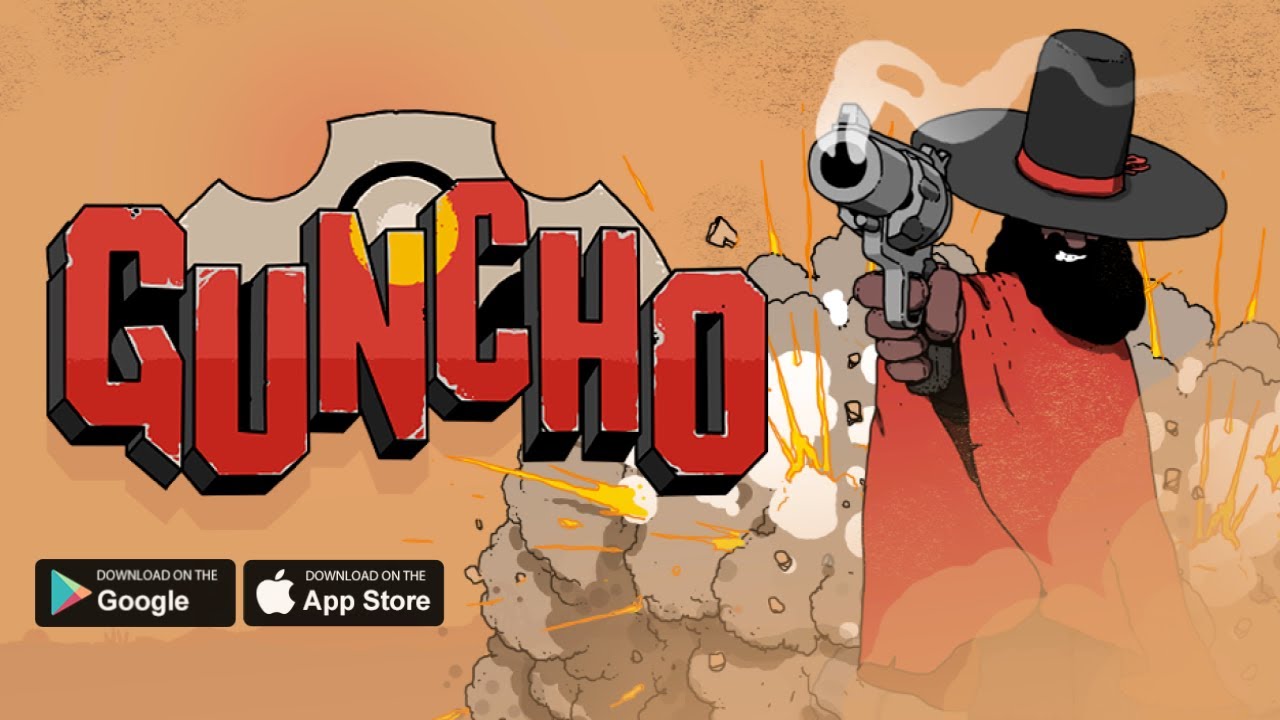
In Guncho, the Wild West is not won by the fastest draw, but by the smartest move. As a turn-based tactical roguelike, Guncho strips away the chaos of real-time shooters and replaces it with a rigorous, grid-based puzzle where every tile you step on could be your last. To survive, you must stop thinking of yourself as a gunslinger and start thinking as a master of positioning.
Success in Guncho relies on a simple, brutal reality: you are almost always outnumbered. Your primary weapon is not your revolver, but the environment itself. By manipulating enemy pathing and line-of-sight, you can dictate the pace of every encounter.
Mastering Grid Movement for Total Survival
In Guncho, movement is a defensive action. Every grid square is a decision point. Because enemies react to your position, ending your turn in the open is a death sentence.
- The Diagonal Advantage: Diagonal movement is your most potent tool for breaking enemy tracking. Many enemies in Guncho rely on cardinal alignment to line up shots. By stepping diagonally behind cover, you often force the AI to waste a turn repositioning rather than attacking.
- The "Kiting" Technique: Never stand your ground against a mob. Instead, lure enemies into long paths where they have to traverse open ground to reach you. By moving in a circular or "L-shaped" pattern, you can bunch up enemies, forcing them to occupy the same space or block each other, which prevents them from surrounding you.
- Counting Tiles: Always scan the map before you commit to a move. If you move four tiles, can an enemy reach you in their next turn? If the answer is yes, you must ensure that your landing spot provides cover or ends their line of sight.
Tactical Revolver Reloading and Ammo Economy
Your six-shooter is your most precious resource. In Guncho, missing a shot isn't just a waste of lead—it is a waste of a turn that could have been used to reach safety.
The Rules of Engagement
- Never Fire Blind: Do not shoot at enemies behind cover unless you have no other choice. If an enemy is behind a barrel or wall, they are effectively neutralized for the moment. Ignore them and focus on the immediate threats in the open.
- The Reload Rhythm: Never reload in the open. If you are empty, your priority must be breaking line-of-sight. Use a turn to move behind a solid wall, then use your next turn to reload.
- Ammo Conservation: If you have one bullet left, make sure it is saved for an enemy that has a direct shot on you. If you kill the enemy threatening you, you have bought yourself an entire turn of "free" movement to reposition or find a better angle.
Manipulating Enemy AI Behavior
The AI in Guncho is predictable, and that predictability is your greatest advantage. Enemies generally operate on a "shortest path" logic to reach your current coordinate.
You can use this to create bottlenecks. By retreating into a narrow hallway or a single-tile gap between crates, you force enemies to approach you one at a time. This turns a 1v4 scenario into four consecutive 1v1 duels. By forcing the AI into these narrow corridors, you effectively negate their numbers advantage, as only the enemy at the very front can fire at you. If you find yourself in an open area with enemies closing in, immediately look for the nearest "pinch point" to funnel them into your crosshairs.
Utilizing the Environment for Defensive Advantage
The map in Guncho is never just scenery; it is a dynamic puzzle. You must categorize every environmental element as either a hard cover (blocks bullets) or a movement inhibitor (slows down enemies).
- Corners are King: Standing at the edge of a corner allows you to peek out, take a shot, and immediately step back behind the wall. This "peek-a-boo" strategy is the gold standard for clearing rooms without taking return fire.
- Edge Control: The edges of the map are the safest places to be. By hugging the perimeter, you reduce the number of directions from which enemies can attack you. If you are in the center of the map, you are vulnerable from all four sides. Always aim to finish your movement phase with your back to the edge of the screen whenever possible.
Prioritizing Target Selection
Not every enemy is a priority. Learning to triage targets is what separates a novice from a veteran. Use this hierarchy to decide who to shoot first:
- Immediate Threat: Any enemy that can see you and has a clear shot. If you don't kill them, you will take damage.
- The Flanker: Enemies that are moving to a position where they will have a clear shot on you in the next turn.
- The Blocker: Enemies that are currently behind cover. These are your lowest priority. Let them waste their turns trying to move around obstacles while you deal with the enemies that are actively threatening your health.
Avoiding Common Mistakes
Even experienced players fall into these traps. Avoid them to increase your run longevity:
- The "Greed" Trap: Don't chase a low-health enemy into the open. If they are hiding, let them stay there. Your goal is to survive the encounter, not to hunt down every single bandit.
- Ignoring Movement Ranges: Always double-check how many tiles an enemy can move. If you end your turn just one tile within their range, you are inviting unnecessary damage.
- Panic Reloading: Never reload while you are still in an enemy's line of sight. Even if you have the ammo, if you are exposed, move to cover first. The extra turn taken to reach safety is always worth the health you save by avoiding a hit.
By consistently applying these principles—prioritizing bottlenecks, managing your reload cycles behind hard cover, and treating every move as a defensive necessity—you will master the tactical flow of Guncho. Remember: in the Wild West, the survivor isn't the one who shoots the most, but the one who positions themselves to never get hit.

Free Guncho Codes
Current active codes and how to redeem them.

James Brown
James focuses on Android gaming on PC, emulator setup, controls, performance tuning, and practical troubleshooting for longer play sessions.
COMMUNITY
Player Comments
134 players commented on this guide.
Nice guide. I am checking the other Guncho articles next.
Good guide for Guncho players. The base building part was useful.
This saved me time in the early game.
This helped me understand base building much better.