
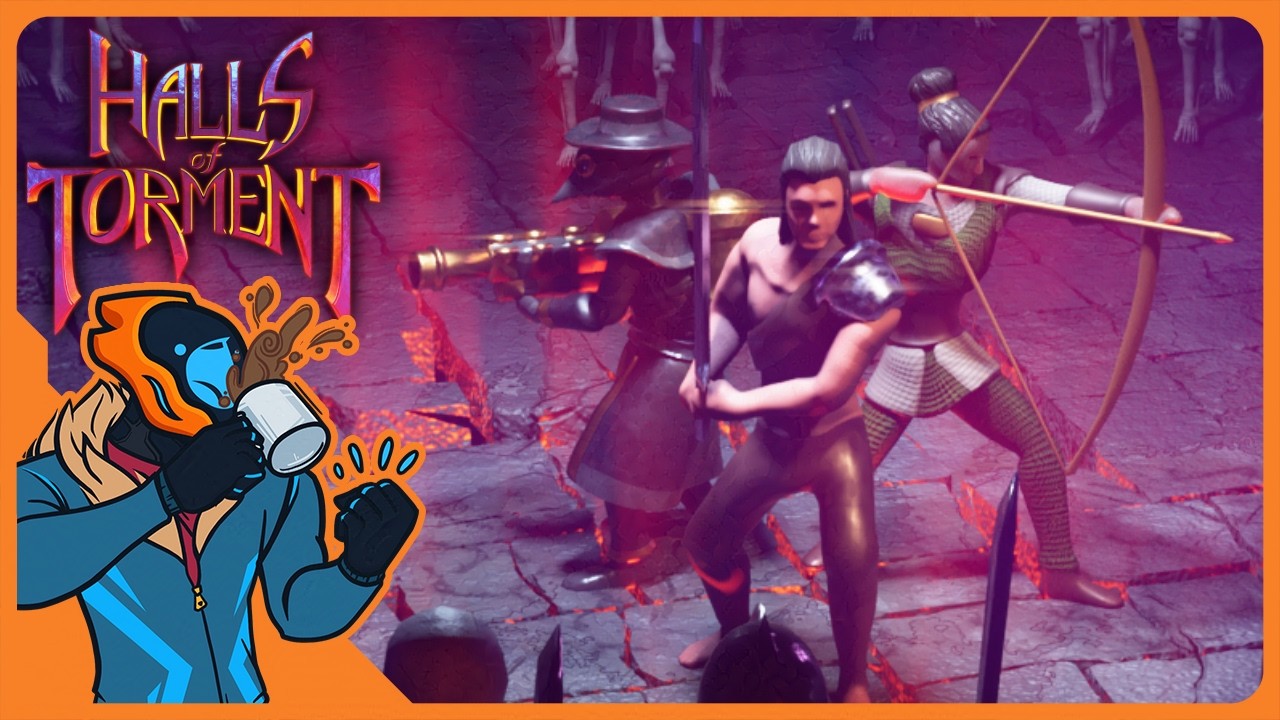
To dominate the grueling, high-density stages of Halls of Torment, you must transition from treating each run as a standalone challenge to viewing the game through the lens of long-term meta-progression. Halls of Torment is designed to punish players who ignore the permanent growth systems, as the scaling difficulty curve eventually outpaces any build that hasn't been bolstered by base stat investments. By strategically funneling your gold into the right upgrades and understanding how to manipulate the game’s scaling mechanics, you can transform your characters from fragile survivors into unstoppable forces of nature.
The Foundation of Strength: Permanent Stat Upgrades
The most critical investment in Halls of Torment occurs at the main menu. Gold earned during your runs is not merely a score; it is the currency for your character’s permanent evolution. Before jumping into another run, always visit the permanent stat menu to distribute your wealth.
- Movement Speed: This is non-negotiable. As enemy density increases in the final minutes, the ability to kite and reposition becomes your primary defensive layer.
- Attack Speed and Multipliers: These act as force multipliers. When you increase your base attack speed, every offensive trait you pick up during a run becomes more valuable.
- Max Health and Regeneration: These provide a safety net, allowing you to survive minor positioning errors while you learn the attack patterns of late-game bosses.
By investing in these fundamentals, you reduce your reliance on "lucky" RNG trait rolls during level-ups. A character with high base stats can make almost any ability set work, whereas a character with poor base stats is forced to fish for specific high-tier traits just to survive.
Optimizing Gold Farming Efficiency
If you find yourself hitting a wall, your current bottleneck is likely a lack of meta-upgrades. To accelerate your progress, you need a dedicated gold-farming strategy.
Instead of chasing high-risk, high-reward builds that might fail halfway through a run, prioritize items that offer gold bonuses. Even a modest percentage increase to gold gain compounds significantly over dozens of runs. Focus your farming efforts on stages where you can clear screens rapidly without needing to move constantly. The more enemies you eliminate per minute, the higher your gold-per-run ratio will be.
Pro-tip: If you are struggling to keep up with the scaling, return to earlier stages. You will clear them faster, take less damage, and accumulate gold with near-zero risk. Use these "low-stakes" runs to bankroll the upgrades that will eventually allow you to crush the later, more difficult tiers.
Decoding the Scaling Difficulty Curve
Halls of Torment features an aggressive difficulty curve. As the timer ticks toward the 30-minute mark, enemy health pools and damage output scale exponentially. To survive this, you must pivot your build from "clearing trash mobs" to "boss-killing efficiency."
- Multiplicative vs. Additive: Early in a run, flat damage increases are fine. By the mid-game, you must prioritize multiplicative bonuses—such as Critical Damage, Attack Speed, and Projectile Count. These traits stack together to create massive DPS spikes that keep pace with the elite enemies spawning in the final minutes.
- Ability Synergy: A balanced build requires a "Clear/Control/Single-Target" split. Use area-of-effect abilities like Transfixion or Lightning Strike to manage the swarm, while reserving slots for high-damage abilities that can melt boss health bars.
- Crowd Control (CC): In the late game, you cannot out-damage every enemy. You need CC, such as slows or stuns, to create "dead zones" in the swarm where you can safely stand and attack.
Strategic Trait Selection and Risk Management
Every level-up screen is a decision point that defines the outcome of your run. The biggest mistake players make is picking traits based on what "feels good" rather than what the build requires.
Before you start, identify your win condition. If you are playing the Archer, your goal is high projectile count and crit chance. If you are playing the Cleric, you are likely looking for area size and damage-over-time synergy.
- The 70/30 Rule: Dedicate 70% of your trait picks to your core offensive strategy and 30% to covering your defensive weaknesses (like movement speed or health).
- Avoid Trait Dilution: Don't pick defensive traits "just in case" if your damage is currently sufficient. If you kill enemies faster, they have less time to hit you, making offense the best form of defense in Halls of Torment.
Leveraging Meta-Progression for New Classes
One of the most rewarding aspects of Halls of Torment is that meta-progression is account-wide. When you unlock a new character class, they aren't starting from scratch; they inherit the base stats you’ve purchased with your previous runs.
Use this to your advantage. If you are farming gold efficiently with a character you know well, you are effectively "power-leveling" every other character in your roster. This removes the "barrier to entry" for trying out more complex or fragile classes. By the time you unlock a class like the Warlock or Exterminator, the global stat boosts you've accumulated will provide them with a massive head start, allowing you to experiment with their unique mechanics immediately rather than spending hours grinding their base stats from zero.
Final Thoughts: The Path to Mastery
To truly master Halls of Torment, you must treat gold as your most precious resource. Every run should have a purpose: either to push into a new difficulty tier to test your limits or to efficiently farm gold to fuel your next wave of permanent upgrades. By maintaining a balance between aggressive trait selection and consistent meta-progression, you will find that the "unholy creatures" of the underworld become trivial obstacles on your path to total dominance. Keep your movement precise, your damage multiplicative, and your focus on the long-term growth of your roster.

Free Halls of Torment Codes
Current active codes and how to redeem them.

Sarah Williams
Sarah specializes in RPG and collection games, explaining team building, character growth, and beginner-friendly ways to avoid expensive early mistakes.
COMMUNITY
Player Comments
148 players commented on this guide.
This guide answered the exact question I had.
I tried this today and it worked better than my old setup.
I wish I had read this before upgrading the wrong thing.
Can you add more details about base building in a future update?