
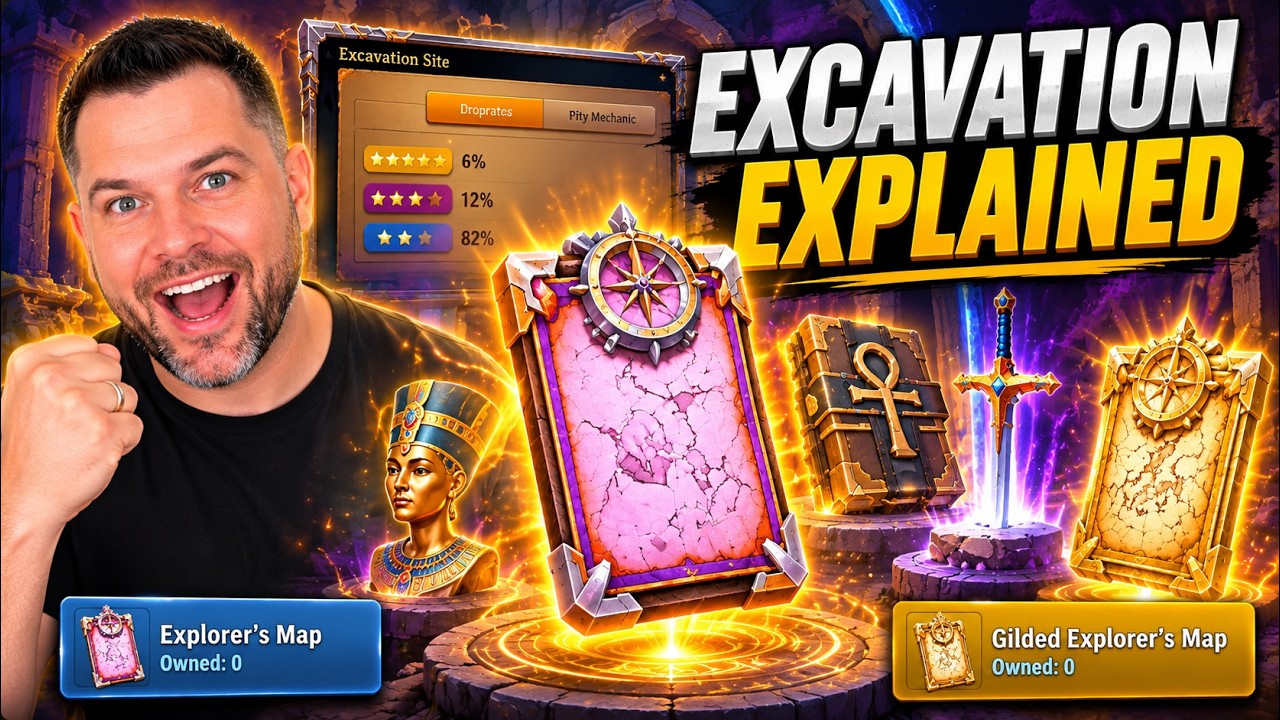
In Heroes of History: Epic Empire, relics are the backbone of your hero development, providing the essential stat boosts and unique abilities required to tackle late-game PvE and competitive PvP content. The most reliable way to acquire these items is through the Excavation system. While many players treat Excavation as a passive activity, top-tier competitors view it as a precision resource management game. By understanding how to track your "pity" counter and choosing the right time to spend your Explorer Maps, you can guarantee high-rarity relic drops without relying on pure luck.
Decoding the Excavation System Mechanics
At its core, Excavation is a probability-based reward system that utilizes a hidden counter to track your progress toward a guaranteed rare drop. Every time you consume an Explorer Map to search a site, you earn progress toward a "pity" threshold. Once this threshold is reached, the game guarantees a legendary-tier relic.
The game differentiates between two primary currencies: Standard Explorer Maps and Gilded Explorer Maps.
- Standard Explorer Maps: Used for general relic farming and building your base collection of lower-tier artifacts. These are abundant but have a lower probability of yielding high-rarity loot.
- Gilded Explorer Maps: The premium currency of the Excavation system. These maps significantly shift the probability distribution toward higher-rarity relics and are essential for players looking to min-max their hero loadouts.
Mastering the Pity Counter Strategy
The "pity" mechanic is the most important tool in your arsenal. It is essentially a safety net that prevents you from endlessly spending resources without seeing a meaningful return. To use this effectively, you must maintain a consistent habit of tracking your attempts.
If you are currently ten or fifteen excavations away from your guaranteed legendary, treat those remaining attempts as your highest priority. Do not be tempted to split your resources across multiple different excavation sites or banners if you are close to a pity trigger. By focusing your maps on a single target, you ensure that the guaranteed legendary drop occurs exactly when you want it, rather than wasting it on a rotation that doesn't benefit your primary team composition.
Resource Management: Standard vs. Gilded Usage
Efficient players in Heroes of History: Epic Empire do not spend all their maps the moment they acquire them. Instead, they follow a disciplined resource allocation strategy:
| Resource Usage Strategy | Benefit |
|---|---|
| Early Cycle | Use Standard Maps to build initial pity progress toward the threshold. |
| Pity Threshold | Swap to Gilded Explorer Maps when you are 1-5 attempts away from the pity trigger. |
| Low-Yield Rotation | Hold all maps if the current site rotation does not include relics for your main heroes. |
By saving your Gilded Explorer Maps for the final steps of your pity cycle, you maximize the statistical value of the "guaranteed" drop. This approach turns a potentially mediocre outcome into a high-tier legendary relic that can serve as a cornerstone for your hero builds.
Strategic Selection: Why Rarity Isn't Everything
While legendary relics are the goal, not every legendary relic is created equal. The Excavation system features rotating reward pools, and players often make the mistake of chasing the highest rarity regardless of the item's utility.
Before you begin an excavation session, always inspect the "Available Rewards" list. Ask yourself: Does this relic provide a set bonus or an ability boost that complements my current PvP setup or PvE campaign team? If the answer is no, it is often more efficient to hoard your maps until the rotation changes. Investing resources into relics that provide "dead stats" for your specific build—such as defense-heavy relics for an offensive-focused hero—is a trap that stalls your overall progression.
Avoiding Common Excavation Pitfalls
To stay competitive, you must avoid the most common traps that drain player resources:
- The "Empty Site" Trap: Never start an excavation session without checking the current drop pool. If you are farming for a specific relic set that isn't featured, you are effectively wasting your maps on items that will eventually be salvaged or ignored.
- Ignoring Event Bonuses: Heroes of History: Epic Empire frequently runs events that increase the drop rates or offer bonus rewards for Excavation. Always time your major spending sprees to coincide with these events to maximize the value of every single map used.
- Fragmented Spending: Spreading your maps across different, unrelated excavation sites prevents you from reaching pity thresholds efficiently. Focus your efforts on one goal until it is completed.
- Underestimating Gilded Maps: Many players hoard Gilded Explorer Maps out of fear of wasting them. However, if you are hitting a wall in the arena or struggling with high-level bosses, you are likely suffering from outdated relic gear. Use your Gilded maps to break through these progression bottlenecks.
Final Recommendations for Long-Term Growth
Consistency is the secret to success in Heroes of History: Epic Empire. Develop a routine where you log in, check your current pity progress, and evaluate the active relic pool. If the pool is favorable, commit your maps to trigger that legendary reward. If the pool is unfavorable, focus on daily resource gathering and save your maps for the next rotation.
By treating the Excavation system as a calculated investment rather than a gamble, you ensure that your heroes always have access to the best possible gear. This level of planning is what separates casual players from those who dominate the leaderboards. Keep your eyes on the pity counter, prioritize Gilded maps for your final pushes, and always align your relic farming with your long-term team-building goals.

Free Heroes of History: Epic Empire Codes
Current active codes and how to redeem them.

Sarah Williams
Sarah specializes in RPG and collection games, explaining team building, character growth, and beginner-friendly ways to avoid expensive early mistakes.
COMMUNITY
Player Comments
30 players commented on this guide.
Can you add more details about heroes in a future update?
This guide answered the exact question I had.
I tried this today and it worked better than my old setup.
Nice guide. I am checking the other Heroes of History: Epic Empire articles next.