
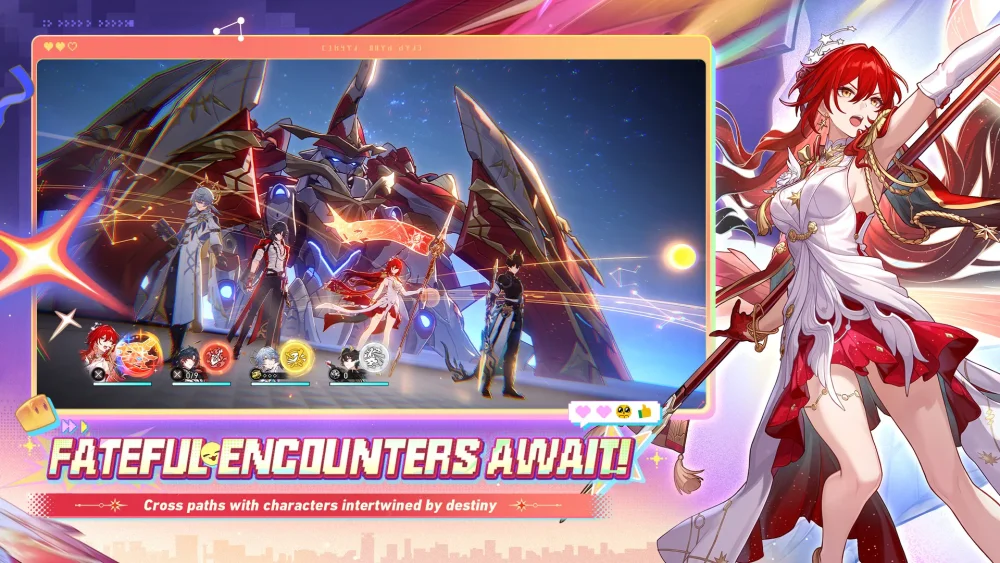
In Honkai: Star Rail, the transition from a character’s initial reveal to their live combat performance is rarely a coincidence. HoYoverse utilizes a highly intentional "visual language" to communicate a character’s mechanical role, elemental identity, and narrative significance long before they hit the battlefield. For the seasoned Trailblazer, learning to decode these high-production trailers and promotional materials is more than just appreciating art—it is a strategic tool for informed account management and banner planning.
The Mechanics of Rhythmic Synchronization in Character Reveals
The pacing of a character’s reveal trailer is a direct reflection of their intended gameplay rhythm. When you watch a Honkai: Star Rail character trailer, pay close attention to the edit’s heartbeat—the moment where the music swells and the character’s signature move lands.
- High-Tempo, Staccato Edits: These are almost exclusively reserved for DPS units (The Hunt, The Destruction, or The Erudition). Rapid-fire cuts and beat-synced impacts mirror the "burst window" gameplay loop where you dump skill points to maximize damage within a limited timeframe.
- Melodic, Fluid Transitions: Characters defined by smooth, flowing motion—often associated with The Harmony or The Abundance—are typically designed for consistent buff uptime and team utility. Their trailers favor long, uninterrupted shots, mirroring their role in managing the combat flow rather than spike-damage output.
Understanding this synchronization allows you to mentally categorize a unit’s "weight." If a character trailer feels sluggish or measured, they are likely a sustain or support unit designed for long-form content like Pure Fiction or Memory of Chaos, rather than a hyper-carry meant for speed-running.
Decoding Visual Motifs and Color Theory
Color theory in Honkai: Star Rail is remarkably consistent. The design team uses specific palettes to signal a character’s Path and elemental affinity at a glance. By deconstructing these palettes, you can cross-reference them with your existing roster to identify potential synergy.
- Elemental Signaling: Look for the dominant "energy" color during a character's Ultimate. While not always 1:1, the visual effects often mirror the elemental damage type. A character draped in sharp, electric-blue geometry or lightning-like motifs is rarely anything other than Lightning element.
- Thematic Path Indicators: Characters following The Preservation often utilize heavy, grounded, or shielding motifs (geometric armor, stone, or solidified light). Conversely, characters on The Nihility often feature "blurred" visual effects, smoke, or chaotic, asymmetrical designs that reflect their role in debuffing enemies and distorting combat rules.
When you notice a character utilizing visual motifs similar to an established "S-Tier" unit—for example, shared color-coding or similar animation silhouettes—it is often a hint that they fill a mechanically similar niche. Use this to determine if you actually need a new unit or if you are simply experiencing "pull anxiety" for a character that overlaps with your current roster.
Narrative Foreshadowing Through Character Motion
HoYoverse excels at hiding lore in the periphery of high-motion sequences. Promotional media often features subtle interactions between characters that foreshadow their role in the next Trailblaze Mission.
Look for the "Spatial Relationship": When two characters share a screen, pay attention to who initiates the movement and who reacts. In Honkai: Star Rail, the character who controls the camera or initiates the scene is often the one driving the narrative arc. If a character appears in a trailer alongside an established faction member (like the Stellaron Hunters or the Express Crew) but is framed in a defensive posture, it suggests they are either an antagonist or an outsider who will face conflict with the established group. Identifying these dynamics early can help you understand the stakes of a new story patch before you even log in.
Strategic Banner Planning: Using Visuals for Investment
Visual analysis is an essential filter for long-term account planning. When a new banner is announced, many players immediately look at raw damage numbers, but visual analysis provides the "soul" of the character—the intended playstyle.
- The "Fluidity" Test: If you prefer teams that prioritize "Rotation-based" gameplay (like Follow-up Attack teams), look for trailers that emphasize multi-character interaction. Units that show other party members reacting to their skills in a trailer are often designed to shine in synergy-heavy teams.
- The "Impact" Test: If you prefer "Hyper-carry" teams, look for the isolation factor. Trailers that focus entirely on the new character, stripping away the background and focusing on singular, massive-damage impact frames, signal that the unit is designed to be the sole star of your party.
By aligning the "vibe" of the character with your preferred playstyle, you minimize the risk of pulling for a unit that is mechanically powerful but aesthetically or functionally frustrating to pilot in your specific team setups.
Limitations and Managing Expectations
While visual analysis is a powerful interpretive tool, it is not a substitute for objective data. It is crucial to remember that promotional media is designed to sell the fantasy of the character.
- The "Flashy" Trap: A character’s ultimate animation might look earth-shattering in a trailer, but the underlying multipliers and cooldowns determine their actual effectiveness.
- Contextual Buffs: Trailers often feature characters against enemies they are specifically designed to counter, or in teams that perfectly amplify their strengths. Never assume the "best-case scenario" shown in a video will be your daily experience.
Expert Advice: Always treat visual analysis as your "First Impression" phase. Once the character details, kit breakdowns, and beta testing reports are available, use those to confirm your initial hypothesis. If the mechanical reality contradicts the visual "feel," trust the numbers, but consider if your personal enjoyment of the character’s aesthetic outweighs their potential performance gap.
Conclusion: The Expert Trailblazer’s Approach
Mastering the visual language of Honkai: Star Rail turns the wait for new banners into a rewarding investigative process. By observing rhythm, color, and motion, you can build a more cohesive roster and understand the narrative threads of the galaxy with greater clarity. Keep your expectations grounded in the game’s actual mechanics, but use these artistic clues to ensure every Stellar Jade you spend is on a character that truly fits your vision for your account.
Free Honkai: Star Rail Codes
Current active codes and how to redeem them.

Sarah Williams
Sarah specializes in RPG and collection games, explaining team building, character growth, and beginner-friendly ways to avoid expensive early mistakes.
COMMUNITY
Player Comments
98 players commented on this guide.
Can you add more details about strategy in a future update?
This saved me time in the early game.
The explanation is clear, especially for beginners.
Good guide for Honkai: Star Rail players. The strategy part was useful.