
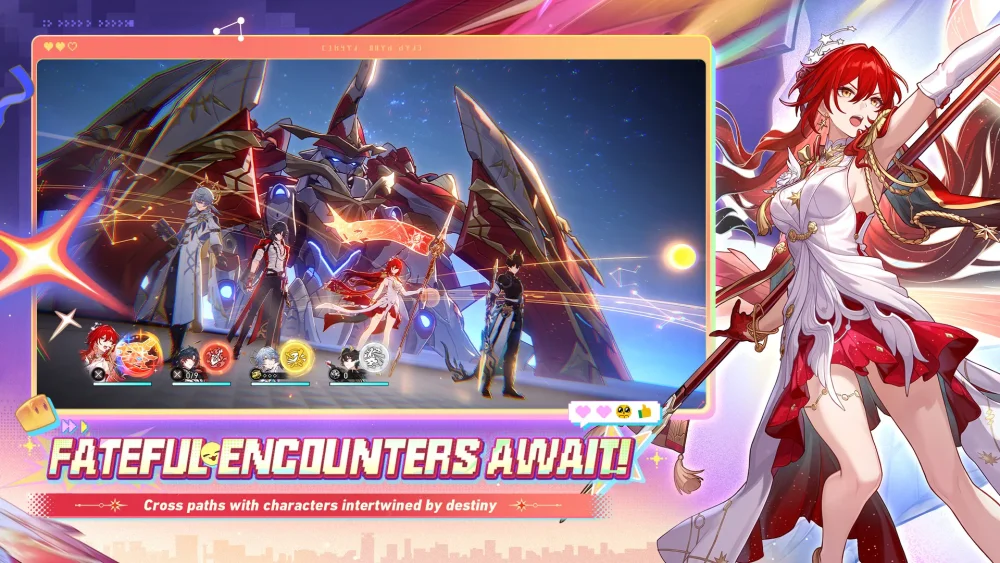
The City of Elation stands as one of the most distinct departures from the traditional turn-based combat of Honkai: Star Rail. While the game is widely known for its strategic team-building and tactical role-playing elements, the City of Elation challenges players to shift their focus toward precision, rhythm, and environmental navigation. To succeed, players must stop viewing the event through the lens of standard combat and start treating it as a specialized, skill-based puzzle environment.
By mastering the specific rhythm of the mini-games and understanding how to prioritize resource nodes, players can maximize their rewards and breeze through the narrative-driven challenges that define this unique space.
Understanding the Shift in Mechanics
In most Honkai: Star Rail content, success is determined by your character stats, Relic builds, and Path synergies. In the City of Elation, those factors take a backseat to mechanical execution. The gameplay loop here is defined by:
- Mini-Game Interactions: You are often tasked with completing quick-time events (QTEs), rhythmic inputs, or spatial puzzles that deviate from the standard combat UI.
- Resource Management: Rather than managing skill points, you are managing event-specific currency and collection streaks that reset if you fail an environmental hurdle.
- Time-Sensitive Objectives: Many stages require you to clear segments under a time limit, forcing you to prioritize critical paths over thorough exploration.
Strategic Priority: Resource Accumulation
The most common mistake players make in the City of Elation is attempting to "clear" every single node on the map during their first run. This often leads to running out of time or failing a late-stage mini-game, which resets your progress.
The "Path of Efficiency" Strategy:
- Identify High-Value Nodes: Scan the map for clusters of event currency. These are your multipliers. Ignore individual, low-value items until the main high-value path is secured.
- Avoid Combat Traps: Many encounters are designed to bait you into wasting time. If an encounter does not reward you with essential event items or progression, skip it.
- Prioritize Momentum: The event rewards "streaks." Focus on clearing consecutive nodes without stopping to ensure your rewards compound significantly by the end of the run.
Mastering Mini-Game Mechanics
The City of Elation’s mini-games are effectively progression gates. If you fail these, you don’t just lose a score bonus—you lose the ability to proceed to the next area.
- Visual Cues and Rhythm: The game uses distinct color-coding and audio cues to signal when an interaction is about to occur. Turn your sound up; the audio cues are often more reliable than the visual animations in chaotic segments.
- Input Consistency: When performing directional inputs, don’t spam the buttons. Input lag or incorrect commands will trigger a penalty. Practice the "one-press" method to ensure each command registers correctly within the game engine.
- Learning the Loop: Mini-games in this mode often cycle through a predictable pattern. If you fail, do not rush to restart. Use the "failure screen" as an opportunity to observe the pattern one more time. Memorizing the sequence is the ultimate key to high-scoring runs.
Managing Limitations and Trade-offs
Unlike the Memory of Chaos or Pure Fiction, the City of Elation does not allow for long-term team-building setups. You are restricted to specific character utility, meaning you must play to the strengths of the environment rather than your favorite DPS carry.
Decision-Making Tips:
- Utility over Damage: Favor characters that provide movement speed buffs or shield utility if the stage includes environmental hazards that deal damage over time.
- The "Reconnaissance Run": Your first attempt at any new City of Elation stage should always be a "recon" run. Ignore the score. Spend the time mapping the hazards and identifying where the mini-games trigger.
- Stamina/Resource Balance: Do not exhaust your resources on the first segment. If the stage is long, pace yourself. The game often introduces a "boss" mini-game at the end of the path that requires a higher level of focus; ensure you have enough mental energy and time left to handle it.
Adapting to Dynamic Environmental Challenges
The City of Elation is not a static map. As you progress, the environment changes, often introducing "Hazard Zones." These zones can restrict movement or introduce obstacles that you cannot simply run through.
- Observe Pathing Changes: After completing a major objective, look for doors or paths that were previously locked. These often lead to secret caches that provide massive rewards.
- Memorize Enemy/Hazard Loops: If you are moving through a section with moving hazards, wait for the cycle to reset. Trying to sprint through a hazard is the most frequent cause of failure in the City of Elation.
- Cooldown Management: If your character has an active ability that interacts with the map (like a speed boost or a dash), save it for the most navigationally dense areas, not the open stretches.
Maximizing Rewards: A Two-Phase Approach
To truly master the City of Elation, you must separate your gameplay into two distinct phases:
- The Mapping Phase: Focus entirely on exploration. Find every shortcut, note the locations of high-value resource nodes, and identify the trigger points for every mini-game. Do not worry about your total score here.
- The Execution Phase: Now that you know the map, optimize your route. Use the most efficient path between the highest-value resource nodes, and use your stored knowledge of mini-game patterns to complete them in one attempt.
This two-phase approach removes the frustration of "blind" play. It turns the complex, high-pressure environment of the City of Elation into a calculated, efficient run. By focusing on the mechanics rather than the pressure of the clock, you ensure that every resource is collected and every reward tier is reached.
Final Expert Insights
The City of Elation is designed to test your ability to adapt to Honkai: Star Rail outside of its standard combat comfort zone. The most successful players are those who remain calm during the mini-games and are disciplined enough to skip non-essential encounters. Remember that in this mode, efficiency is your greatest weapon. If you find yourself struggling with a specific sequence, step back, observe the pattern, and execute with precision rather than speed. This mindset will not only help you clear the content but will also make you a more versatile player across all of Honkai: Star Rail’s diverse game modes.

Free Honkai: Star Rail Codes
Current active codes and how to redeem them.

Sarah Williams
Sarah specializes in RPG and collection games, explaining team building, character growth, and beginner-friendly ways to avoid expensive early mistakes.
COMMUNITY
Player Comments
138 players commented on this guide.
This helped me understand resources much better.
I tried this today and it worked better than my old setup.
This saved me time in the early game.
This guide answered the exact question I had.