
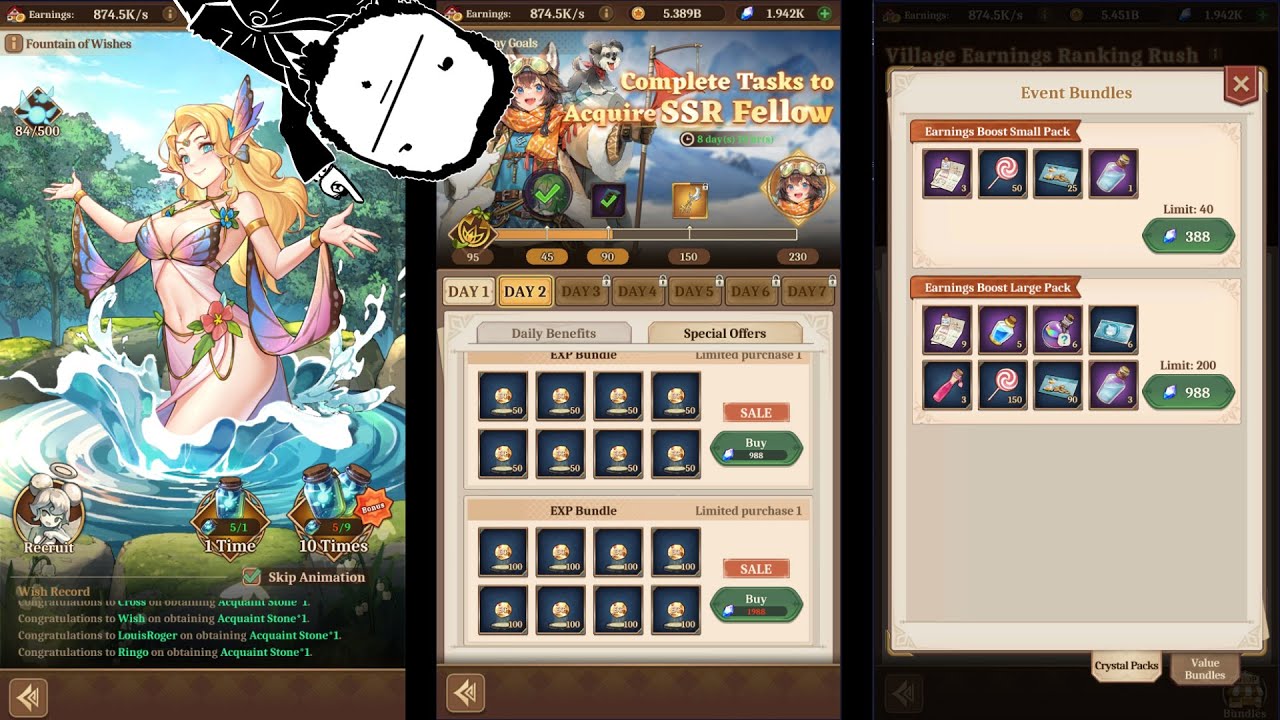
In Isekai: Slow Life, Gems are the most precious resource at your disposal. As a life simulation game with heavy idle and strategy elements, the game is designed to test your patience. Many players fall into the trap of using Gems for instant gratification, such as skipping construction timers or refreshing shop inventories, but these choices rarely provide the long-term power growth required to dominate the leaderboards or clear late-game content.
To succeed in Isekai: Slow Life, you must shift your mindset from "speeding up play" to "investing in growth." This guide breaks down exactly where your Gems should go to ensure every single one contributes to your village’s development and your Fellows' power.
The Hierarchy of Spending: What Matters Most
Not all items in the game are created equal. When evaluating a potential Gem purchase, you should categorize your spending into three tiers: Essential Daily Growth, High-Value Event Bundles, and Non-Essential Sinks.
1. Essential Daily Growth
These are your bread-and-butter purchases. These items provide consistent, compounding returns.
- Stamina Potions/Energy Refills: In games like Isekai: Slow Life, stamina is your primary gatekeeper for progression. Purchasing limited daily stamina refills allows you to participate more frequently in exploration and event tasks, which in turn grants more experience and resources.
- Core Upgrade Materials: Keep an eye on the daily shop for rare upgrade materials that are otherwise difficult to farm. If the shop offers a pack of materials that you know you need for an upcoming Fellow promotion, these are almost always worth the Gem cost.
2. Strategic Event Bundles
Events are where the "whales" spend their money, but as a smart player, you can optimize your spending to remain competitive.
- Fellow Shards: If an event offers shards for a character you are currently building, this is often the most efficient use of Gems. Focus on completing sets rather than pulling for random rewards.
- Event-Exclusive Currency: Some events allow you to buy event-specific currency with Gems. Only do this if you are within a few points of hitting a major milestone (like a top-tier rank reward or a rare artifact). Spending 500 Gems to secure a reward worth 2,000 Gems in value is a high-IQ play.
The "Golden Rule" of Avoiding Gem Traps
The biggest mistake new players make is treating Isekai: Slow Life like a game that needs to be "rushed." The following actions are considered "Gem sinks"—avoid them at all costs:
- Skipping Timers: Whether it’s building a structure or waiting for a timer to expire, paying Gems to skip these is a permanent loss of value. The time will pass regardless; keep your Gems for permanent stat boosts.
- Random Gacha Pulls: While tempting, spending your entire Gem stash on random gacha pulls without a specific pity-target in mind is a recipe for disaster. Only pull when you have enough resources to hit a guaranteed threshold or a specific event banner reward.
- Shop Refreshes: Unless you are in the final hour of a limited-time event and need one specific item to complete a milestone, do not pay to refresh the shop. The inventory is meant to rotate naturally; paying for a refresh is paying for a chance at value, not guaranteed value.
Planning for F2P and Low-Spender Longevity
If you aren't spending real money, your Gem income is finite. You must treat your Gem balance like a bank account.
- Establish a "Reserve Floor": Never let your Gem balance drop below a specific amount (e.g., 2,000 or 5,000 Gems). This acts as your emergency fund. If a surprise event pops up that offers a massive power boost, you will be prepared.
- Cycle Your Spending: Do not spend Gems every day. Instead, evaluate the game’s event calendar. Save your Gems for the days when the events offer the most significant return on your investment. If the current daily event offers weak rewards, skip it and save for a better week.
Comparison: Value vs. Convenience
To determine if a purchase is worth it, use the Efficiency Ratio: [Total Power Gained / Gem Cost].
| Purchase Type | Long-Term Value | Immediate Value | Recommendation |
|---|---|---|---|
| Stamina Refills | High | High | Highly Recommended |
| Event Shard Packs | High | Medium | Recommended for focused builds |
| Timer Skips | None | Low | Never do this |
| Shop Refreshes | Low | Low | Only in emergencies |
By comparing items, you start to see that buying individual, overpriced items in the standard shop is far less efficient than waiting for a bundle. Bundles often come with "bonus" items like experience crystals or gold, which increase the total value of your Gem spend.
Practical Tips for Advanced Players
- Monitor the Tavern and Market: Occasionally, the game offers deep discounts on essential items. If you are a daily player, check these spots first before spending Gems on fixed-price items in the main menu.
- Focus on One Fellow: Do not spread your upgrade resources thin. Use your Gems to buy materials specifically for your strongest Fellow. A single maxed-out character will carry you further in tower challenges than five mediocre ones.
- Participate in Every Event: Even if you don't spend Gems, participate in every event to earn free currency. You will get a better sense of which events are "high-value" and which are "low-value," allowing you to save your Gems for the events that truly matter to your progression.
Final Thoughts on Progression
Isekai: Slow Life is a marathon, not a sprint. The players who reach the top of the leaderboards are not those who spent the most Gems to skip a building timer, but those who consistently invested their Gems into long-term growth assets like Fellow shards and stamina refills. By practicing restraint and waiting for high-value bundles, you ensure your village is always growing, your Fellows are always getting stronger, and your Gem stash is always ready for the next big milestone.
Stop clicking the "speed up" button, stop refreshing shops, and start playing the long game. Your village will thank you for it in the months to come.

Free Isekai:Slow Life Codes
Current active codes and how to redeem them.

Emily Johnson
Emily writes practical mobile strategy guides with a focus on resource planning, base progression, and the early decisions that shape a long-term account.
COMMUNITY
Player Comments
69 players commented on this guide.
This guide answered the exact question I had.
Nice guide. I am checking the other Isekai:Slow Life articles next.
Good guide for Isekai:Slow Life players. The resources part was useful.
I wish I had read this before upgrading the wrong thing.