
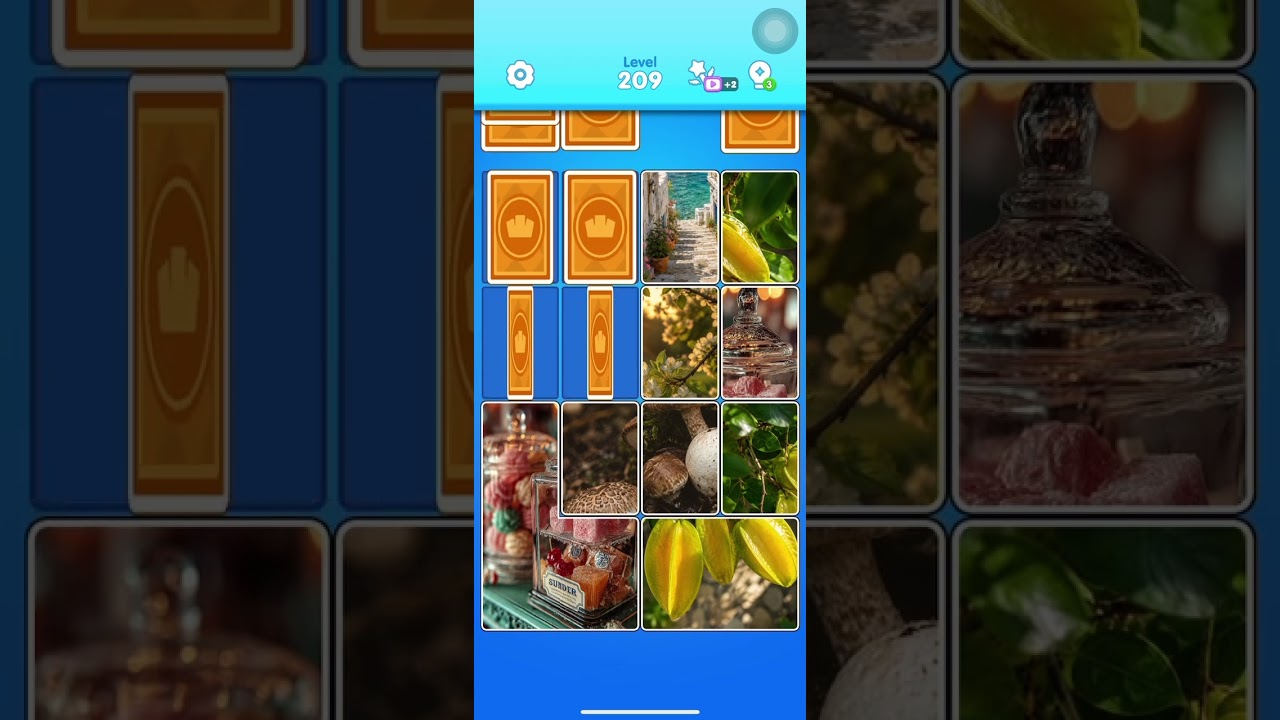
Levels 208, 209, and 210 in Jigsaw Drop: Solitaire Puzzle represent a notorious difficulty spike that transitions the game from basic pattern matching to high-level board management. At this stage, the margin for error shrinks significantly, and a single misplaced card can lead to a board lockout. Succeeding here requires moving beyond reactive play—where you simply match what you see—and adopting a proactive strategy focused on column thinning and cascading mechanics.
This guide breaks down the tactical adjustments necessary to navigate these specific levels and provides the expert reasoning behind why certain board-clearing techniques are superior to others.
Mastering Vertical Column Clearance
The most common reason for failure in levels 208–210 is board congestion. When you leave cards scattered indiscriminately across all columns, you lose the "vertical mobility" needed to access the bottom rows. In Jigsaw Drop: Solitaire Puzzle, the board functions as a dynamic grid; if every column is partially filled, you cannot shift pieces effectively.
Your priority must be to clear at least one full vertical column as early as possible. This creates a "staging lane." Once a column is empty, it acts as a buffer zone, allowing you to move cards into that space to unlock deeper, more complex matches.
- The Rule of One: If a column has only two or three cards, prioritize clearing it immediately, even if it doesn't seem like the most "valuable" move. The value here is in the space gained, not the points earned.
- Avoid Horizontal Spread: Resist the urge to clean the board evenly across the top. Focus on deepening one or two columns to gain access to the cards buried at the base of the board.
Sequencing for Strategic Cascades
Once you have established a staging lane, your focus should shift toward creating cascades. A cascade occurs when one match triggers the removal of a set, causing cards above to fall into positions that complete additional matches automatically.
In levels 208–210, the game hides essential pieces behind layers of filler cards. To uncover these, you must look two or three steps ahead. Before making a move, ask yourself: "If I remove this set, what will drop into the resulting gap?"
- The Funnel Effect: Use gaps to guide falling tiles into empty spaces in adjacent columns.
- Anticipation: If you see a card that can be matched, wait to see if clearing a different set first will pull a matching piece closer to your target. This is the hallmark of an advanced player; sacrificing a low-impact match now to set up a chain reaction later is often the only way to clear the board within the move limit.
Efficiently Managing the Restricted Deck
Levels 208–210 are restrictive regarding the number of cards you can draw from the deck. Every draw is a resource, and wasting them on unnecessary matches is a primary cause of failure.
Avoid drawing from the deck unless you have exhausted all viable moves on the current board. Many players fail because they treat the deck as a "refresh" button, but in reality, drawing too often clutters the screen and obscures the long-term patterns you need to resolve the level.
- Identify "Orphan" Cards: These are cards that have no potential matches currently available. They are board-clutterers. Do not focus on them immediately; instead, work on clearing the cards surrounding them. By clearing the neighbors, you increase the surface area available to the orphan, making it easier to pair once the deck provides a match.
Strategy for Level 210: The Color Constraint
Level 210 is the pinnacle of this challenge. It limits the variety of colors and pieces available, forcing you to be highly disciplined with your moves. In this level, the game will often present "distraction matches"—small, easy clears that look tempting but consume a column you desperately need to keep open.
To conquer level 210, keep these tactical guidelines in mind:
- Ignore Low-Impact Matches: If a match doesn't help you clear a deep column or set up a cascade, skip it. Save the moves.
- Edge Awareness: Cards at the far left and right edges are the most difficult to clear because they have fewer adjacent neighbors. Prioritize these "fringe" cards early in the level.
- Balanced Depth: Keep your card stacks at a relatively even height across the middle columns. If one column is significantly taller than the others, it will inevitably become your "bottleneck" where the game hides the piece you need to finish the puzzle.
Recognizing the "Bottleneck"
When you reach a point where you cannot make any more matches, you have likely encountered a "bottleneck." This is a specific card or set of cards preventing the rest of your board from clearing.
If you are stuck, analyze the board for the bottleneck. Is there a card that is effectively blocking access to two other columns? If so, use your remaining moves—even if it means making inefficient pairs elsewhere—to clear the path to that specific card. Do not waste your move limit trying to force matches in columns that are already "dead." If the bottleneck cannot be cleared, you are better off resetting the level early rather than dragging out an unsuccessful attempt.
Key Differences and Decision Making
Understanding the mechanics of Jigsaw Drop: Solitaire Puzzle means understanding when to play aggressively and when to play defensively.
- Aggressive Play: Best used at the start of a level. Clear as many columns as possible to open the board.
- Defensive Play: Essential when you have fewer than 10 moves remaining. Focus entirely on the immediate goal of clearing the current board state without worrying about long-term cascades.
By shifting your mindset from "matching cards" to "managing space," you will find that levels 208–210 become far more manageable. The game is designed to test your spatial reasoning, not just your ability to spot colors. Keep your board as open as possible, prioritize vertical clearance, and always look for the cascade—this is the path to clearing these difficult levels consistently.

Free Jigsaw Drop: Solitaire Puzzle Codes
Current active codes and how to redeem them.

Michael Smith
Michael covers live-service games, events, reward systems, and efficient daily routines, turning frequent updates into clear actions for players.
COMMUNITY
Player Comments
133 players commented on this guide.
Good guide for Jigsaw Drop: Solitaire Puzzle players. The strategy part was useful.
Can you add more details about strategy in a future update?
Nice guide. I am checking the other Jigsaw Drop: Solitaire Puzzle articles next.
This helped me understand strategy much better.