
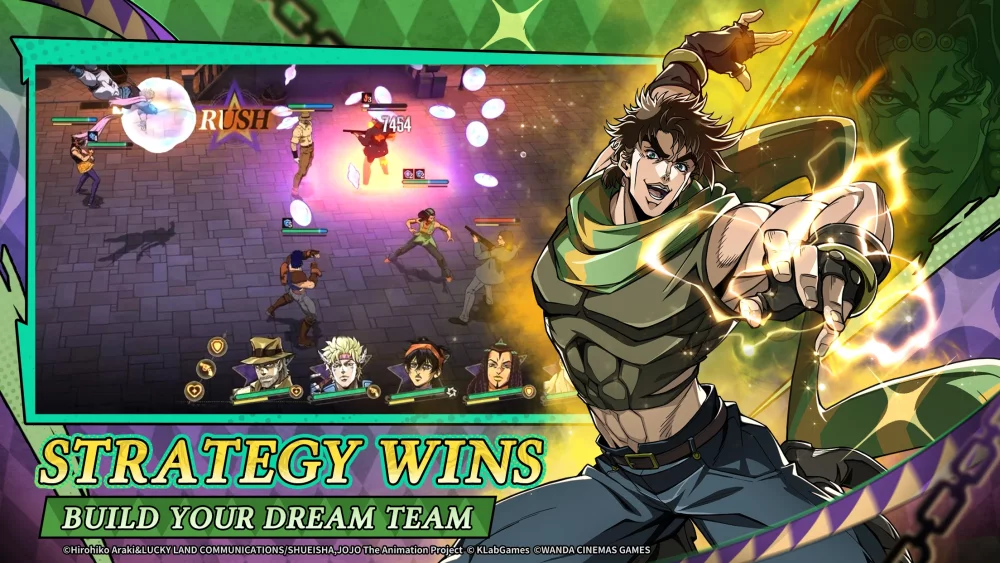
Navigating the multiversal storyline of JoJo's Bizarre Adventure: GS can be a daunting task, especially as the game rapidly shifts between generations of iconic characters and distinct strategic combat mechanics. To efficiently progress through Story Mode, you must adapt to a constantly rotating roster, master character-specific Stand abilities, and prioritize stage-based objectives that dictate narrative pacing.
Because JoJo's Bizarre Adventure: GS is a multigenerational role-playing game, treating it like a standard beat-'em-up will quickly lead to progression roadblocks. This comprehensive guide covers everything you need to know to optimize your campaign run, from managing forced character shifts and building synergistic teams to surviving high-difficulty boss encounters and unlocking hidden stage rewards.
Understanding Story Mode Progression Mechanics
Success in Story Mode is heavily tied to understanding how chapters are gated by narrative milestones. The campaign is not a linear string of fights, but rather a series of distinct narrative arcs that test your ability to adapt to different fighters and shifting win conditions.
How Narrative Arcs Gate Content
When entering a new chapter, quickly identify the primary character assigned to you and the overarching goal of the era you are currently playing. The game frequently shifts perspectives to maintain fidelity to the source material. This means you might spend three chapters mastering a close-range brawler, only to be thrown into a puzzle-heavy boss fight requiring a long-range, trap-based Stand in the next.
To avoid getting stuck, you must treat every chapter as a unique mechanical puzzle. Progression is gated behind completing the main scenario, but the efficiency of your progression—how many resources, experience points, and unlockables you earn—depends on how well you interact with the game's secondary systems.
Primary vs. Secondary Stage Objectives
Focusing on the specific goals listed in the mission briefing is essential. While the primary objective is usually obvious (e.g., "Defeat the enemy Stand user"), secondary objectives are easily missed if you rush.
- Time-Attack Objectives: Some stages require you to defeat a set number of enemies within a strict time limit. In these scenarios, prioritize area-of-effect (AoE) attacks and ignore defensive, drawn-out tactics.
- Survival Objectives: Other missions demand that you survive against a massively overpowered boss for a set duration or maintain your health above a 50% threshold. Here, evasion, guarding, and utilizing environmental cover take precedence over dealing damage.
- Location Objectives: You may be tasked with reaching a specific extraction point while being hunted. Do not waste time fighting infinitely spawning minions; use mobility skills to bypass combat entirely.
Ignoring secondary objectives can lead to missed narrative beats, lower mission ranks, and incomplete reward payouts, effectively slowing down your overall journey and leaving your characters under-leveled for future arcs.
Mastering Roster Shifts and Character Adaptability
The game frequently rotates your playable roster to mirror the diverse cast of the franchise. Because each character possesses unique Stand abilities, stat distributions, and physical combat styles, relying on a single "main" character is a guaranteed way to fail in Story Mode.
Dealing with Forced Character Assignments
When the story forces you into the shoes of a new protagonist or side character, take the first two minutes of the chapter to experiment. Before engaging in major combat sequences, find a safe zone or a group of low-level minions to test the following:
- Basic Movement: Does the character have a fast dash, a teleport, or a slow, armored walk?
- Attack Ranges: Determine the maximum distance of your light and heavy attack strings.
- Stand Activation: Understand how the character's Stand modifies their base moveset. Does activating the Stand drain a meter, or can it be kept out indefinitely?
Identifying Stand Combat Archetypes
To adapt quickly, categorize your currently assigned character into one of the core archetypes found in JoJo's Bizarre Adventure: GS:
- Rush-Down / Power Types: These characters excel in close-quarters combat. They possess high health and devastating melee combos but struggle against ranged attackers. When playing them, use environmental cover to close the gap before unleashing your offense.
- Projectile / Zoner Types: Characters with ranged Stands excel in open-map chapters. They thrive on keeping enemies at a distance. If you are forced to play a zoner in a confined arena, prioritize moves that create space or knock opponents backward.
- Technical / Trap Types: These characters rely on setting up hazards, applying debuffs, or countering enemy attacks. They require patience and a deep understanding of enemy AI patterns to be used effectively.
Advanced Combat Strategies for Boss Encounters
Boss battles in JoJo's Bizarre Adventure: GS represent the most significant progression hurdles. These encounters often feature increased artificial intelligence responsiveness, massive health pools, and high-damage output that can deplete your health bar in a single combo.
Reading Boss Gimmicks and Environmental Cues
Many Story Mode encounters include stage hazards or specific mechanics designed to counter certain playstyles. For example, a boss might periodically electrify the floor, forcing you to use aerial combos, or they might summon minions that shield them from frontal assaults.
Pay close attention to the environment. Often, the arena contains interactive objects that can be thrown, destroyed to create cover, or used to trigger a stage hazard against the boss. If you find yourself repeatedly losing a fight, stop attacking and spend one attempt purely observing the boss's movement patterns and the environmental cues that signal their ultimate attacks.
Baiting and Punishing Heavy Animations
To succeed against late-game antagonists, you must prioritize defensive positioning. Avoid mindlessly spamming attacks; late-game bosses possess "hyper-armor" (immunity to flinching) during their attack startups, meaning they will easily punch right through your basic combos.
Instead, utilize the "bait and punish" strategy:
- Maintain Mid-Range Distance: Stay just outside the boss's immediate melee range to bait them into committing to a heavy lunge or sweeping attack.
- Evade or Perfect Guard: Use your defensive options to completely avoid the damage.
- Exploit the Recovery Window: After a heavy animation, the boss will be locked into a brief recovery phase where their hyper-armor drops. This is your window to strike with your most damaging Stand combo.
Exploiting Companion AI and Team Synergy
Keep an eye on your teammates during high-stakes segments. Even in single-player Story Mode, your AI-controlled companion is an invaluable asset. The companion AI functions as an excellent aggro-draw (distraction) for the boss.
Use this to your advantage by positioning yourself behind the enemy while they are occupied with your ally. Striking an enemy in the back often yields bonus damage and prevents them from guarding. Furthermore, coordination is critical for triggering Dual Team Attacks. Watch for the prompt that appears when both you and your AI companion land a simultaneous heavy strike; triggering these cinematic maneuvers is often the most effective way to bypass boss defenses and chunk down massive health bars.
Optimizing Team Builds and Stand Mastery
While the narrative often dictates your lead character, many chapters allow you to select your AI companion or customize your character's loadout via the game's RPG mechanics. Proper team building and stat management will drastically reduce the difficulty of the campaign.
Leveling and Stat Prioritization
As you complete missions, you will earn experience points and upgrade materials. Do not hoard these resources. Invest them into the skill trees of the characters you are currently forced to play.
- Prioritize Health and Defense First: In Story Mode, surviving a boss's ultimate attack is more important than dealing slightly more damage per punch.
- Unlock Combo Extenders: Spend points to unlock new branching paths in your attack strings. This allows you to keep enemies staggered for longer durations, generating more Stand energy in the process.
Synergizing Multigenerational Teams
When you have the freedom to choose your companion, always aim to cover your primary character's weaknesses.
- If you are playing a slow, close-range Power type, pair them with a Ranged companion who can interrupt enemies from afar.
- If you are playing a fragile Technical character, select a bulky, aggressive companion to draw enemy fire and act as a frontline tank.
Maximizing Rewards and Secret Objectives
Completing story missions efficiently is your primary method for expanding your roster, earning upgrade currency, and unlocking side content. Beyond just clearing the stage, look for "secret" objectives or interaction prompts that appear during combat.
Triggering Narrative Combat Events
During specific canonical fights, the game features hidden triggers known as Narrative Events. These often involve executing a unique move, finishing a boss with a specific Stand attack, or moving to a certain part of the arena when the boss's health reaches 10%.
Successfully identifying and triggering these events not only provides a massive boost to your post-mission rewards but often triggers unique cutscenes that recreate iconic moments from the franchise. Check the pause menu at the start of a chapter; sometimes, cryptic hints are provided regarding these hidden conditions.
When to Replay Earlier Chapters
If you find yourself stuck on a specific chapter and severely under-leveled, consider backtracking to earlier, cleared stages. The game highly encourages replayability.
Replaying earlier missions is the perfect opportunity to:
- Refine your understanding of complex Stand mechanics without the pressure of a high-difficulty boss.
- Farm upgrade materials to boost your character's stats.
- Complete secondary objectives you missed during your first run to secure an "S-Rank" clear.
Mastering these fundamentals in a lower-stakes environment will significantly improve your performance when you return to the challenging chapters that define the conclusion of the story.
Common Mistakes to Avoid in Story Mode
Even veteran players can hit a wall if they fall into bad habits. To ensure smooth progression, avoid these common pitfalls:
- Ignoring Stand Energy Management: Your most powerful moves require Stand energy. Button-mashing special attacks will leave you depleted and vulnerable when you actually need a defensive burst or combo breaker. Manage your meter carefully.
- Forgetting to Upgrade Companions: It is easy to focus all your resources on the main protagonist of the current arc, but if your AI companion is severely under-leveled, they will die in the first 30 seconds of a boss fight, leaving you to fight a 2-on-1 battle.
- Tunnel Vision on the Boss: Many bosses summon weaker minions to harass you. Ignoring these "adds" is a fatal mistake, as they will constantly interrupt your combos. Always clear the minions before focusing your attention back on the main boss.
- Neglecting the Block Button: Evasion is great, but blocking is guaranteed damage mitigation. Many players try to dodge every attack, get caught by a wide hitbox, and lose half their health. Learn which boss attacks can be safely guarded and which must be dodged.
By understanding how JoJo's Bizarre Adventure: GS structures its narrative pacing, adapting to its varied roster, and utilizing smart combat positioning, you will easily conquer Story Mode. Take your time, read the mission objectives, and let your mastery of Stand mechanics carry you to victory.

Free JoJo's Bizarre Adventure: GS Codes
Current active codes and how to redeem them.

James Brown
James focuses on Android gaming on PC, emulator setup, controls, performance tuning, and practical troubleshooting for longer play sessions.
COMMUNITY
Player Comments
124 players commented on this guide.
Can you add more details about heroes in a future update?
I wish I had read this before upgrading the wrong thing.
This saved me time in the early game.
I tried this today and it worked better than my old setup.