
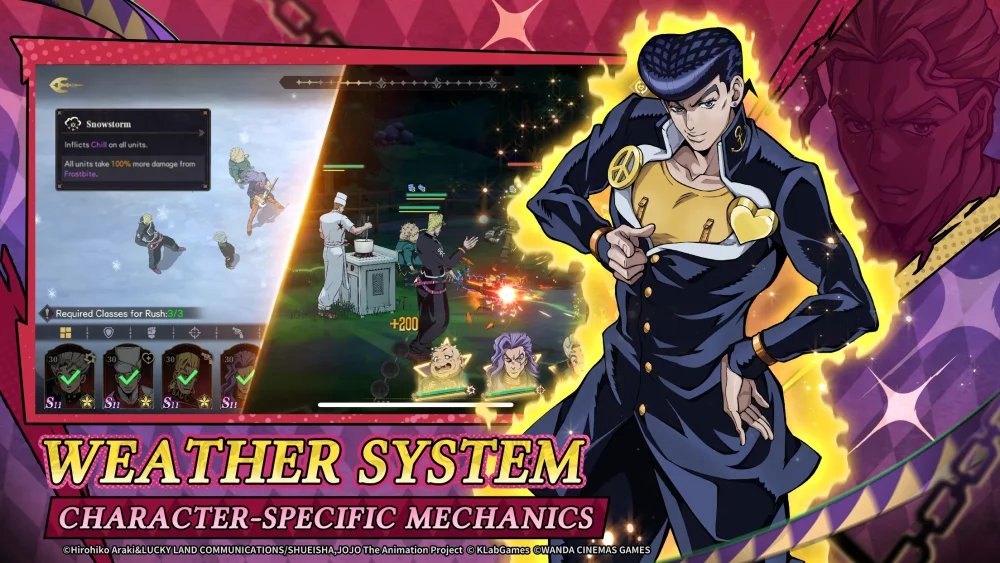
Custom community-driven events, such as the Squid Game-themed challenges in JoJo's Bizarre Adventure: GS, require players to shift from standard combat rotations to high-precision movement and timing. These specialized modes often strip away traditional Stand abilities to force a focus on fundamental player control. Success in these scenarios depends on your ability to read environmental cues and execute precise, rhythmic inputs while under the pressure of instant-fail mechanics common in these creative server modes.
Mastering Movement and Timing Constraints
Survival in custom event modes is fundamentally about rhythm and spatial awareness. Unlike standard ranked matches where you rely on Stand cooldowns, these challenges often introduce "Red Light, Green Light" mechanics where movement at the wrong time results in immediate elimination.
- Input Delay Management: Familiarize yourself with your character's stopping animation. Many models have a slight "drift" before coming to a full halt; account for this by cutting your movement inputs early.
- Camera Positioning: Keep your camera pulled back to maximize your field of view, allowing you to see the movement of other players and the host simultaneously.
- Anticipating Cues: Do not rely solely on visual changes from the host. Most successful players use audio cues or a steady internal count if the host follows a predictable interval.
Spatial Positioning and Crowd Control
When the challenge mode shifts from movement-based trials to combat-heavy obstacle courses, your positioning relative to other players becomes your primary defensive tool.
| Strategy | Tactical Benefit |
|---|---|
| Edge Hugging | Minimizes the surface area exposed to projectiles or hazards. |
| Center Crowding | Useful for avoiding knockback effects from peripheral AOE attacks. |
| Spacing Buffer | Maintains a gap between you and aggressive players to prevent collision displacement. |
Avoiding Collision Displacement
In high-density custom modes, other player models are your biggest threat. Being bumped into a hazard zone is a common cause of failure. Always prioritize standing in open spaces rather than being clumped with the main group, as the physics engine in JoJo's Bizarre Adventure: GS can lead to unpredictable character sliding when multiple hitboxes overlap in tight corridors.
Adapting to Custom Mode Rulesets
Custom modes often ignore the standard meta of the base game. If the event host mandates specific character limitations or disables Stand abilities, focus entirely on your base movement speed and jump height stats.
- Identify Restricted Abilities: Before the round begins, check if your character's passive movement buffs are active. Some modes normalize all stats, making character choice aesthetic rather than tactical.
- Prioritize Stability: If the mode involves platforming, choose characters with the most stable jump arcs. Avoid characters with "floaty" movement, as they are harder to control during precise landing sequences.
- Observe the Host: In community-run games, the host often has a specific tell before changing the rules or ending a round. Watch the chat or the host's character model for subtle animations that signal the next phase of the challenge.

Free JoJo's Bizarre Adventure: GS Codes
Current active codes and how to redeem them.

Michael Smith
Michael covers live-service games, events, reward systems, and efficient daily routines, turning frequent updates into clear actions for players.
COMMUNITY
Player Comments
33 players commented on this guide.
Nice guide. I am checking the other JoJo's Bizarre Adventure: GS articles next.
The tips are practical and easy to follow.
Can you add more details about strategy in a future update?
Good guide for JoJo's Bizarre Adventure: GS players. The strategy part was useful.