
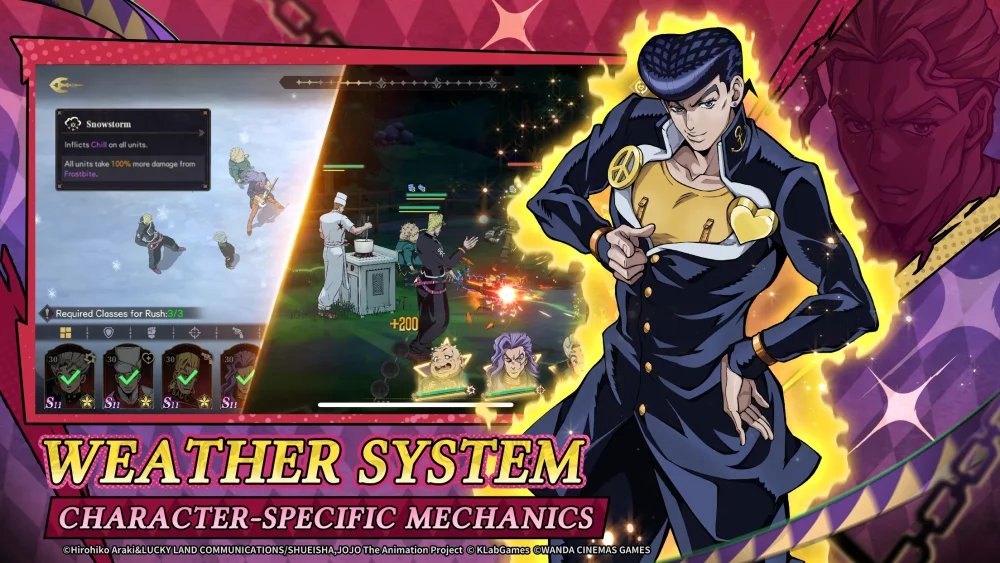
To master the narrative progression in JoJo's Bizarre Adventure: GS, players must treat the story mode as a multiversal convergence rather than a linear timeline. The game features a unique "Eyes of Heaven" arc that ignores traditional canon boundaries, allowing characters from different generations to collide. Recognizing these temporal anomalies is essential for understanding how the story progresses through its various chapters and identifying why certain characters appear in unexpected locations throughout your journey.
Recognizing Multiversal Convergence Points
The primary mechanic driving the story in JoJo's Bizarre Adventure: GS is the disruption of established timelines. Unlike standard adaptations that strictly follow the manga volumes, this experience introduces "Eyes of Heaven" as a narrative catalyst. This device acts as a narrative anchor, pulling iconic characters from their respective eras into a singular, unstable reality. You will notice that the game treats these timeline crossovers as intentional plot devices rather than continuity errors.
For players to effectively track their progress through the campaign, it is vital to acknowledge that each stage is essentially a localized "what-if" scenario. The conflict is not just about physical combat, but about stabilizing these overlapping realities. When you encounter characters who should not exist in the same timeframe, recognize that you are participating in a reality-warping event orchestrated by the central antagonist to rewrite history, which creates distinct, non-linear progression gates.
Identifying Key Antagonist Objectives
The central threat in the story mode revolves around the collection of specific "Corpse Parts" and the manipulation of the "Heaven" concept. Understanding this objective is necessary for players to anticipate the difficulty spikes in the campaign. The antagonist is not merely seeking power; they are actively seeking to transcend the limitations of their own destiny, which directly influences the stage design and the boss encounters you will face in the final chapters.
When progressing, keep an eye on how these objectives shift the environment. Each chapter moves through different iconic locations—such as the streets of Cairo or the Morioh Town setting—because the antagonist is harvesting energy from these specific points of historical significance. By identifying which Corpse Part or reality fragment is being targeted in a specific chapter, you can better prepare for the type of environmental hazards and enemy team compositions you are about to encounter.
Leveraging Character Synergy Across Eras
Because the narrative allows for the convergence of different generations, the game encourages you to experiment with team compositions that would be impossible under normal circumstances. The story mode rewards players for utilizing character interactions that span multiple parts of the series, such as pairing heroes from the early 1800s with those from the late 1990s. This is not just for aesthetic appeal; these combinations often trigger unique dialogue and combat interactions.
To maximize your efficiency, consider the following tactical approaches when building teams for story missions:
- Era-Matching Bonuses: Some missions provide subtle combat advantages when you pair characters who share a familial or historical connection, even if they never met in the original manga.
- Antagonist Counters: Since the story focuses on reality-altering villains, prioritizing characters with high mobility or "Time Stop" abilities often makes the boss stages significantly more manageable.
- Dialogue Triggers: Pay close attention to pre-fight cutscenes, as certain character pairings unlock specific narrative nodes that provide deeper context for the current multiversal crisis.
Navigating the Final Resolution
The conclusion of the story mode serves as a definitive resolution to the "Eyes of Heaven" crisis, involving a high-stakes confrontation that requires a deep understanding of the game's unique lore. The final boss encounter is designed to test your knowledge of how the various pieces of the puzzle—the Corpse Parts, the Heaven ascension, and the convergence—finally lock into place. This is where the game’s narrative and combat mechanics perfectly align.
Limitations arise in this final phase because the game forces specific character choices during key story beats to maintain narrative integrity. Do not be surprised if your preferred roster is temporarily restricted during these climactic moments. Instead, treat these sections as a tutorial for mastering characters you might not have used previously, as the game requires you to utilize the specific "destiny-defying" traits of those characters to effectively counter the final boss’s reality-warping abilities.
Free JoJo's Bizarre Adventure: GS Codes
Current active codes and how to redeem them.

Emily Johnson
Emily writes practical mobile strategy guides with a focus on resource planning, base progression, and the early decisions that shape a long-term account.
COMMUNITY
Player Comments
91 players commented on this guide.
The tips are practical and easy to follow.
Nice guide. I am checking the other JoJo's Bizarre Adventure: GS articles next.
This saved me time in the early game.
This guide answered the exact question I had.