
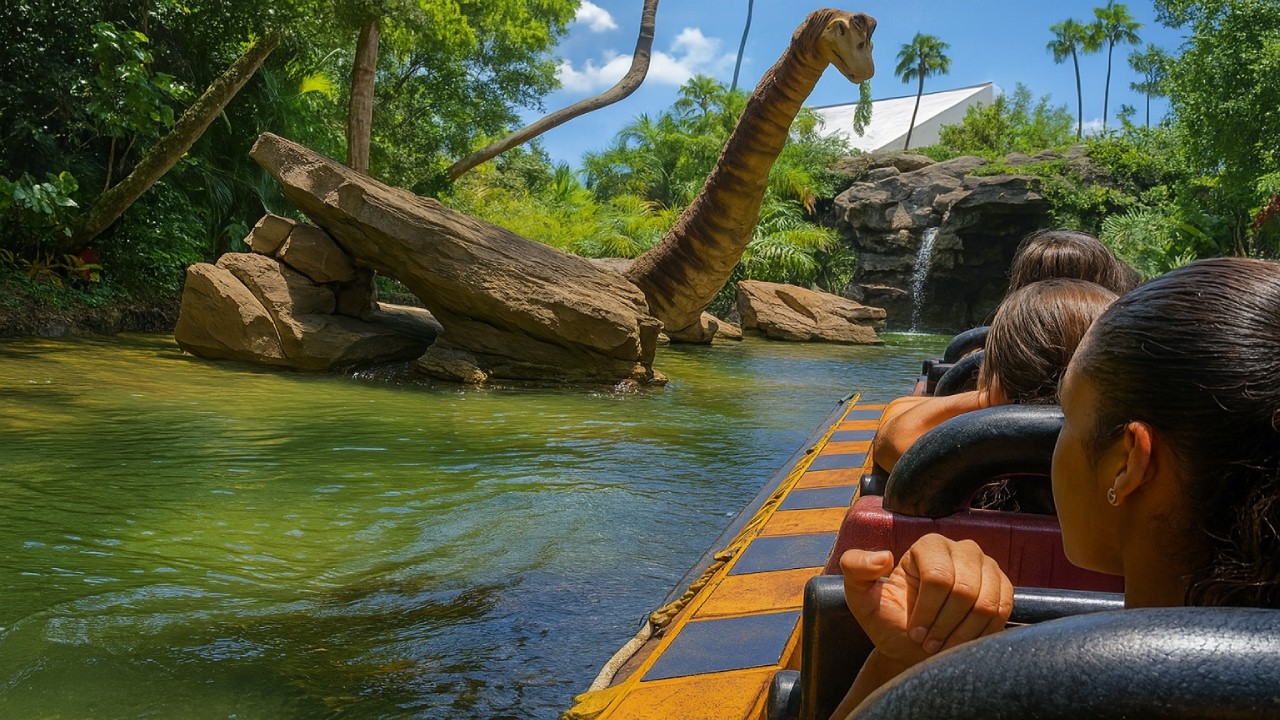
Successfully managing your park in Jurassic World™: The Game requires more than just hatching dinosaurs; it demands a sophisticated approach to park architecture. As you progress, your park must evolve from a simple collection of paddocks into a cohesive, high-revenue attraction that balances the complex needs of your creatures with the logistical demands of your visitors. Whether you are aiming for a cinematic layout inspired by iconic attractions like the River Adventure or prioritizing raw production efficiency, understanding the mechanics of space, flow, and security is essential for becoming a top-tier park manager.
The Foundation of Park Layout: Space and Efficiency
In Jurassic World™: The Game, space is your most limited resource. Every square unit of land should serve a purpose—either generating income, housing high-value dinosaurs, or supporting infrastructure that boosts your overall park rating.
To maximize your layout, adopt a modular design strategy. Instead of placing paddocks randomly, group them by their environmental requirements and biological categories. For instance, creating a dedicated "Aquatic and Semi-Aquatic Sector" allows you to centralize your water-based infrastructure, reducing the number of redundant support buildings required. When you cluster structures that share maintenance needs, you minimize the "travel time" for your support staff and ensure that your highest-earning dinosaurs are always within the radius of your most potent decorations.
Implementing Verticality and Terrain for Aesthetic Immersion
While the game operates on a grid-based system, you can simulate verticality and depth to transform your park from a flat map into a dynamic landscape. By utilizing natural terrain variations and strategic placement of decorations, you can guide the player’s eye toward your most prestigious exhibits.
Much like the tension-filled drops of a classic river ride, you can create "viewing corridors." Place your most imposing, high-level carnivores—such as the Indominus rex—at the rear of your layout, framed by layered rows of smaller, low-threat herbivore paddocks. This creates a sense of scale and anticipation. By placing guest paths that wind through these layers, you replicate the "River Adventure" experience, where the environment feels like a deliberate journey rather than a static grid of cages.
Optimizing Water Features and Containment Zones
Water in Jurassic World™: The Game is more than just a visual flourish; it is a critical component of habitat satisfaction and park flow. Using water features to delineate zones provides two major benefits:
- Natural Barriers: Placing water-based paddocks adjacent to high-traffic visitor paths creates a "moat" effect. This visually communicates security to the visitor, even when your dinosaurs are technically behind advanced fencing.
- Traffic Management: By using water as a natural boundary, you can force visitor traffic into specific lanes, creating "bottleneck" areas. When you place high-value shops or attraction buildings in these bottlenecks, you maximize the passive income generated by your visitors as they travel between enclosures.
Balancing Security with Thrill Factors
The core tension in any park simulation is the trade-off between guest accessibility and safety. The most popular attractions in the Jurassic World franchise are defined by the proximity of the guests to the animals. In your game, you can simulate this by placing your primary viewing platforms directly against the perimeter of your most aggressive dinosaur enclosures.
However, this increases the "Containment Failure" risk. To manage this:
- Layered Security: Always place your most volatile creatures in the center of your park, surrounded by "buffer" zones of lower-threat dinosaurs.
- Infrastructure Placement: Ensure your security outposts and emergency stations are prioritized in sectors where you have pushed the boundaries of guest proximity.
- The Proximity Rule: Never place your most expensive, high-risk assets near the park entrance. If a breakout occurs, you want your primary revenue generators to be shielded by multiple layers of security and distance.
Progression Strategies: From Discovery to Apex
To manage your resources effectively, your park should follow a three-tier narrative progression:
- The Discovery Sector: Focus on low-level herbivores and common dinosaurs. This is your "startup" phase where you generate consistent, low-risk income to fund your infrastructure.
- The Mid-Tier Zone: Introduce semi-aquatic and medium-sized carnivores. Use this phase to experiment with your layout, testing how different water-to-land ratios affect your dinosaur happiness levels.
- The Apex Zone: This is your endgame. Reserve this area for legendary, super-rare, and hybrid species. Because these dinosaurs have the highest maintenance costs, they should be housed in a compact, highly optimized area that features your most advanced security upgrades.
Strategic Maintenance and Iterative Expansion
Your park is a living, breathing entity that requires constant pruning and refinement. As you unlock new species, you will inevitably find that your early-game enclosures are no longer efficient. Do not be afraid to demolish and rebuild.
A successful manager reviews their park layout every time they unlock a new tier of dinosaur. If a new, larger species requires a footprint that disrupts your traffic flow, re-evaluate the surrounding paths. An "iterative design" mindset—where you are constantly upgrading infrastructure to match the power of your dinosaurs—is what separates successful players from those who struggle with park ratings.
Common Mistakes to Avoid
- Overcrowding: Cramming too many high-value dinosaurs into a single sector will crash your performance and make containment management a nightmare. Spread your high-value assets out.
- Neglecting Paths: If your visitors cannot reach your enclosures, your income will tank. Always prioritize path connectivity over aesthetic placement.
- Ignoring Decorations: Decorations are not just for looks; they provide critical stat boosts to nearby dinosaurs. Always integrate decorations into your enclosure design to maximize the "happiness" and production rates of your animals.
By focusing on these strategic pillars—efficient layout, thematic immersion, and proactive security management—you will transform your park in Jurassic World™: The Game into a masterpiece of simulation. Remember, the goal is to create a park that feels like it could exist in the movies, while maintaining the cold, hard logic of a successful business manager.

Free Jurassic World™: The Game Codes
Current active codes and how to redeem them.

Sarah Williams
Sarah specializes in RPG and collection games, explaining team building, character growth, and beginner-friendly ways to avoid expensive early mistakes.
COMMUNITY
Player Comments
95 players commented on this guide.
The explanation is clear, especially for beginners.
Nice guide. I am checking the other Jurassic World™: The Game articles next.
The tips are practical and easy to follow.
I wish I had read this before upgrading the wrong thing.