
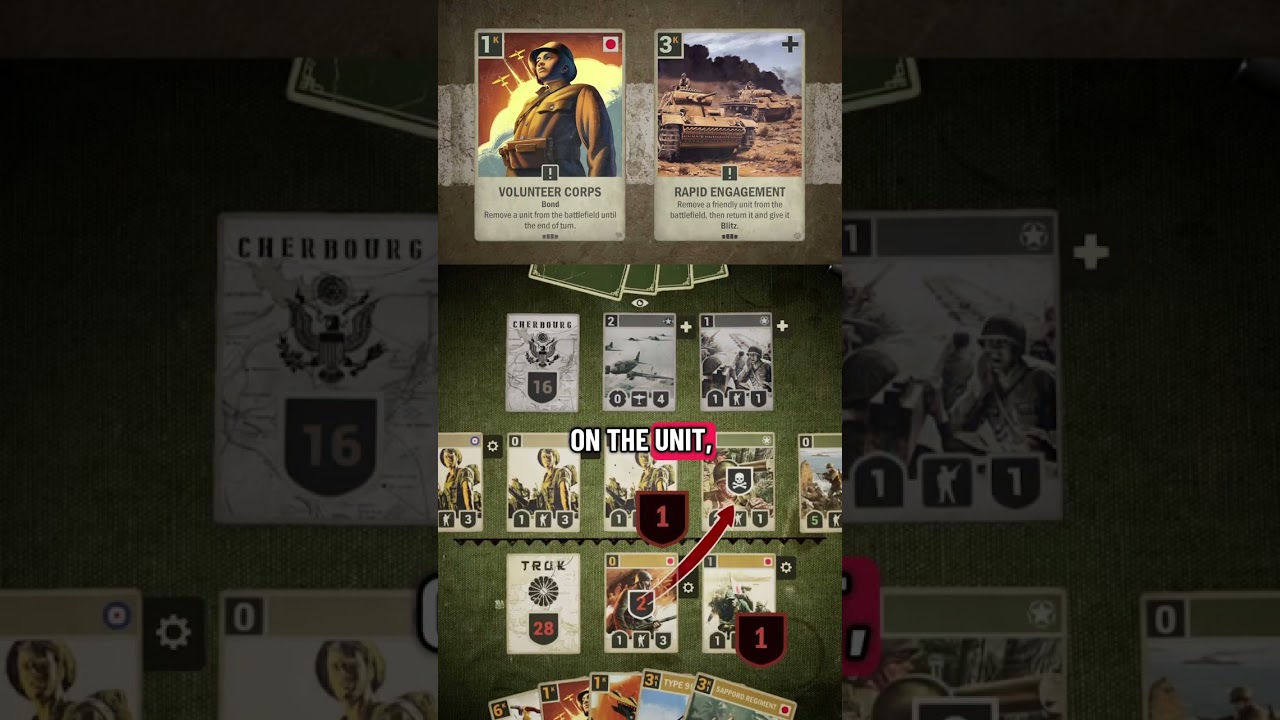
In KARDS - The WW2 Card Game, removing a card from play excises the unit directly from the battlefield without triggering standard destruction rules. This mechanic bypasses "Destruction:" abilities entirely and permanently excludes the card from the match's destroyed unit pool. Use removal from play to neutralize threatening on-death effects, dismantle graveyard recursion strategies, and delete tokens via retreat orders.
How Removed From Play Differs from Destruction
Standard elimination requires a unit's defense to reach zero or an order to destroy it directly. When this occurs, the game registers a death event, fires any printed Destruction effects, increments casualty counters, and logs the unit into the destroyed ledger for revival orders.
Removing a card from play bypasses that entire sequence. Because the game engine registers no death event, retaliatory effects never resolve. Any active status buffs, veterancy gains, and attached modifications disappear immediately with the excised unit.
| Combat Interaction | Standard Unit Destruction | Removed From Play |
|---|---|---|
| Destruction Keywords | Triggers immediately upon death | Suppressed and never activated |
| Destroyed Unit Pool | Added to the graveyard pool | Excluded permanently from the match |
| Death Synergies | Counts toward death-based counters | Registers zero casualties |
| Attached Unit Buffs | Cleared upon unit defeat | Cleared upon removal |
Suppressing Destruction Triggers and Revenge Abilities
Target enemy units with removal from play whenever their Destruction effects threaten your board or Headquarters. High-value units often balance their stats with hazardous on-death abilities, including:
- Direct damage dealt to your Headquarters.
- Collateral damage to adjacent units on your frontline or support line.
- Forced discards from your hand.
- Immediate deployment of replacement armor or infantry.
Standard combat trades or damage orders force you to absorb these secondary penalties. When you use removal from play, the Destruction condition is never met. The opposing card leaves the board cleanly, preserving your units and Headquarters health.
Countering Graveyard Recursion and Resurrection
Removing key units from play permanently denies targets to graveyard retrieval decks. Certain deck archetypes—most notably Soviet builds—generate long-term card advantage by cycling destroyed units back to the battlefield or retrieving high-tier tanks from the casualty pool.
Revival orders require a recorded history of destroyed units to function. If you exile an opponent's signature heavy unit, it never registers in the destroyed pool. When the opponent later plays resurrection or salvage orders, those cards either fail completely or are forced to target low-impact units. Banish centerpiece threats early to break the opponent's late-game attrition loop.
Token Excision and the Hand-Cap Interaction
Two board conditions automatically trigger the removal from play mechanic without requiring dedicated banish orders:
- Retreating Tokens: Tokens (such as Soviet Light Infantry or spawned tank divisions) have no physical card representation in a player's deck or hand. If a retreat or bounce order targets a token, the unit cannot move to the reserve line or hand. The game engine instantly removes the token from play.
- The Nine-Card Hand Limit: A player's hand holds a maximum of nine cards. If an opponent holds nine cards and you play an order that forces one of their regular units to retreat, that card cannot enter their full hand. Because the bounce cannot legally resolve, the unit is destroyed or removed from play, converting a temporary bounce into permanent removal.
Tactical Priorities and Resource Timing
Exile and banish orders generally cost more Kredits than basic direct-damage orders. To maximize their value, follow these deployment rules:
- Save banish effects for high-priority targets: Reserve exile tools for units with lethal Destruction abilities, heavy Armor, or persistent Guard.
- Identify recursion pairings early: Check the opponent's nation combination at the start of the match. If they field factions with known graveyard resurrection mechanics, hold your removal from play tools for their core late-game win conditions.
- Do not waste removal on vanilla units: If an enemy unit lacks both on-death keywords and recursion potential, use standard combat trades or low-cost damage orders instead of expending premium exile effects.
Free KARDS - The WW2 Card Game Codes
Current active codes and how to redeem them.

Sarah Williams
Sarah specializes in RPG and collection games, explaining team building, character growth, and beginner-friendly ways to avoid expensive early mistakes.
COMMUNITY
Player Comments
60 players commented on this guide.
Nice guide. I am checking the other KARDS - The WW2 Card Game articles next.
This helped me understand strategy much better.
Can you add more details about strategy in a future update?
The explanation is clear, especially for beginners.