
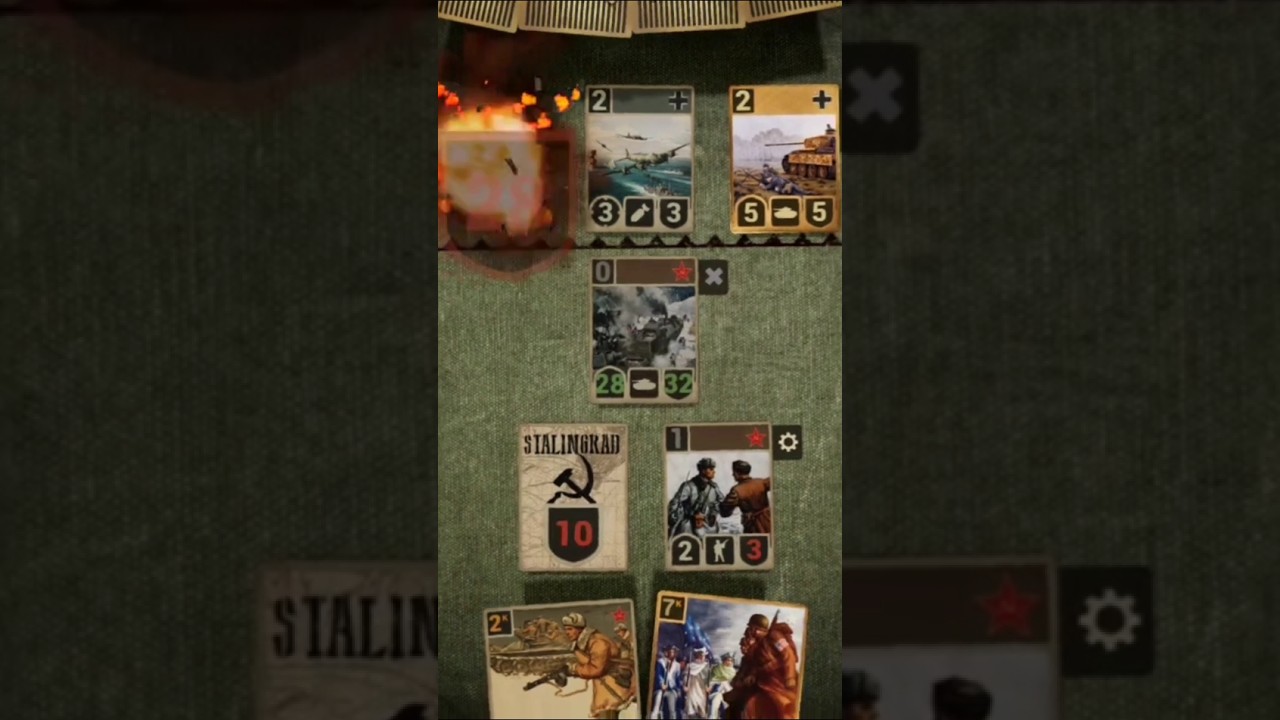
To secure a lethal turn with the Soviet Armored Train in KARDS - The WW2 Card Game, you must completely clear enemy Guard units from the frontline, verify that you have enough Kredits to cover both deployment and operation costs, and stack attack-boosting orders in a single uninterrupted turn. Failing to account for movement costs or attacking into defensive Countermeasures will strand the unit and surrender board tempo.
Clearing the Frontline Before the Finisher
Direct attacks against an opponent's Headquarters are impossible if the enemy holds the frontline with Guard units. Because the Armored Train is a ground unit that cannot bypass frontline obstructions on its own, clearing the lane is your mandatory prerequisite.
- Use cheap removal on the setup turn: Spend the turn preceding your lethal push removing light blockers. Low-cost Soviet orders like Bloody Sickle remove low-defense targets without consuming the high Kredit totals required later.
- Control trades with support artillery: Position durable support line threats or artillery to clear opposing units incrementally. This forces opponents to spend their resources reacting to your support line rather than fortifying the frontline.
- Avoid committing the train early: If the train is deployed without an open path to the enemy Headquarters, it risks being pinned, targeted by hard removal, or stalled by newly played Guard units.
Calculating Turn Sequencing and Kredit Costs
A lethal burst turn requires precise math. Every phase of the lethal turn consumes Kredits: clearing residual threats, paying the initial deployment cost, paying the operation cost to move or attack, and casting attack buffs.
Follow this strict action order during your decisive turn:
| Execution Step | Tactical Action | Primary Strategic Purpose | Kredit Focus |
|---|---|---|---|
| 1. Board Clearance | Play removal orders or trigger artillery | Eliminate remaining frontline Guard units | Low-cost removal reserves |
| 2. Deployment | Deploy Armored Train to the support line | Establish the primary damage threat | Major deployment allocation |
| 3. Movement & Activation | Pay operation cost to advance or strike | Put the unit within striking range | Operation cost preservation |
| 4. Stat Amplification | Cast attack-boosting Soviet orders | Scale single-strike damage to lethal | Remaining surplus Kredits |
The most common failure point is casting stat buffs before paying the movement or attack operation cost. Always confirm your total available Kredits cover Steps 2 and 3 before playing optional buff orders.
Playing Around Countermeasures and Pin Effects
Committing your full turn to an all-in attack leaves you vulnerable to reactive orders from factions like Britain and Germany. Walking into an untriggered Countermeasure can cancel your damage, destroy the train, or waste your turn.
- Bait Countermeasures with secondary units: Before attacking with the Armored Train, attack with light infantry or play a low-impact order to trigger hidden traps.
- Account for Pin mechanics: If the opponent has access to Pin effects, do not deploy the train a turn early in hopes of attacking next turn. Pinning freezes the unit for a full turn cycle, giving the opponent time to heal their Headquarters or deploy fresh blockers.
- Stack damage multipliers: Base stats on an armored train rarely suffice to eliminate a full-health Headquarters. Once the board is safe from traps, stack Soviet attack buffs such as Patriotic War to scale the single strike over the opponent's remaining defense pool.
Executing the Strike
Do not initiate the lethal sequence if your calculated damage leaves the enemy Headquarters with two or three defense points remaining. Overextending without securing the knockout will leave you with an exhausted Kredit pool and an empty hand. If the arithmetic falls short of lethal, hold your buff orders, maintain your defensive posture, and continue developing secondary threats until the enemy Headquarters enters guaranteed elimination range.
Free KARDS - The WW2 Card Game Codes
Current active codes and how to redeem them.

Michael Smith
Michael covers live-service games, events, reward systems, and efficient daily routines, turning frequent updates into clear actions for players.
COMMUNITY
Player Comments
158 players commented on this guide.
This helped me understand strategy much better.
This saved me time in the early game.
This guide answered the exact question I had.
The tips are practical and easy to follow.