
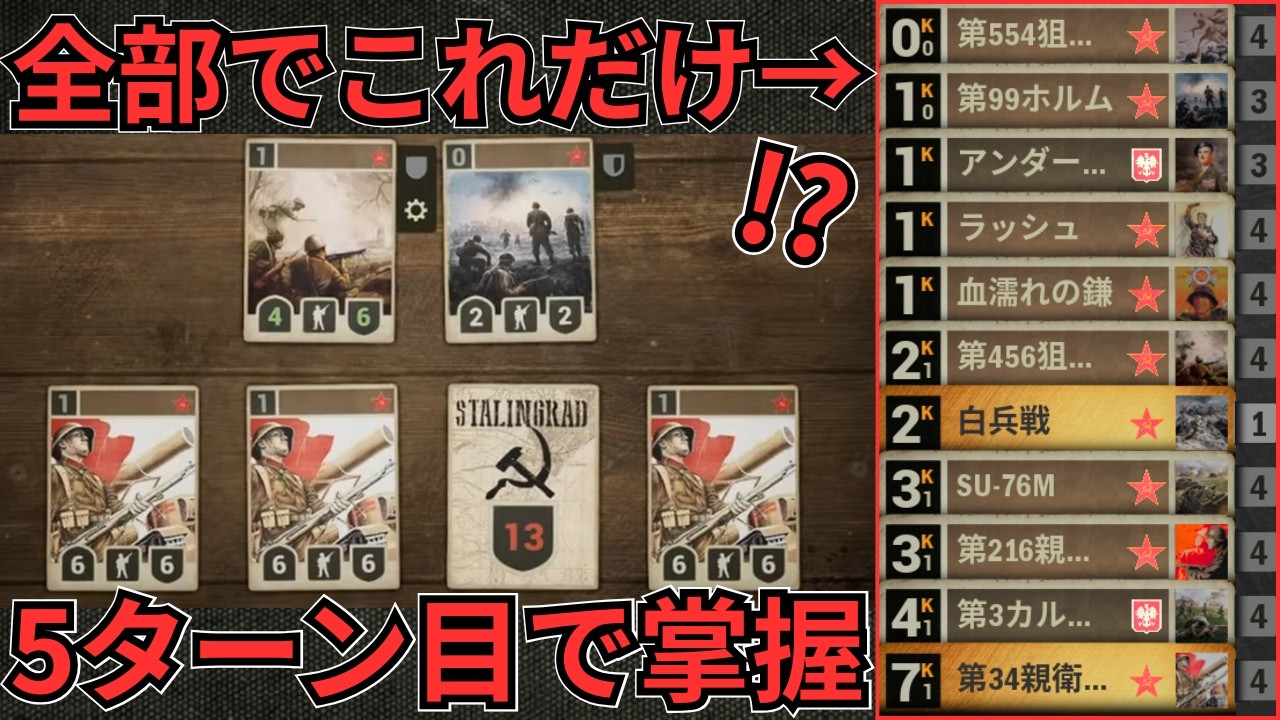
To win with a Soviet-Poland self-damage aggro deck in KARDS - The WW2 Card Game, your immediate priority is deploying cheap scaling units on Turn 1, advancing into the frontline on Turn 2, and triggering self-harm effects on Turns 3 and 4 to deal massive burst damage before your opponent can stabilize.
This high-variance strategy treats your own HQ and unit health as an offensive currency, turning friendly damage into immediate stat buffs to force early concessions.
Core Self-Damage Engine
The deck relies on Soviet units that scale when friendly targets take damage on your turn, supported by cheap self-inflicted damage triggers and cost-efficient Polish allied units.
| Card | Type & Cost | Role in Self-Damage Engine |
|---|---|---|
| 84th Rifle Regiment | Soviet Unit (1 Kredit) | Primary snowball attacker; gains attack whenever your HQ takes damage on your turn. |
| 272nd Guards | Soviet Guard (2 Kredits) | Protects low-cost scalers and grants random friendly buffs upon receiving damage. |
| Bloody Sickle | Soviet Order (1 Kredit) | Triggers friendly damage abilities, eliminates 1-health enemy targets, and draws a card. |
| Polish Support Units | Polish Ally (Infantry/Legion) | Secures early frontline presence using the Exile mechanic when allied with the Soviet Union. |
Do not cast self-damage orders like Bloody Sickle on Turn 1 if you have no scaling units on the board. Always ensure a receiver is in play before triggering friendly damage.
Turn-by-Turn Piloting Sequence
- Turn 1 (Deployment): Play the 84th Rifle Regiment or a cheap Polish infantry unit to your support line.
- Turn 2 (Frontline Control): Move your active unit into the frontline. Frontline control locks the opponent into their support line, prevents them from deploying directly into combat range, and positions your unit to threaten the enemy HQ next turn.
- Turn 3 to 4 (Power Spike): Chain friendly damage triggers. Target your own units or HQ with cards like Bloody Sickle to pump attack values, remove minor enemy blockers, and attack the enemy HQ directly. Your goal is reducing the enemy HQ below 15 health before Turn 5.
Managing Variance and Mulligans
Because this deck relies on combining specific units with damage activators, match outcomes depend heavily on opening hand discipline. The deck has a wide gap between strong and weak draws:
- Always Keep: 1-Kredit scaling units (84th Rifle Regiment), 2-Kredit Guard units (272nd Guards), and low-cost Polish drops.
- Keep Conditionally: Cheap ping orders like Bloody Sickle, but only if you already have an early scaling unit in your opening hand.
- Always Mulligan: Expensive late-game units, high-cost removal spells, and situational buffs that require an established board.
Matchup Adjustments
- Against Control (British-US Ramp, Soviet Control): Prioritize direct HQ damage. Slower decks aim to stabilize with sweepers, healing, and heavy armor in the late game. Push buffed attackers directly into the enemy HQ and ignore non-threatening support units.
- Against Fast Aggro (Japanese Rush, German Blitz): Guard your own life total. Do not damage your own HQ recklessly if the enemy threatens immediate board lethal. Deploy 272nd Guards early to absorb attacks, use Bloody Sickle defensively against enemy units, and pivot to counter-attacks once the opponent exhausts their hand.

Free KARDS - The WW2 Card Game Codes
Current active codes and how to redeem them.

Emily Johnson
Emily writes practical mobile strategy guides with a focus on resource planning, base progression, and the early decisions that shape a long-term account.
COMMUNITY
Player Comments
42 players commented on this guide.
The explanation is clear, especially for beginners.
Nice guide. I am checking the other KARDS - The WW2 Card Game articles next.
This guide answered the exact question I had.
I tried this today and it worked better than my old setup.