
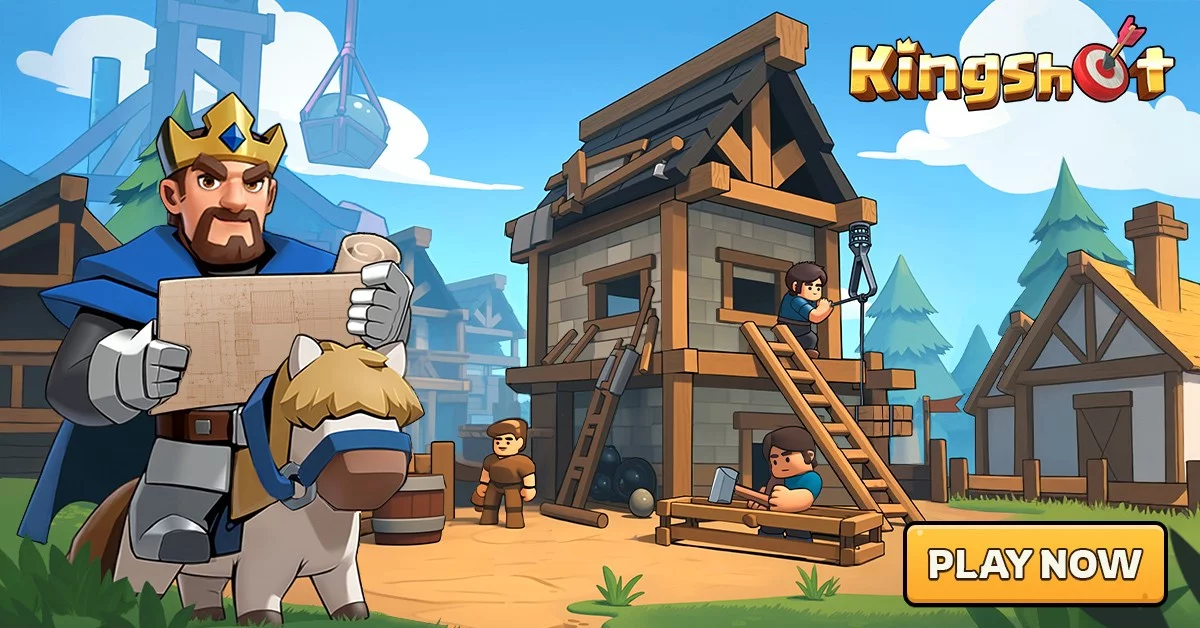
Securing 1st place in the Kingshot Lost Ruins event is not a matter of luck or favorable random number generation (RNG). It requires a highly reproducible, disciplined approach to grid management, sequence execution, and combo preservation. By focusing on consistent pathing and prioritizing high-value tile clearing, you can reliably push your score past the 549,000-point threshold in every single attempt.
Because Kingshot is fundamentally an idle medieval survival game, the massive resource injections you earn from dominating limited-time events like the Lost Ruins are critical. The rewards obtained here directly fund your strategic town management, accelerate your resource allocation, and give your heroes the edge needed for competitive combat. This comprehensive guide breaks down the exact movement patterns, tactical decisions, and multiplier management strategies necessary to hit 549k points and claim the top spot on the leaderboard.
Understanding the Lost Ruins Scoring Mechanics
Before diving into advanced pathing, you must understand how Kingshot calculates your score during the Lost Ruins event. The 549,000-point milestone is generally recognized by top players as the benchmark for securing 1st place tier rewards. Reaching this number requires mastering two specific mechanics:
- Base Tile Values: Different tiles on the grid offer different base point values. Standard tiles provide minimal points, while rare artifact or glowing tiles provide massive base boosts.
- The Combo Multiplier: This is the true engine of a 1st place run. The game rewards speed and accuracy by applying a compounding bonus for consecutive successful clears. If you maintain your combo without dropping it, the value of every single tile increases exponentially.
If you clear tiles in a disorganized, reactive fashion, your multiplier will frequently reset. A player who clears 100 tiles with a broken multiplier will easily lose to a player who clears 70 tiles with a maxed-out, unbroken combo string.
Prioritizing Consistent Tile Clearing Patterns
The foundation of a high score in the Lost Ruins event is a predictable and efficient clearing sequence. Instead of reacting to individual tiles as they randomly catch your eye, you must establish a rhythm that covers the board systematically.
The "Sweeping" Technique
Players who achieve top-tier scores consistently utilize a "top-down" or "side-to-side" sweeping motion to ensure no high-value tiles are left behind.
- Side-to-Side Sweeping: This is often the most reproducible method. By clearing horizontal bands of the grid, you allow the tiles above to fall uniformly. This prevents the board from becoming fragmented and keeps clusters of matching tiles close together.
- Top-Down Sweeping: Useful when you need to prevent the bottom of the board from shifting unpredictably. By clearing the top first, the lower tiles remain static, allowing you to plan your next moves without the grid shifting underneath your cursor or finger.
Avoiding "Dead Time"
Consistency minimizes the "dead time" between actions. To implement sweeping effectively, avoid erratic movements that jump from the top-left corner to the bottom-right corner. By staying in a localized zone until it is fully cleared, you reduce the risk of leaving behind easy points. This methodical approach ensures that your total active board state remains optimized for rapid scoring rather than frantic, reactive cleanup.
Managing Event Multipliers and Momentum
Maintaining your score multiplier is the single most critical factor in reaching the 549,000-point goal. The Kingshot combo meter is unforgiving; a single misclick on an empty space or a delay in your tapping rhythm will reset your multiplier to zero, instantly destroying your point potential.
Rhythm Over Raw Speed
A common mistake newer players make is attempting to play as fast as physically possible. While speed is important, consistency in your clicking speed is far more vital. A steady, rhythmic pace (e.g., two taps per second) is vastly superior to rapid, frantic clicking that leads to missed tiles and lost multipliers.
Identifying Contiguous Clusters
When you encounter a difficult or fragmented board layout, resist the urge to panic. Take a split-second to identify the largest contiguous group of tiles. Clearing these larger clusters not only provides immediate points but also keeps your combo meter active while giving the board time to replenish.
The Reset Protocol
If you do break your combo, do not waste time being frustrated. Immediately locate the highest-density cluster on the board and begin your sweeping pattern again to rebuild the multiplier as fast as possible. The 549k threshold allows for a small margin of error, but you cannot afford to sit idle while the event timer ticks down.
Strategic Resource Utilization Within the Ruins
The Lost Ruins event provides specific opportunities to boost your score if you manage your board state correctly. Not all tiles offer equal value, and knowing when to deviate from your sweeping pattern is what separates standard players from 1st-place finishers.
Prioritizing High-Value Targets
Focus your efforts on clearing rare or high-value items first, as these often anchor the scoring potential of the surrounding grid. When a high-value tile spawns, you should adjust your sweep to intercept it. By prioritizing these targets while your combo multiplier is high, you maximize their point yield. Even if your run ends prematurely or you make a mistake later, securing these high-value tiles early ensures you have already banked the bulk of the available points.
Tracking Spawn Rates and Pre-Aiming
Pay close attention to the item spawn rates during the event. The Kingshot engine does not drop tiles completely at random; there are internal cooldowns and cluster logic at play.
If you notice a specific pattern in how tiles replenish, use that information to position your cursor for the next likely hit. Experienced players track these movements to anticipate where the next cluster will appear, effectively "pre-aiming" their next move. This tactical foresight turns the Lost Ruins event from a game of chance into a test of pattern recognition and reactive timing.
The "Bridge Move": Mastering Zone Transitions
A major mistake players make is over-committing to a single area of the board while ignoring the rest of the grid. If you focus too heavily on the bottom-left corner, you may find yourself trapped when the tiles in that area run dry. You are then forced to move to a distant part of the screen, and that transition time is the enemy of your combo meter.
To solve this, high-level players use a technique known as the Bridge Move.
How to Execute a Bridge Move
- Monitor the Zone: Always keep peripheral vision on the entire board to identify when your current clearing section is becoming depleted.
- Plan the Exit: When your current zone begins to thin out (down to 3-4 tiles), identify the next dense cluster on the opposite side of the board.
- Leave a Breadcrumb: Do not clear your current zone completely. Leave one or two tiles on the edge closest to your next destination.
- Cross Over: Clear the "breadcrumb" tile to refresh your combo meter, and immediately use that momentum to cross the gap to the new zone.
This bridge move keeps your combo meter alive as you move across the screen. By treating the board as a continuous flow rather than a collection of separate segments, you minimize the downtime that typically prevents players from hitting the 549k mark.
Common Pitfalls to Avoid in the Lost Ruins
Even with a strong strategy, certain bad habits can tank your score. Avoid these common pitfalls to ensure your runs remain highly reproducible:
- Tunnel Vision: Staring exclusively at the tile you are currently clearing prevents you from planning your next move. You should always be looking one or two steps ahead of your actual taps.
- The Corner Trap: Clearing from the center outward often pushes remaining tiles into the corners. If you trap yourself in a corner with no adjacent tiles, your combo will die. Always sweep from the edges inward, or side-to-side, to keep tiles grouped in the center.
- Ignoring Board Shuffles: If the game offers a manual board shuffle or reset mechanic during the event, do not be afraid to use it if the grid becomes completely unplayable. Waiting for bad tiles to clear themselves wastes too much time.
Translating Event Rewards into Town Management
Hitting 549k points and securing 1st place in the Lost Ruins event is highly satisfying, but its true value lies in how it accelerates your overarching progress in Kingshot. As an idle medieval survival game, resource bottlenecks are your biggest enemy.
The premium currency, rare materials, and exclusive items rewarded for top-tier event placement should be immediately reinvested into your core gameplay loop:
- Strategic Town Management: Use the influx of event resources to upgrade your resource-generating buildings. This permanently increases your idle income, allowing your town to grow even when you are offline.
- Hero Evaluations and Upgrades: The highest tiers of the Lost Ruins often reward hero shards or experience materials. Allocate these to your frontline defenders and highest DPS heroes to improve your odds in competitive combat and survival waves.
- Defense Fortification: Survival in Kingshot requires strong walls and upgraded garrisons. Funnel event gold and stone directly into your town's defenses to survive higher-level enemy sieges.
By mastering the Lost Ruins event and consistently hitting the 549,000-point benchmark, you create a powerful economic engine for your town. Stick to the sweeping patterns, protect your combo multiplier at all costs, and use bridge moves to navigate the board efficiently. With practice, achieving 1st place will become a routine part of your Kingshot strategy.

Free Kingshot Codes
Current active codes and how to redeem them.

Michael Smith
Michael covers live-service games, events, reward systems, and efficient daily routines, turning frequent updates into clear actions for players.
COMMUNITY
Player Comments
117 players commented on this guide.
This guide answered the exact question I had.
This saved me time in the early game.
This helped me understand updates much better.
I tried this today and it worked better than my old setup.