
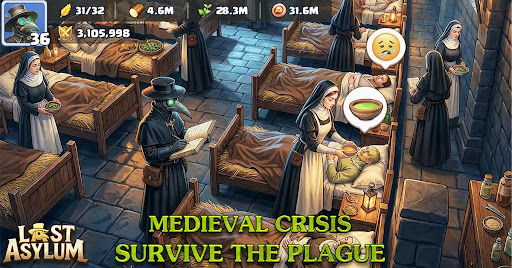
In Last Asylum: Plague: Plague, the "Last Patient" narrative arc serves as the definitive transition from mid-game expansion to high-stakes late-game survival. For many players, this phase feels overwhelming due to the sudden spike in infection intensity and the introduction of complex morale mechanics. However, by treating this narrative milestone as a structural blueprint for your base operations rather than just flavor text, you can turn a period of potential chaos into a period of maximum efficiency.
This guide outlines how to synchronize your mechanical progression with the "Last Patient" storyline, ensuring your facility remains secure against the most punishing waves in the game.
Understanding the Last Patient Narrative Integration
The "Last Patient" is not merely a quest; it is a game-state signal. When you trigger this narrative arc, Last Asylum: Plague: Plague fundamentally alters its pacing. The game shifts from a resource-gathering focus to a "containment-first" methodology.
Think of this arc as a stress test for your logistics network. The narrative requires you to move beyond basic survival and into the realm of specialized facility management. When the game introduces the "Last Patient" lore, it is explicitly telling you that your current, general-purpose base layout is insufficient for the final waves of the plague. You must transition your infrastructure to prioritize "High-Density Containment"—a strategy where your most valuable resources and elite units are physically separated from the general population to prevent cross-contamination during inevitable breaches.
Strategic Resource Allocation: The Late-Game Pivot
As you enter the "Last Patient" stage, your resource priority must shift from expansion to fortification. Many players make the critical mistake of continuing to build out, stretching their supply lines too thin. Instead, follow this priority table to optimize your late-game economy:
| Progression Phase | Primary Goal | Resource Focus |
|---|---|---|
| Pre-Arc | Perimeter Expansion | Basic Turrets & Walls |
| Early-Arc | Morale Stabilization | Infirmary & Recreational Wings |
| Peak-Arc | Containment | Elite Gear & Defensive Buffs |
| Finale | Asset Consolidation | Emergency Power & Rapid-Response Units |
During this arc, stop all low-tier construction. The "Last Patient" waves are designed to punish players who have not focused their economy. Invest your currency into permanent stat-boosting upgrades for your infirmary and containment wings. These buildings are your primary defense against the morale decay mechanics introduced during this chapter.
Managing Survivor Morale Through Story Milestones
"Morale Decay" is the hidden killer in the "Last Patient" arc. As the narrative intensity increases, your survivors react to the grim atmosphere, which manifests as a debuff to their work speed and combat effectiveness.
To counteract this, you must build "Recreational Containment" facilities. These are not luxury items; they are tactical necessities. By providing your survivors with these amenities, you mitigate the morale penalty, keeping your production chains running at 100% capacity even when the external plague threat is at its highest. If you neglect these facilities, you will find your elite units underperforming exactly when you need them to hold the line.
Aesthetic Progression as a Tactical Tool
In Last Asylum: Plague: Plague, the "Last Patient" arc is visually distinct, characterized by a gothic, somber aesthetic. Use this to your advantage through "Visual Categorization." By upgrading the aesthetics of your elite containment zones to match the dark, gothic tone of the narrative, you create an intuitive, visual shorthand for your base.
- Color-Code Your Defenses: Use specific lighting schemes or building skins associated with the Last Patient arc to mark high-security zones.
- Unit Identification: Equip gear that matches the aesthetic of your elite squad. In the heat of a real-time combat encounter, being able to instantly identify your high-tier units by their visual profile can be the difference between a successful defense and a base-wide infection.
- Atmospheric Cues: The game’s audio shifts during this arc to a symphonic, haunting score. Experienced players use this shift as an auditory timer. When the music changes, it is your cue to cease all construction and move your troops into defensive positions.
Common Mistakes and How to Avoid Them
The biggest hurdle for players in Last Asylum: Plague: Plague is the "Over-Expansion Trap." During the "Last Patient" arc, the map becomes more hostile, and the cost of maintaining a large footprint outweighs the benefits of the resources you might find.
- Over-building: Don’t try to cover the whole map. Abandon non-essential sectors and consolidate your survivors into a "Gothic Bastion." Smaller, more defensible layouts are mathematically superior during the late-game waves.
- Ignoring the Infirmary: Players often prioritize combat towers over medical facilities. In the "Last Patient" arc, your ability to heal and purge infection from your own ranks is more important than your ability to kill incoming waves.
- Static Positioning: Do not keep your elite units in the same spot for the entire duration of the arc. The narrative suggests that the plague is "evolving," and your defensive strategy must evolve with it. Rotate your guards frequently to prevent morale fatigue and to manage local infection levels.
The Pavlovian Strategy: Using Narrative as a Game-State Indicator
The most successful players in Last Asylum: Plague: Plague use the "Last Patient" narrative as a Pavlovian trigger. By associating the gothic, symphonic elements of this arc with a specific set of defensive behaviors, you reduce the mental load of the game.
When you see the visual cues of the "Last Patient" or hear the thematic shift in the soundtrack, your response should be automatic:
- Step 1: Verify all gates are locked.
- Step 2: Check the infirmary for active infections.
- Step 3: Deploy elite units to the outer perimeter.
By turning the narrative into a functional part of your tactical toolkit, you move from playing the game at a surface level to mastering the complex logistics of Last Asylum: Plague: Plague. The story is not just there to provide atmosphere; it is there to provide the structure you need to survive the most difficult challenges the game has to offer. Treat every narrative beat as a piece of data, and your asylum will remain an unbreakable bastion against the encroaching plague.

Free Last Asylum: Plague Codes
Current active codes and how to redeem them.

Emily Johnson
Emily writes practical mobile strategy guides with a focus on resource planning, base progression, and the early decisions that shape a long-term account.
COMMUNITY
Player Comments
134 players commented on this guide.
This saved me time in the early game.
I tried this today and it worked better than my old setup.
This guide answered the exact question I had.
Good guide for Last Asylum: Plague players. The base building part was useful.