

In Last War, the Frontline Breakthrough event is a high-stakes test of arithmetic, reflexes, and tactical pathing. Achieving a 2600+ score is not a matter of luck; it requires a disciplined approach to gate prioritization and a deep understanding of how troop density influences your survival and damage output. To hit this threshold consistently, you must transition from a growth-focused mindset in the early stages to a defensive, casualty-minimizing strategy in the final segments.
The Mathematics of Multipliers: Prioritizing Growth
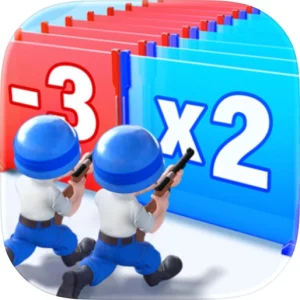
The most common mistake players make in Frontline Breakthrough is choosing additive ("plus") gates over multiplicative ("multiply") ones. In the early game, an additive gate might seem superior because it grants an immediate, large boost to your numbers. However, multipliers are the engine of your late-game power.
- The Scaling Rule: Always prioritize multipliers, even if the base number seems low. As your squad size grows, these multipliers compound, leading to exponential growth that additive gates simply cannot match.
- The "Snowball" Effect: By prioritizing multipliers early, you increase your squad's DPS (Damage Per Second), which allows you to burn through enemy waves faster. Faster clearing means your troops spend less time taking incoming fire, preserving your total health pool for the high-density boss encounters in later stages.
Tactical Movement and Lane Management
Your movement across the board determines your engagement efficiency. You should never move blindly; instead, treat the lane as a resource-management puzzle.
- Kiting and Funneling: Rather than rushing into the center of the screen, hug the edges to force enemies to funnel into your firing line. This minimizes the surface area your squad occupies, making them less susceptible to splash damage and area-of-effect attacks from enemy turrets.
- The Path of Least Resistance: If a lane offers a high-value gate but forces you through a high-damage hazard, calculate the "net gain." If the damage you take reduces your squad count by more than the gate would provide, it is mathematically better to take a safer, lower-value path. A healthy, medium-sized squad is almost always superior to a massive but severely depleted one.
Strategic Gate Selection Logic
To reach that 2600+ score, you must actively scan the board for upcoming threats. Use these rules when making split-second decisions:
- Avoid Subtraction Zones: Never prioritize a gate if it requires passing through a "minus" zone, even if the gate is a high multiplier. The loss of units creates a deficit that slows down your wave-clearing speed.
- The Pivot Rule: If you see a "divide by" gate or a cluster of high-damage turrets, pivot to the adjacent lane immediately. It is better to miss a single, moderately good gate than to lose 20% of your squad health to a trap.
- Hazard Assessment: Look for "red zones." These are often bait. High-scoring runs are built on consistency, not risky plays. If a path looks dangerous, assume it is—the game is designed to test your ability to recognize and avoid these traps.
Managing Combat Density in Stages 1–4
The first four stages are about building a "buffer." You want to enter each new stage with your squad as close to maximum capacity as possible.
- Stage 1 & 2 (The Accumulation Phase): Focus exclusively on growth. Ignore enemies if they are not directly blocking your path to a multiplier gate.
- Stage 3 & 4 (The Stabilization Phase): Start playing more cautiously. You should have a large enough squad to handle standard enemies quickly. If you find yourself losing units rapidly, slow your movement. You do not need to hit every single gate; you need to maintain the squad you have already built.
Mastering Stage 5: The Survival Threshold
Stage 5 is where most players fail to reach the 2600+ score. The enemy density is significantly higher, and the game places traps in the direct path of the most tempting multipliers.
- Shift to Defense: By Stage 5, stop chasing every single multiplier. If you have successfully followed the growth strategy in Stages 1–4, you already have the necessary numbers to succeed. Your goal now is to reach the end of the stage with the highest possible troop count.
- Boss Preparation: Aim to enter the final boss encounter with at least 80% of your squad intact. If you arrive with a depleted force, the boss will shred your remaining units before you can deal enough damage to clear the stage efficiently, tanking your final score.
- Controlled Aggression: During the boss fight, focus on positioning. Stay at the maximum range of your weapons to avoid the boss’s counter-attacks. If you have a large enough squad, you can "burst" the boss down, effectively ending the stage before it can whittle your numbers down to a point where your score suffers.
Common Mistakes That Kill Your Score
- Ignoring the "Divide By" Gates: Even a minor division can negate the benefit of two or three additive gates. Always prioritize movement that avoids these completely.
- Tunnel Vision: Don't focus only on the gates at the bottom of the screen. Look ahead. If you see a dangerous obstacle three rows up, adjust your pathing now, not when you are already committed to the lane.
- Over-committing to Combat: Remember, Last War rewards survival. While you must kill enemies to progress, you should avoid unnecessary "slug-fests" with minor mobs that don't block your path to better gates.
Final Thoughts for Consistency
Achieving a 2600+ score in Last War Frontline Breakthrough is a repeatable process if you treat it as a game of logic rather than a reflex-based shooter. By prioritizing multiplicative growth, avoiding high-damage hazards at the cost of minor gains, and playing defensively during the final, high-density stage, you will find your scores rising significantly. Remember: in the apocalypse, it isn't about how many enemies you kill, but how many of your own troops you keep alive to fight another day.
Free Last War Codes
Current active codes and how to redeem them.

James Brown
James focuses on Android gaming on PC, emulator setup, controls, performance tuning, and practical troubleshooting for longer play sessions.
COMMUNITY
Player Comments
40 players commented on this guide.
This guide answered the exact question I had.
Good guide for Last War players. The strategy part was useful.
I tried this today and it worked better than my old setup.
This saved me time in the early game.