
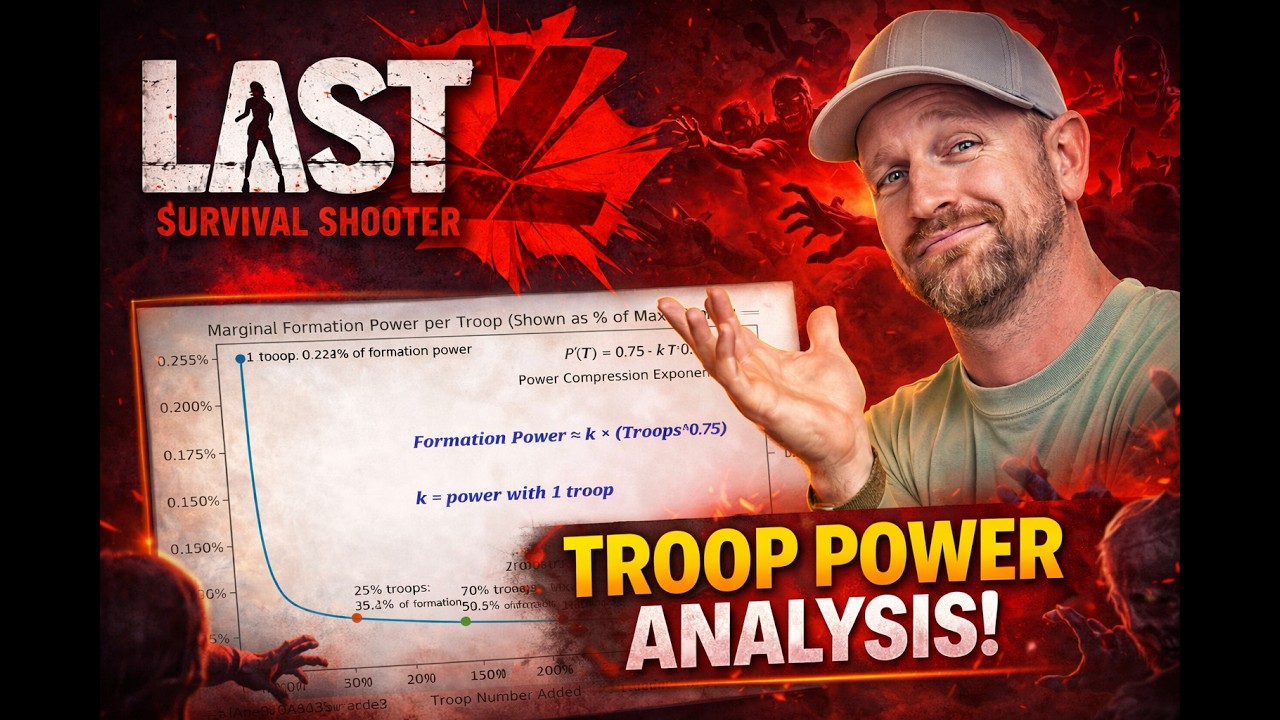
In Last Z: Survival Shooter, your visible Battle Power is not merely a sum of all units; it is a complex calculation heavily weighted toward higher-tier troops. Many players fall into the trap of "power inflation," filling their barracks with massive amounts of low-tier fodder that look impressive on paper but collapse under the pressure of real combat. By understanding the underlying mathematical influence of troop tiers, you can stop inflating your numbers with useless units and focus on the specific thresholds that determine true battlefield dominance.
The Tier-Based Power Hierarchy
The core mechanic of Last Z: Survival Shooter is the application of a significant weighting multiplier to higher-tier troops. The game’s algorithm does not treat all soldiers as equal; rather, it prioritizes "unit quality."
If you are filling your march slots with massive amounts of T1 or T2 units, you are likely inflating your profile power without gaining a proportional increase in combat efficacy. In the game's internal math, a single high-tier soldier contributes exponentially more to your total power than several low-tier soldiers combined. This system is designed to reward long-term progression—specifically, the time and resources invested in your research tree.
When evaluating your army, recognize that the base power value of a unit is intrinsically tied to its tier level. Players often equate total unit count with strength, but the hidden math suggests that maintaining a smaller, elite force is objectively more power-efficient than maintaining a bloated, low-tier army that occupies valuable space and resources.
Why Low-Tier Fodder Distorts Your Stats
Relying on low-tier troops creates a "power illusion." This is a dangerous trap in Last Z: Survival Shooter because your visible power rating can lure you into aggressive PvP encounters you aren't actually prepared to win.
Because the system applies heavy penalties to low-tier units in the calculation, their contribution to your total power is negligible compared to the upkeep costs and hospital space they occupy. If you are experiencing "power creep"—where your numbers are rising but your win rate in combat remains stagnant—it is almost certainly because your roster is bloated with inefficient units.
To break this cycle, adopt these three pillars of optimization:
- Tier Threshold Prioritization: Identify the absolute highest tier you can consistently produce. Shift your training queues to favor these units exclusively.
- Resource Allocation: Stop pouring resources into training low-tier units once you have unlocked your highest available tier. Those resources are better spent accelerating research or building upgrades that unlock the next tier.
- True Combat Impact: High-tier units provide superior stat scaling during combat, including higher base health and damage multipliers. This is where the real value of power exists, far beyond the number displayed on your profile.
The Math Behind Formation Power
The formation power you see before a battle is a dynamic reflection of the specific troop tiers currently deployed in your active march. The game calculates this by applying a specific weight to each unit type within your formation.
When you adjust your formation, pay close attention to the "Power" indicator. You will notice that swapping out a lower-tier unit for a higher-tier unit causes a significant jump in power, even if the unit count remains exactly the same. This confirms that the internal math favors "tier density" over sheer quantity.
Use this to your advantage by tailoring your march to contain only your most powerful available units. By maximizing the tier density of your active formation, you effectively maximize your "effective power," making your army harder to defeat and more lethal during standard PvE exploration or PvP defense.
Strategic Limitations and Trade-offs
While focusing on high-tier troops is essential for maximizing your power, there are critical trade-offs. Higher-tier troops consume more resources to train and, more importantly, are significantly more expensive to heal after a battle.
- The Sustainability Problem: If you engage in high-risk, constant PvP, you may find that an elite army is unsustainable. If you suffer heavy losses, replacing high-tier troops takes significantly longer than replacing low-tier fodder.
- The Hidden Cost of Power: The math forces a decision: do you want a "high-power" profile that looks intimidating, or a "sustainable" army that can be replaced quickly?
- Synergy vs. Stats: Never let the power formula override the necessity of tactical formation adjustments. A high-power formation of all one unit type can be easily countered by an opponent using the correct "Rock-Paper-Scissors" troop type counters (Infantry, Cavalry, or Ranged). Use the power formula as a baseline, but always ensure your composition matches the threat you are facing.
Prioritizing Progression Over Quantity
For players aiming for long-term growth in Last Z: Survival Shooter, the path forward is clear: shift your focus away from unit quantity and toward technological advancement.
Your power score is a reflection of your economic and technological health. If your goal is to climb the rankings, you must prioritize the research and building upgrades that enable you to train higher-tier troops. By consistently pushing to the next tier, you naturally increase your power without needing to waste resources on lower-level training.
This strategy ensures that every unit you own contributes the maximum possible value to your account. Avoid the temptation to mass-produce weak troops to "pad" your numbers; they serve as dead weight that masks your true combat potential, wastes valuable training slots, and ultimately slows down your progression toward the endgame. In the world of Last Z: Survival Shooter, it is far better to have one hundred elite soldiers than one thousand novices. Focus on quality, optimize your research, and let the math work in your favor.
Free Last Z: Survival Shooter Codes
Current active codes and how to redeem them.

James Brown
James focuses on Android gaming on PC, emulator setup, controls, performance tuning, and practical troubleshooting for longer play sessions.
COMMUNITY
Player Comments
82 players commented on this guide.
This helped me understand strategy much better.
I wish I had read this before upgrading the wrong thing.
This saved me time in the early game.
Can you add more details about strategy in a future update?