
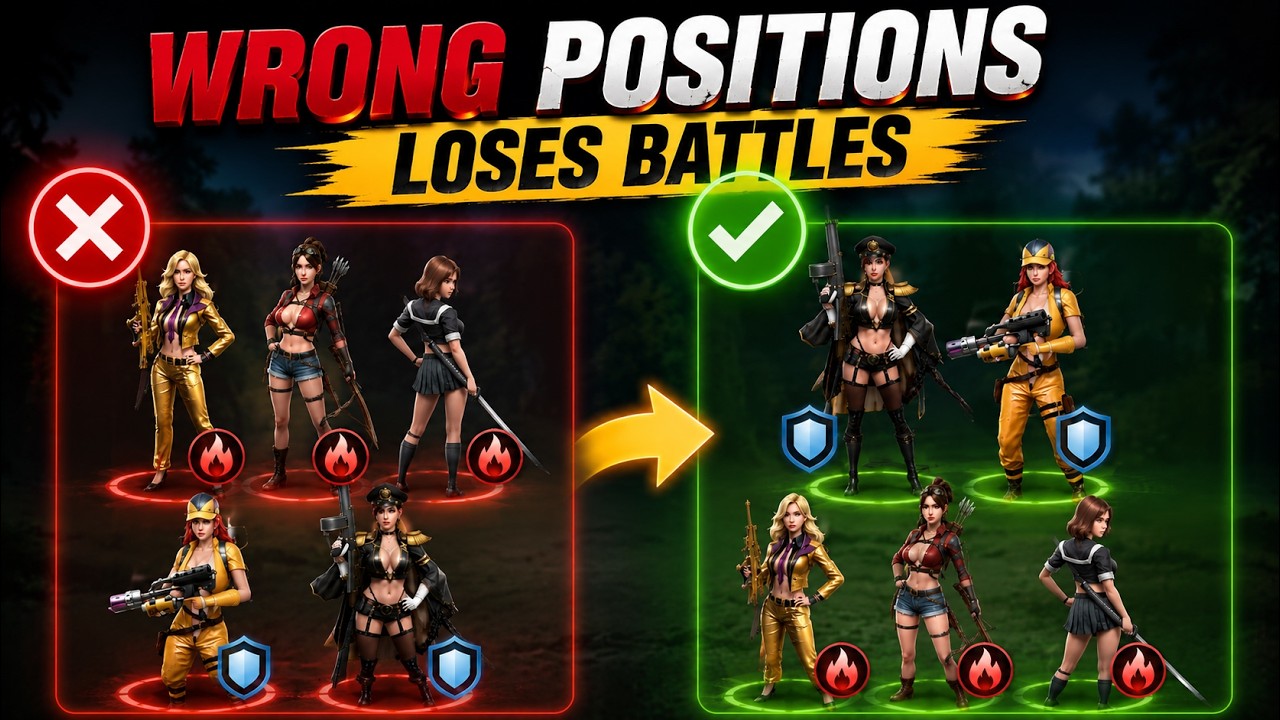
In Last Z: Survival Shooter, the difference between a crushing victory and a squad wipe often comes down to a single tactical decision: where you place your heroes. Many players focus exclusively on hero level, gear, or rarity, ignoring the fundamental mechanics of the game's row-based combat system. If your backline damage dealers are constantly falling before the fight truly begins, your formation is likely the culprit.
This guide breaks down the essential mechanics of hero positioning, squad synergy, and mode-specific adjustments to ensure your team thrives in the apocalypse.
The Foundation: Why Front-Row Tanking is Non-Negotiable
The combat engine in Last Z: Survival Shooter utilizes a proximity-based targeting system. Enemies will prioritize the closest available targets, which makes your front row the most vital defensive layer in your squad.
If you place a low-defense sniper or a fragile support hero in the front, the enemy AI will focus fire on them immediately. This does more than just lose you a hero; it cripples your team's total damage-per-second (DPS) output. By forcing your most durable "Tank" class heroes to occupy these front-row slots, you create a buffer that allows your high-damage dealers to operate without interruption. Before every deployment, audit your roster to ensure that any hero with high HP and defensive skill modifiers is positioned at the very front.
Protecting the Backline: The Engine of Your Squad
If your front row is the shield, the back row is the sword. This is where your heavy hitters, long-range snipers, and utility supports belong. Because these units are designed to trade defense for offensive firepower, they are glass cannons that cannot survive direct frontline engagement.
To optimize backline protection, follow these tactical rules:
- Avoid Overlap: Refrain from placing a high-priority damage dealer behind a tank that lacks "Taunt" or area-of-effect defensive skills. If the front-row tank falls, your backline is instantly exposed.
- Range Awareness: Always check the range stat of your backline heroes. A hero with "Close Range" capability is wasted in the back row, while a "Long Range" hero placed in the front is a liability.
- Staggered Placement: If you are struggling with enemy snipers, place your most vital support unit in the center of the back row, surrounded by slightly more durable mid-line units to create a secondary defensive cushion.
Exploiting Hero Synergy for Multiplicative Gains
Positioning is not just about survival; it is about activating hidden potential. Many heroes in Last Z: Survival Shooter possess passive abilities that provide buffs based on their proximity to other allies.
For instance, certain support heroes offer a "Command" aura that increases the physical defense of the entire row in front of them. If you place these support heroes in the middle row, you effectively turn a standard frontline into an impenetrable wall. Conversely, some offensive heroes receive a critical hit bonus if they are placed in the back row. Always read your heroes' skill descriptions carefully; a formation that ignores these specific synergy requirements will always underperform compared to one that aligns hero placement with their mechanical needs.
Tactical Adjustments: PvE vs. PvP
Your formation should never be static. The requirements for clearing a high-level PvE campaign stage are vastly different from those needed to climb the PvP leaderboards.
PvE Campaign Strategy
In PvE, you are often dealing with waves of undead. Your priority is sustainability. Use a "1-2-2" formation: one primary tank in the front, two bruisers or off-tanks in the middle, and two high-DPS/healer units in the back. This setup ensures that if your main tank takes a critical hit, the secondary bruisers can absorb incoming damage while your backline heals the front line.
PvP Combat Strategy
PvP in Last Z: Survival Shooter is a game of "nuke" potential. Human opponents will look for your weakest hero and target them down. To counter this, shift toward "Aggressive Sustainability." Use two tanks in the front to force the opponent to waste their opening rotations, and pack your backline with heroes that have crowd-control (CC) abilities. If you can stun or slow the enemy front line, you prevent them from ever reaching your backline, effectively winning the fight before they can fire a shot.
Avoiding Common Positioning Errors
Even veteran players fall into the trap of relying too heavily on the "Auto-Fill" feature. While convenient, the auto-fill algorithm often selects heroes based on raw power scores rather than functional synergy or defensive capability.
To avoid these common pitfalls, perform a manual audit of your team:
- The Gear Mismatch: Check that your best armor and defensive gear are equipped on the heroes in the front row, not just your highest-level characters.
- The Level Gap: If your primary tank is significantly lower in level than your backline damage dealers, they will collapse quickly. If you cannot level them, consider moving an "off-tank" with higher stats to the front to provide a temporary bridge.
- The "First-Hit" Test: Run a low-stakes mission and watch the first five seconds of combat. If a damage dealer is taking hits before your tank, pause immediately and swap their positions.
By manually managing your positioning, you gain total control over the flow of combat. In Last Z: Survival Shooter, where resources are scarce and every win counts, mastering these formation fundamentals is the most reliable way to ensure your shelter survives the apocalypse. Take the time to experiment with your roster, respect the class roles, and always prioritize the safety of your backline to secure your path to victory.
Free Last Z: Survival Shooter Codes
Current active codes and how to redeem them.

James Brown
James focuses on Android gaming on PC, emulator setup, controls, performance tuning, and practical troubleshooting for longer play sessions.
COMMUNITY
Player Comments
127 players commented on this guide.
I tried this today and it worked better than my old setup.
Nice guide. I am checking the other Last Z: Survival Shooter articles next.
This saved me time in the early game.
Can you add more details about heroes in a future update?