
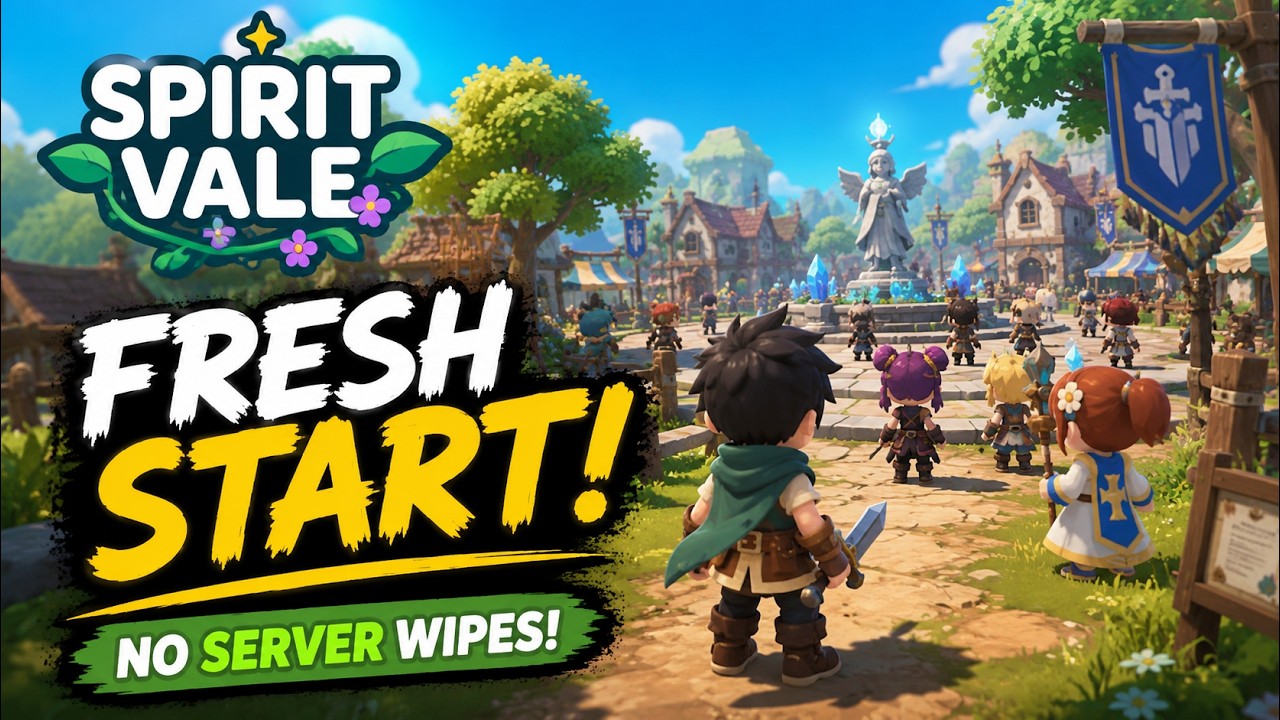

SpiritVale features a distinct dual-tier class progression system that defines your role in the game’s world. To optimize your journey, you must understand the transition from the seven base classes to their seven specialized advanced counterparts. Whether you prefer front-line combat or supportive roles, your initial choice dictates your skill growth and team utility throughout your early and mid-game experience.
Understanding the Base and Advanced Class Structure
SpiritVale organizes its character progression into a two-tier system consisting of seven base classes and seven advanced specializations. You begin by selecting a foundational class that establishes your primary combat mechanics. As you progress, you gain the ability to evolve into an advanced job, which expands your toolkit and deepens your role-specific capabilities.
The seven base archetypes include the Knight, Warrior, Mage, Summoner, Rogue, Acolyte, and Scout. These core classes are designed to be approachable while offering a distinct playstyle that informs your future specialization. Choosing your base class should be based on your preferred combat distance and whether you intend to engage in solo questing or group-based activities, as these foundations are permanent starting points.
Mapping Your Advanced Specialization Path
Once you meet the necessary progression requirements, you can promote your character into one of the seven advanced classes. These specializations are direct upgrades that introduce more complex mechanics and high-impact skills. The current advanced classes include the Paladin, Berserker, Wizard, Necromancer, Shinobi, Priest, and Gunslinger. Each represents a significant pivot in how your character manages resources or executes rotations.
For example, players starting as an Acolyte will eventually transition into the Priest specialization, shifting their focus toward group support and healing efficiency. Similarly, base classes like the Warrior have a clear path into the Berserker class, which emphasizes high-damage output at the cost of defensive stability. Evaluate the advanced skills for your chosen path early to ensure your playstyle preferences align with the final, specialized form.
Leveraging the Buy-to-Play Economy
A defining aspect of SpiritVale’s business model is its commitment to a "Buy-to-Play" structure, explicitly excluding pay-to-win (P2W) mechanics. This approach fundamentally changes how you should view your progression. Because you are not incentivized to purchase power or gear upgrades through microtransactions, your advancement is tied strictly to your own leveling, questing, and mastery of your chosen class skills.
This model removes the pressure to chase rotating banners or spend on convenience items to stay relevant. Instead, you can focus on mastering the nuances of your specific class build and participating in the game's evolving world. The developer’s emphasis on long-term stability and a fair playing field means that your time investment is the primary currency for reaching the endgame.
Engaging with the Community Roadmap
SpiritVale utilizes a community-driven development approach, allowing players to vote on upcoming features and take an active part in the game’s evolution. If you are planning your long-term progression, keep an eye on the official roadmap updates. These announcements often signal upcoming balance changes to classes, new content zones, or quality-of-life improvements that may affect how your chosen class performs in different environments.
Participation in these feedback cycles is more than just social; it is a strategic advantage. By tracking the development milestones, you can anticipate shifts in the meta or upcoming content that might favor specific advanced classes. Staying informed through the community channels ensures that you are not caught off guard by major system updates, allowing you to adapt your leveling and build strategy accordingly.
Strategy for Solo and Group Progression
Your choice of class should also account for the balance between solo leveling and group utility. While the game supports various playstyles, some classes are naturally better suited for handling mobs independently, while others are essential for group synergy. If you intend to progress primarily through solo questing, prioritize classes with self-sustain or high burst damage. If you prefer group play, focus on classes that provide utility buffs or crowd control.
Remember that SpiritVale is designed to be a "cozy" MMO experience. The progression curve is balanced to encourage exploration and steady development rather than rapid, competitive rushing. Take the time to experiment with the base classes during the early stages, as the lack of server wipes ensures that your progress remains secure as the game grows alongside its community.

James Brown
James focuses on Android gaming on PC, emulator setup, controls, performance tuning, and practical troubleshooting for longer play sessions.
COMMUNITY
Player Comments
64 players commented on this guide.
I tried this today and it worked better than my old setup.
The tips are practical and easy to follow.
This saved me time in the early game.
Nice guide. I am checking the other HOT articles next.